
Cavity wall insulation is designed to improve a property’s thermal efficiency by reducing heat loss, but in some cases, it can contribute to penetrating damp. This issue is more common than many homeowners realise and often occurs when insulation is either poorly installed or unsuitable for the building’s exposure level.
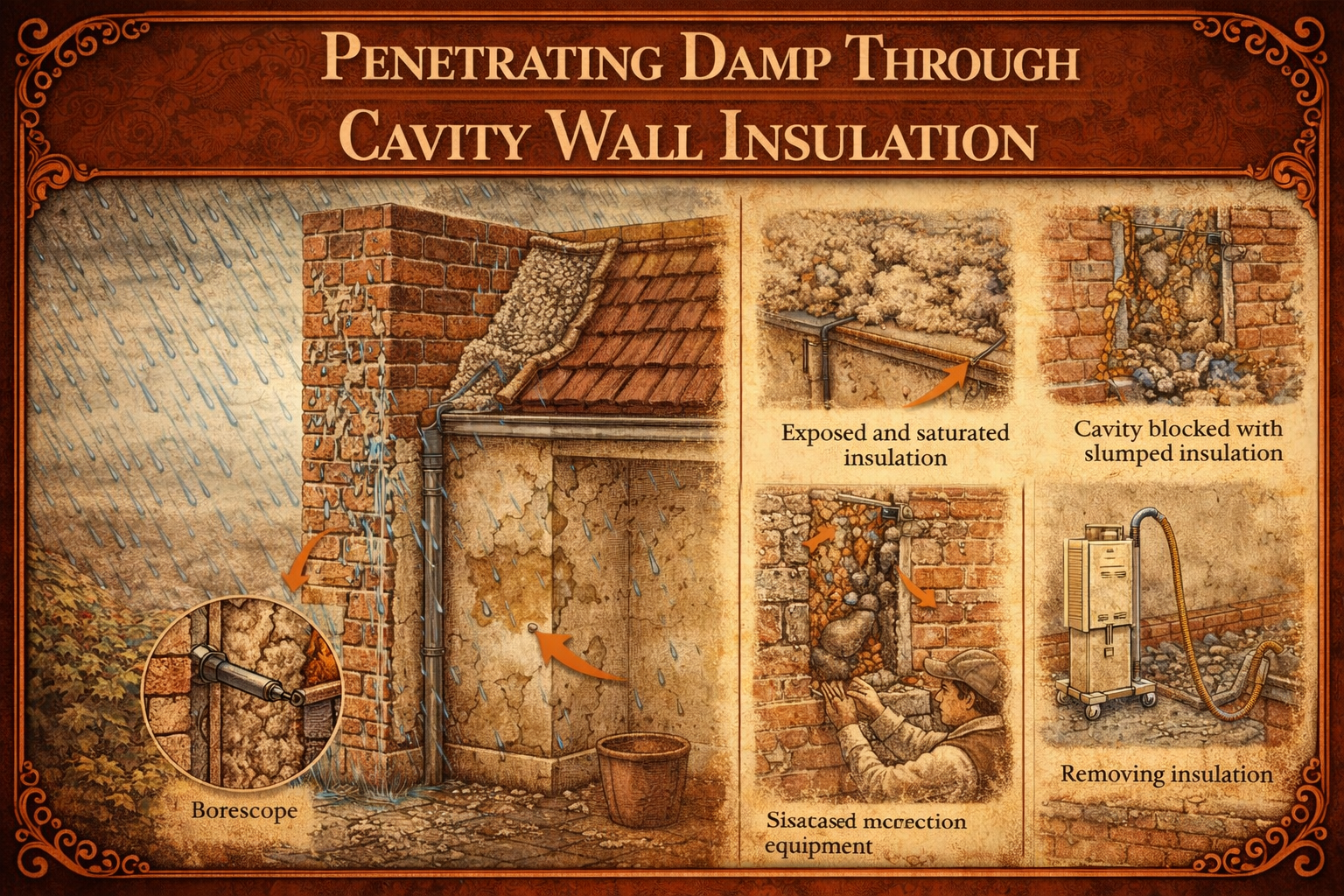
In a traditional cavity wall construction, there is a gap between the outer and inner leaf of masonry. This cavity acts as a barrier, preventing rainwater that penetrates the outer wall from reaching the interior. However, when insulation is introduced, this gap is partially filled. If the insulation becomes saturated or acts as a bridge, it can allow moisture to transfer across the cavity.
This is particularly problematic in exposed locations where the property is subjected to driving rain. Certain insulation materials, such as some fibre-based products, can absorb and retain moisture. Once wet, they can hold water against the inner wall, leading to persistent damp issues internally.
Internally, penetrating damp caused by cavity wall insulation often appears as widespread damp patches on external walls. Unlike isolated defects, this type of damp can affect large sections of a room and may not have a clearly defined source. You may also notice peeling paint, bubbling plaster, and in some cases, mould growth due to the increased moisture levels.
Diagnosing this issue can be challenging because there may be no obvious external defects. The walls may appear to be in good condition, leading to confusion about the cause of the damp. A specialist survey is often required, which may include borescope inspections to assess the condition of the insulation within the cavity.
Solutions typically involve removing the problematic insulation. This is usually done using specialist extraction equipment. Once removed, the cavity can be assessed and, if appropriate, re-insulated with a more suitable material that is less prone to moisture retention.
In some cases, particularly in very exposed properties, it may be better to leave the cavity uninsulated to prevent future damp problems.
Preventative measures include ensuring that cavity wall insulation is only installed where appropriate and by qualified professionals. A proper assessment of the property’s exposure to weather should always be carried out beforehand.
Leave a Reply