
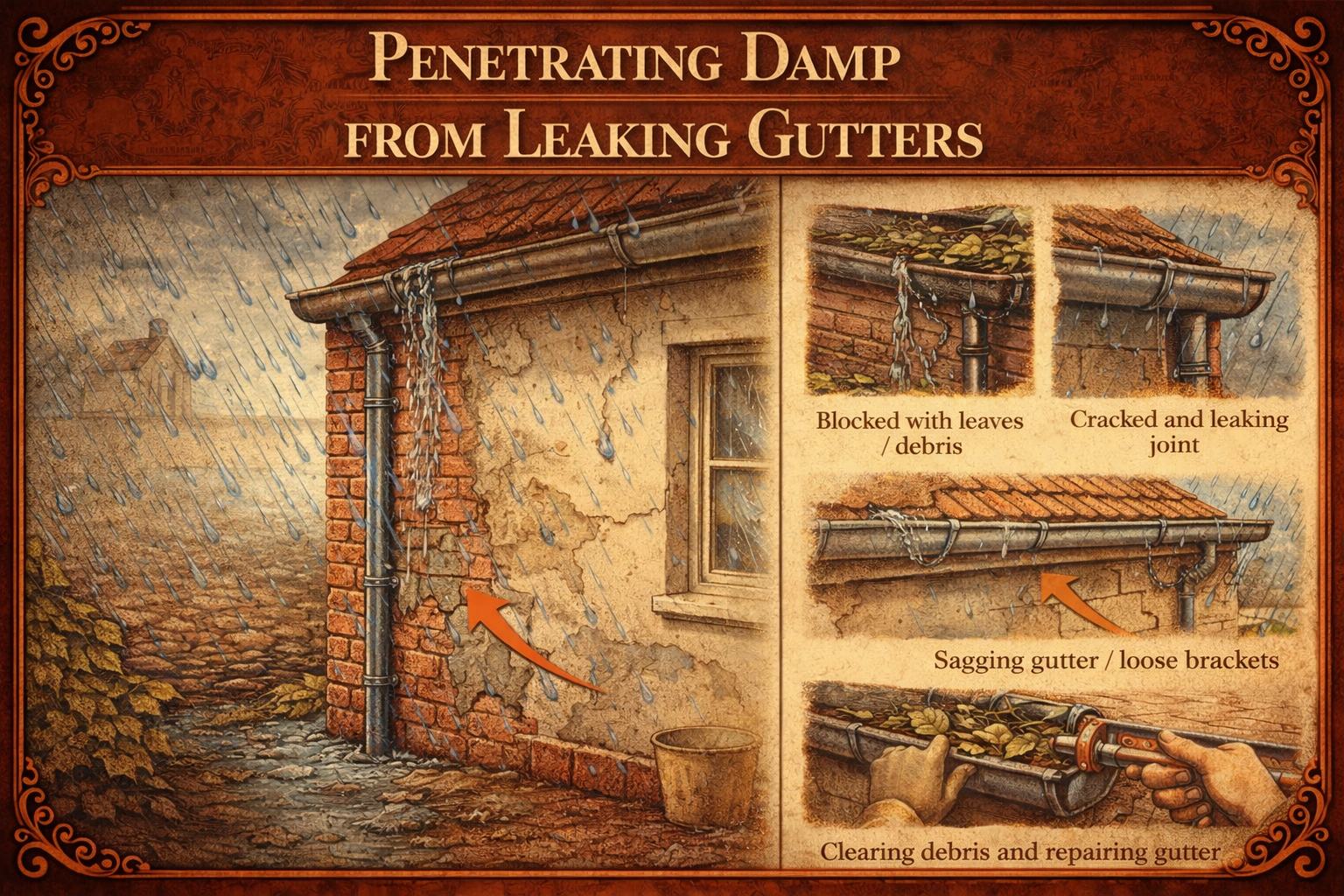
Leaking or defective gutters are one of the most common and preventable causes of penetrating damp. Gutters play a crucial role in managing rainwater by directing it away from the building. When they fail, water can overflow or run down external walls, leading to prolonged saturation and eventual moisture penetration.
One of the main causes of gutter failure is blockage. Leaves, moss, and debris can accumulate over time, particularly in autumn, preventing water from flowing freely. When this happens, rainwater spills over the edge of the gutter and repeatedly soaks the wall below. Over time, this constant exposure allows water to penetrate through brickwork or render.
Other issues include cracked or leaking joints, loose brackets, and sagging sections of guttering. If the gutter is not correctly aligned or lacks the proper fall, water may pool instead of draining efficiently. This increases the likelihood of overflow during heavy rainfall.
Internally, penetrating damp caused by leaking gutters often appears as vertical damp patches on walls. These patches are typically aligned with the position of the gutter or downpipe. You may also notice staining, peeling paint, or mould growth in affected areas.
Externally, signs can include staining on the wall, algae growth, or visible water marks after rainfall. In severe cases, the constant flow of water can even erode mortar joints and accelerate deterioration of the wall.
To fix the issue, start by clearing any blockages from the gutter and downpipes. Inspect the system for damage, including cracks, leaks, or loose joints. Repairs may involve resealing joints, replacing damaged sections, or realigning the gutter to ensure proper drainage.
Regular maintenance is essential to prevent this issue. Cleaning gutters at least once or twice a year, especially after autumn, can significantly reduce the risk of penetrating damp.
Leave a Reply