
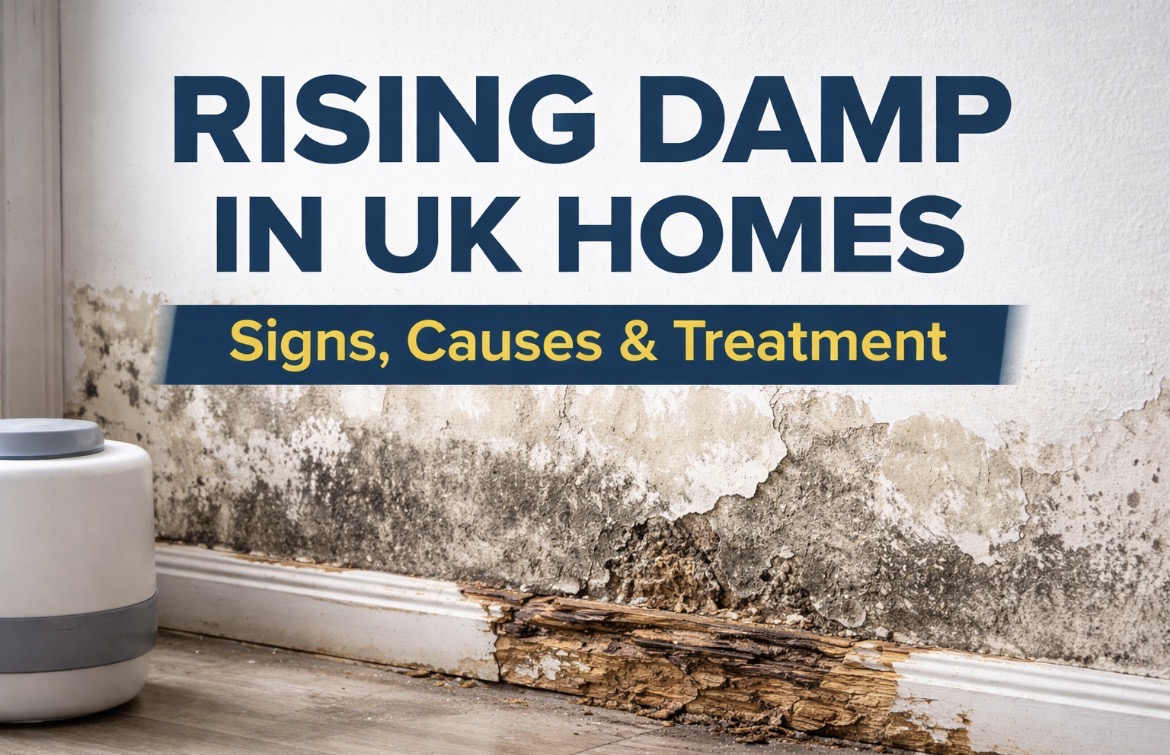
Rising damp is a moisture problem that occurs when groundwater travels upward through masonry by capillary action. Although often misdiagnosed, genuine rising damp can cause significant damage to plaster, skirting boards and internal finishes if left untreated.
In the UK, rising damp is most commonly found in older properties where the damp proof course (DPC) has failed, been bridged, or was never installed.
This guide explains how to identify rising damp, how it differs from condensation, and the correct treatment options.
Rising damp occurs when moisture from the ground moves upward through porous building materials such as brick, mortar and blockwork.
Common causes include:
- Failed damp proof course
- No damp proof course (common in pre-1875 properties)
- Bridged DPC due to raised ground levels
- Blocked cavity walls
- High external ground levels
Modern UK buildings are required to include a damp proof course under Building Regulations, but defects can still occur.
Signs of Rising Damp
Typical indicators include:
- Tide marks on walls up to 1 metre high
- White powdery salt deposits (efflorescence)
- Peeling paint or wallpaper
- Crumbling or blown plaster
- Rotting skirting boards
Rising damp usually affects ground floor walls and rarely extends above one metre.
Rising Damp vs Condensation
Rising damp:
- Affects lower wall areas only
- Leaves salt deposits
- Damages skirting boards
Condensation:
- Appears on windows and cold surfaces
- Often found in corners or ceilings
- Linked to ventilation issues
Correct diagnosis is essential before treatment.
How to Treat Rising Damp
Treatment depends on the cause.
1. Repair or Install a Damp Proof Course
If the original DPC has failed, a chemical injection system may be installed to create a moisture barrier.
2. Lower External Ground Levels
If soil or paving bridges the DPC, reducing ground levels can resolve the issue.
3. Remove Contaminated Plaster
Salt-contaminated plaster must be removed and replaced with a suitable render system.
4. Improve Drainage
Ensure external drainage and gutters are functioning properly.
Is Rising Damp Common?
True rising damp is less common than condensation but does occur in older UK housing stock. Misdiagnosis is common, particularly where ventilation issues are present.
A professional damp survey may be required for confirmation.
Cost of Rising Damp Treatment (UK)
Typical costs vary depending on severity but may include:
- Chemical DPC injection: £800–£2,500
- Replastering affected walls: £500–£1,500
- Ground level adjustments: Variable
Costs depend on property size and damage extent.
When Should You Worry?
You should seek professional advice if:
- Skirting boards are rotting
- Plaster is breaking down
- Damp patches remain constant regardless of weather
- The issue is spreading
Ignoring rising damp can lead to timber decay and further structural issues.
Leave a Reply