
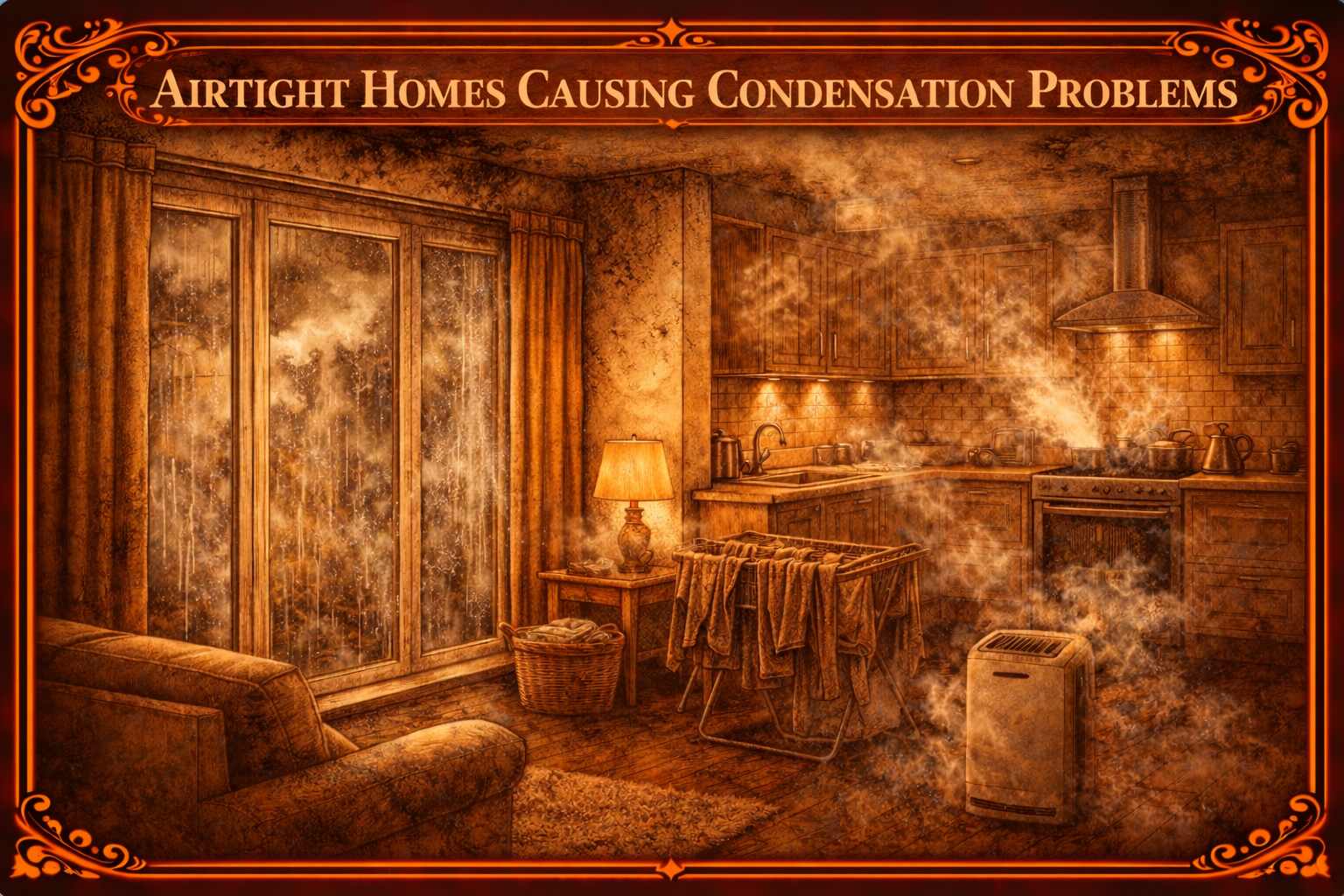
Modern building techniques often focus on creating airtight homes to improve energy efficiency. By reducing heat loss through gaps and drafts, airtight construction helps lower heating costs and improves comfort.
However, if ventilation is not properly designed, airtight homes can develop condensation and moisture problems.
Why Airtight Homes Can Cause Condensation
In traditional buildings, small gaps in walls, floors, and windows allowed air to move naturally through the structure. While this meant heat was lost, it also allowed moisture to escape.
Modern homes are designed to be far more airtight. This prevents warm air from escaping but also traps moisture inside the property.
Everyday activities generate moisture, including:
- Cooking
- Showering
- Breathing
- Drying clothes indoors
If this moisture cannot escape, humidity levels rise and condensation can form on cold surfaces.
Signs of Condensation in Airtight Homes
Condensation problems often appear gradually and may become worse during colder months.
Common signs include:
- Water droplets on windows
- Mould growth around window frames
- Damp patches on walls
- Musty smells
- Peeling wallpaper or paint
Bedrooms and bathrooms are often the most affected rooms because they generate high levels of moisture.
The Importance of Ventilation
Airtight homes require effective ventilation systems to remove excess moisture.
This may include:
- Extractor fans in kitchens and bathrooms
- Trickle vents in windows
- Mechanical ventilation systems
- Positive input ventilation systems
These systems ensure that fresh air enters the property while humid air is removed.
Managing Condensation in Airtight Homes
To reduce condensation problems, homeowners should ensure ventilation systems are working correctly and used regularly.
Opening windows when possible, using extractor fans during cooking or showering, and avoiding drying clothes indoors can also help reduce moisture levels.
Proper ventilation allows airtight homes to remain energy efficient while maintaining healthy indoor air quality.
Leave a Reply