
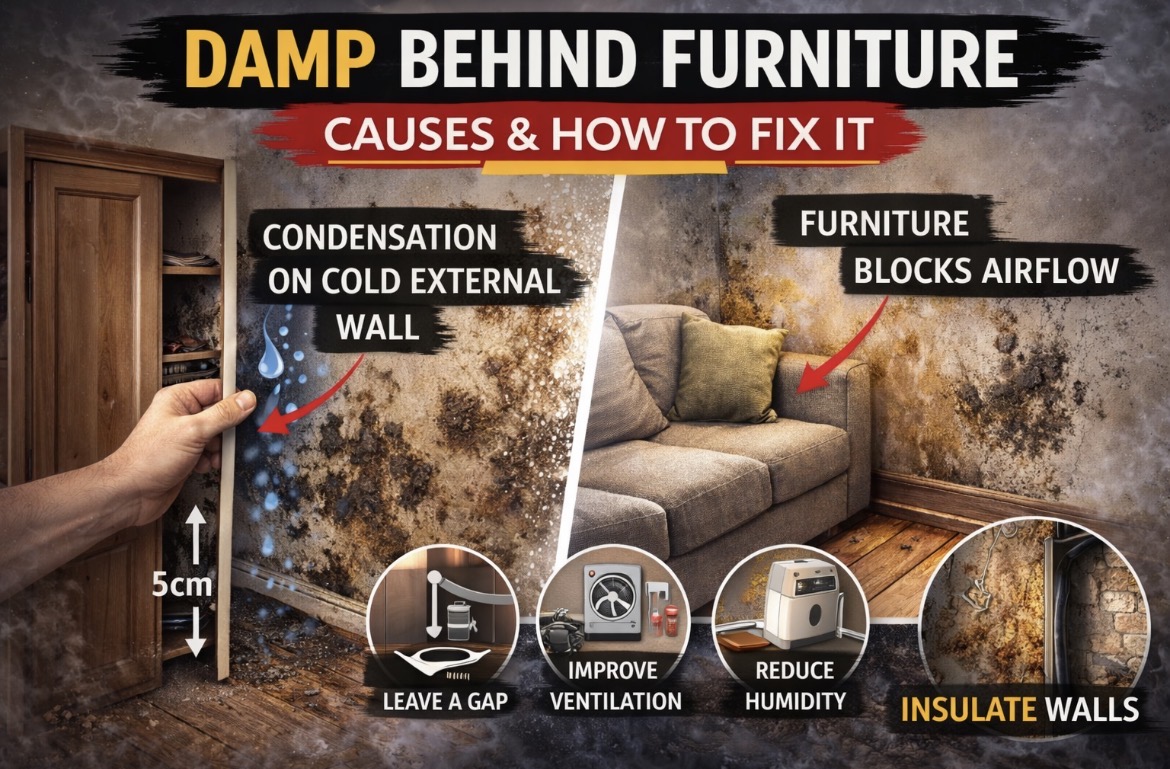
If you’ve moved a wardrobe, sofa or bed and found damp or mould behind it — you’re not alone.
In most cases, this is condensation, not rising damp.
Furniture placed against cold external walls restricts airflow and creates the perfect environment for moisture to build up.
Why Damp Forms Behind Furniture
External walls are naturally colder — especially in winter.
When warm indoor air hits a cold surface:
- Moisture condenses
- Air cannot circulate
- The area stays damp
- Mould begins to grow
Large furniture blocks ventilation, trapping humidity against the wall.
Signs It’s Condensation (Not Rising Damp)
You’re likely dealing with condensation if:
- The damp is only behind furniture
- It’s worse in winter
- There are black mould spots
- The wall feels cold to touch
- There are no tide marks near floor level
Rising damp does not usually appear mid-wall behind furniture only.
Common Risk Factors
- Furniture pushed tightly against external walls
- Solid wall properties (no cavity insulation)
- Poor ventilation
- High indoor humidity
- Drying clothes indoors
- Lack of extractor fans
Modern sealed homes can actually increase condensation problems.
How to Fix Damp Behind Furniture
Create an Air Gap
Leave at least 50mm (2 inches) between furniture and external walls.
Improve Ventilation
- Open trickle vents
- Use extractor fans
- Consider installing a PIV unit
Reduce Indoor Humidity
- Avoid drying clothes inside
- Use lids on pans
- Run a dehumidifier temporarily
Consider Insulation Improvements
If walls are extremely cold:
- Internal wall insulation
- Thermal lining paper (temporary help)
Cleaning Existing Mould
If mould is present:
- Wear gloves and mask
- Use a mould spray or diluted white vinegar
- Do not dry-brush mould
- Ensure area is fully dry before redecorating
Always fix the moisture cause first.
When It Might Not Be Condensation
Investigate further if:
- Plaster is blown or crumbling
- Salts are visible
- Damp extends beyond furniture area
- There are signs of external defects
In those cases, check for penetrating damp.
Summary
Damp behind furniture is usually caused by condensation on cold external walls, not rising damp.
Improve airflow, reduce humidity, and allow walls to breathe — and the problem will usually resolve.
Leave a Reply