
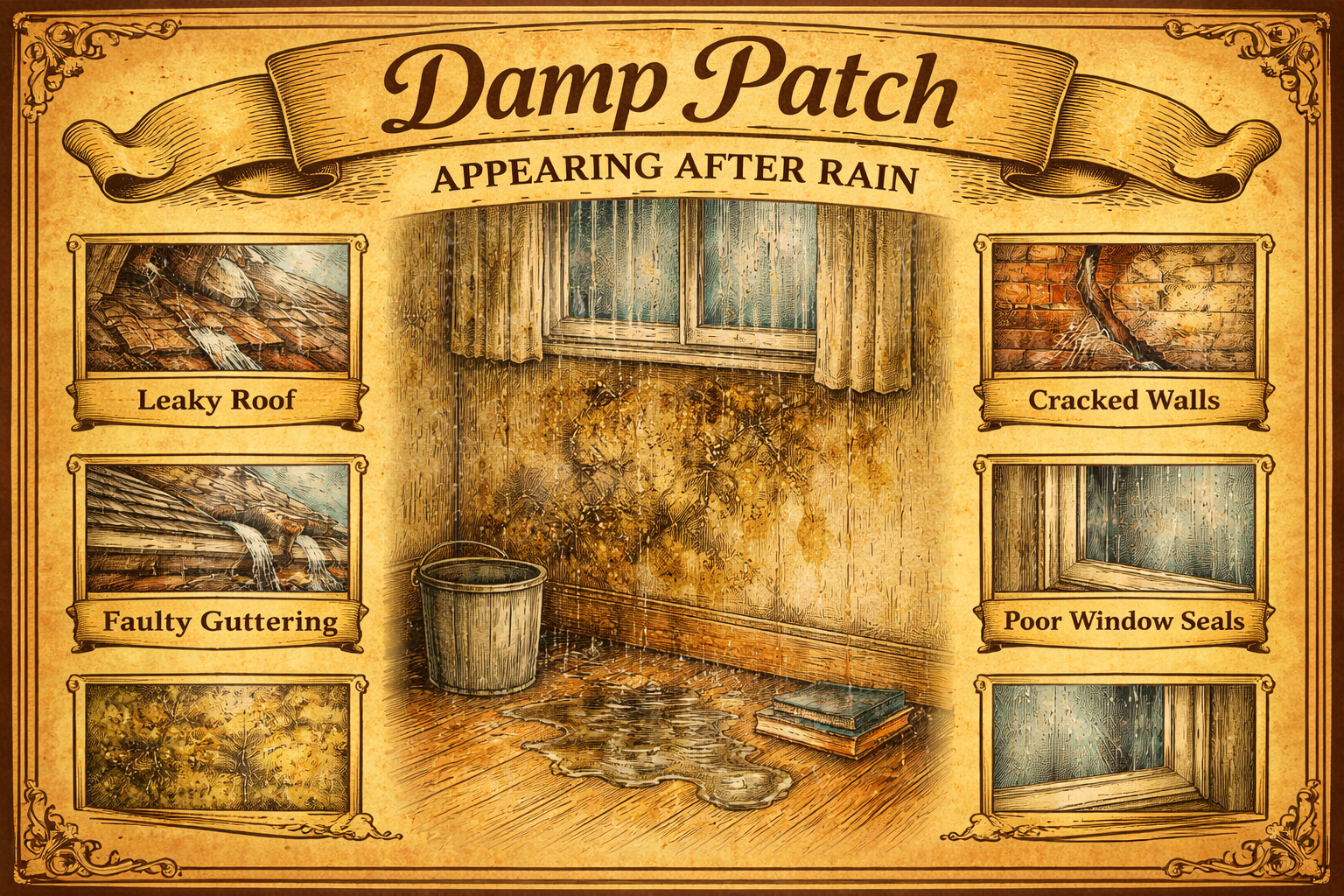
A damp patch that appears or worsens after rainfall is one of the clearest indicators of penetrating damp. Unlike condensation, which is influenced by indoor conditions, penetrating damp is caused by water entering the building from outside.
The most common causes are defects in the building’s exterior. Cracked render, damaged brickwork, and deteriorated pointing can all allow rainwater to seep into the structure. Over time, this moisture travels through the wall and appears internally as damp patches.
Guttering and downpipe issues are another major factor. Blocked or broken gutters can cause water to overflow and run down external walls, saturating them and leading to internal damp.
Roof problems, such as missing tiles or damaged flashing, can also allow water to enter from above. In these cases, damp patches may appear on upper walls or ceilings.
Windows and doors are also vulnerable points. Poorly sealed frames or degraded sealant can allow water to penetrate, particularly during heavy or wind-driven rain.
Typical signs include:
- Damp patches that worsen during or after rain
- Localised staining rather than widespread damp
- Peeling paint or plaster damage
- Visible external defects nearby
Diagnosing the issue involves inspecting the exterior of the property. Look for cracks, gaps, or areas where water may be collecting or overflowing.
Fixing penetrating damp requires addressing the source of water ingress. This may involve repointing brickwork, repairing render, clearing gutters, or fixing roof defects. Internal treatments alone will not resolve the issue.
Once repairs are complete, the affected area should be allowed to dry naturally. Depending on severity, this may take several weeks or even months.
Preventative maintenance is essential. Regular inspections of roofs, gutters, and external walls can help identify issues early. Keeping these elements in good condition is the best defence against penetrating damp.
Penetrating damp can cause significant damage if left untreated, but with prompt action and proper maintenance, it can be effectively managed and prevented.
Leave a Reply