
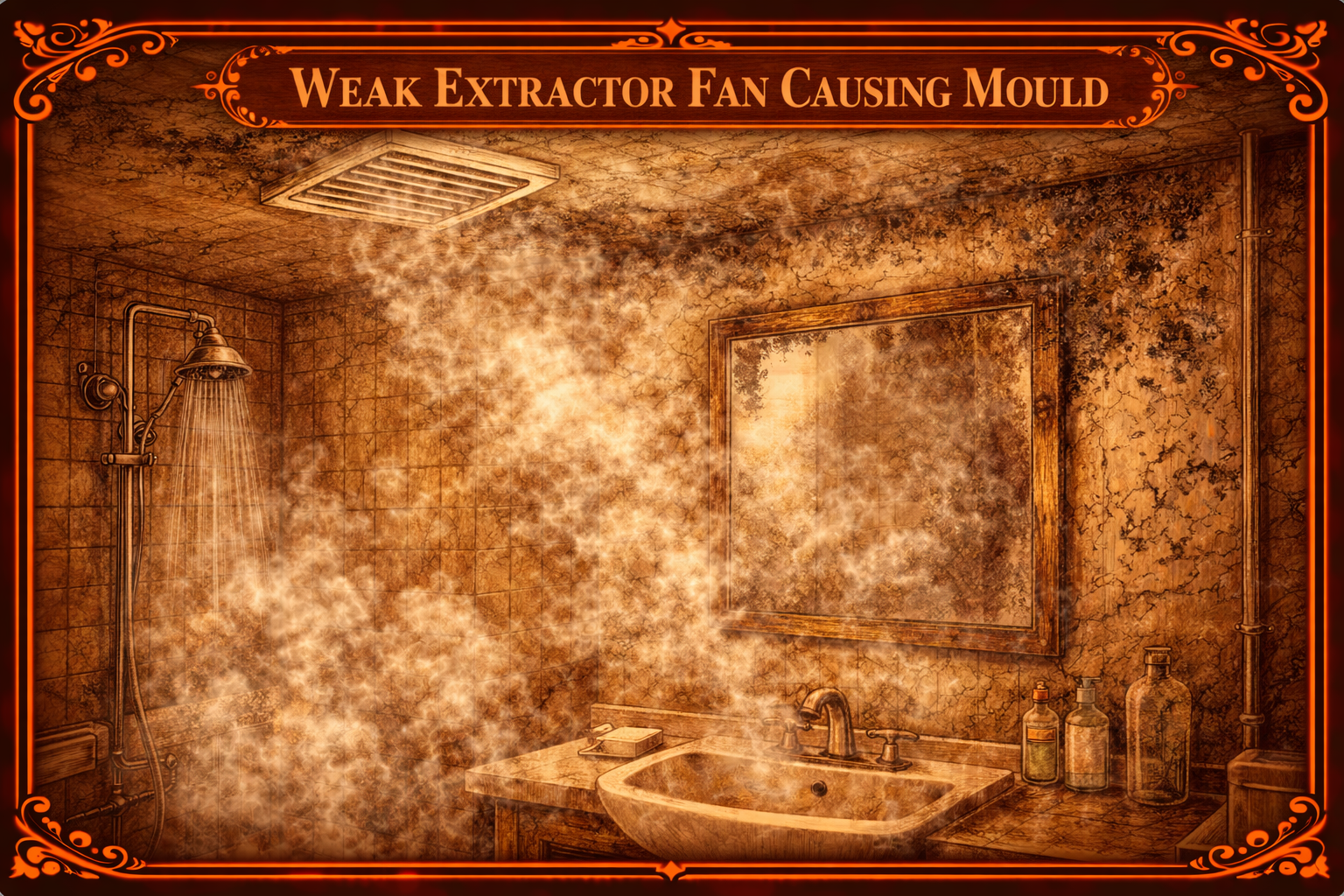
Extractor fans are an important part of household ventilation systems. They remove humid air produced by activities such as showering, bathing, and cooking.
If an extractor fan is too weak or ineffective, it may not remove moisture quickly enough. As a result, humid air remains in the room and can condense on cold surfaces.
Over time this moisture build-up can encourage mould growth on ceilings, walls, and window frames.
Signs the Extractor Fan Is Too Weak
Several signs may indicate that an extractor fan is not powerful enough to ventilate the room properly.
Common indicators include:
- Steam lingering in the bathroom after showers
- Condensation forming on mirrors and windows
- Damp patches appearing on ceilings or walls
- Mould forming in corners or around window frames
- The fan running but producing little noticeable airflow
If moisture remains in the room for long periods, ventilation may be inadequate.
Why Extractor Fans Become Weak
Extractor fans can become ineffective for several reasons.
Older fans may simply lack the airflow capacity needed for modern homes. Fans installed many years ago often have lower extraction rates than modern models.
Blocked vents, dust build-up on fan blades, or long duct runs can also reduce airflow.
In some cases the fan may be poorly positioned within the room, reducing its ability to remove humid air efficiently.
How To Fix a Weak Extractor Fan
Improving ventilation usually involves upgrading to a more powerful extractor fan designed for the size of the room.
Modern fans often include features such as:
- Higher airflow capacity
- Humidity sensors that activate automatically
- Timers that keep the fan running after use
Ensuring the fan vents outside through properly installed ducting will also improve performance and help reduce mould risk.
Leave a Reply