
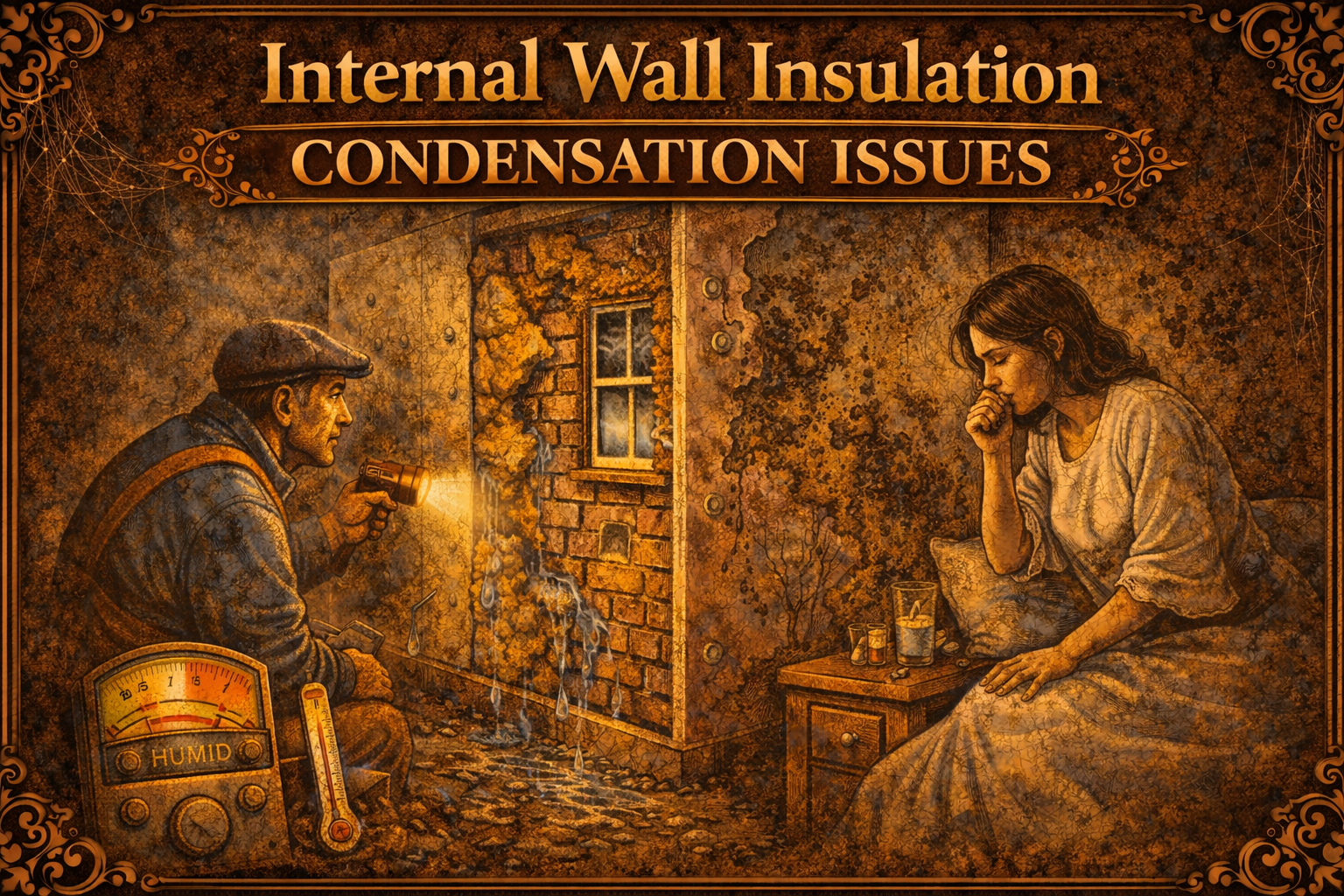
Internal wall insulation (IWI) is often used in older homes where external insulation is not possible. While it can improve thermal efficiency, it can also create condensation problems if moisture control is not properly managed.
This occurs when warm indoor air meets colder surfaces within the wall structure.
How Internal Wall Insulation Works
Internal wall insulation involves fixing insulation boards or stud walls to the inside of external walls.
These systems typically include:
- insulation boards or mineral wool
- vapour control layers
- plasterboard finishing
The aim is to prevent heat loss through solid walls.
Why Condensation Problems Occur
Condensation problems usually arise when moisture from the indoor air becomes trapped behind the insulation layer.
Common causes include:
- missing vapour barriers
- poor ventilation in the home
- gaps in insulation installation
- thermal bridging around windows and floors
When warm humid air reaches colder areas within the wall, condensation forms.
Signs of Condensation Behind Insulated Walls
Typical warning signs include:
- mould appearing on external walls
- damp smells in rooms
- cold patches on insulated walls
- mould behind furniture placed against external walls
In some cases, condensation forms behind the insulation where it cannot be easily seen.
Preventing Condensation With Internal Wall Insulation
Proper installation is essential to prevent moisture problems.
Good practice includes:
- installing a vapour control layer
- ensuring continuous insulation coverage
- improving ventilation in rooms
- controlling indoor humidity levels
These measures help reduce the risk of condensation forming inside the wall.
When to Investigate Further
If condensation or mould appears after internal wall insulation is installed, the system may need to be inspected.
A building surveyor can assess whether the insulation design is contributing to moisture problems.
Early investigation can prevent hidden damp damage developing behind the insulation.
Leave a Reply