
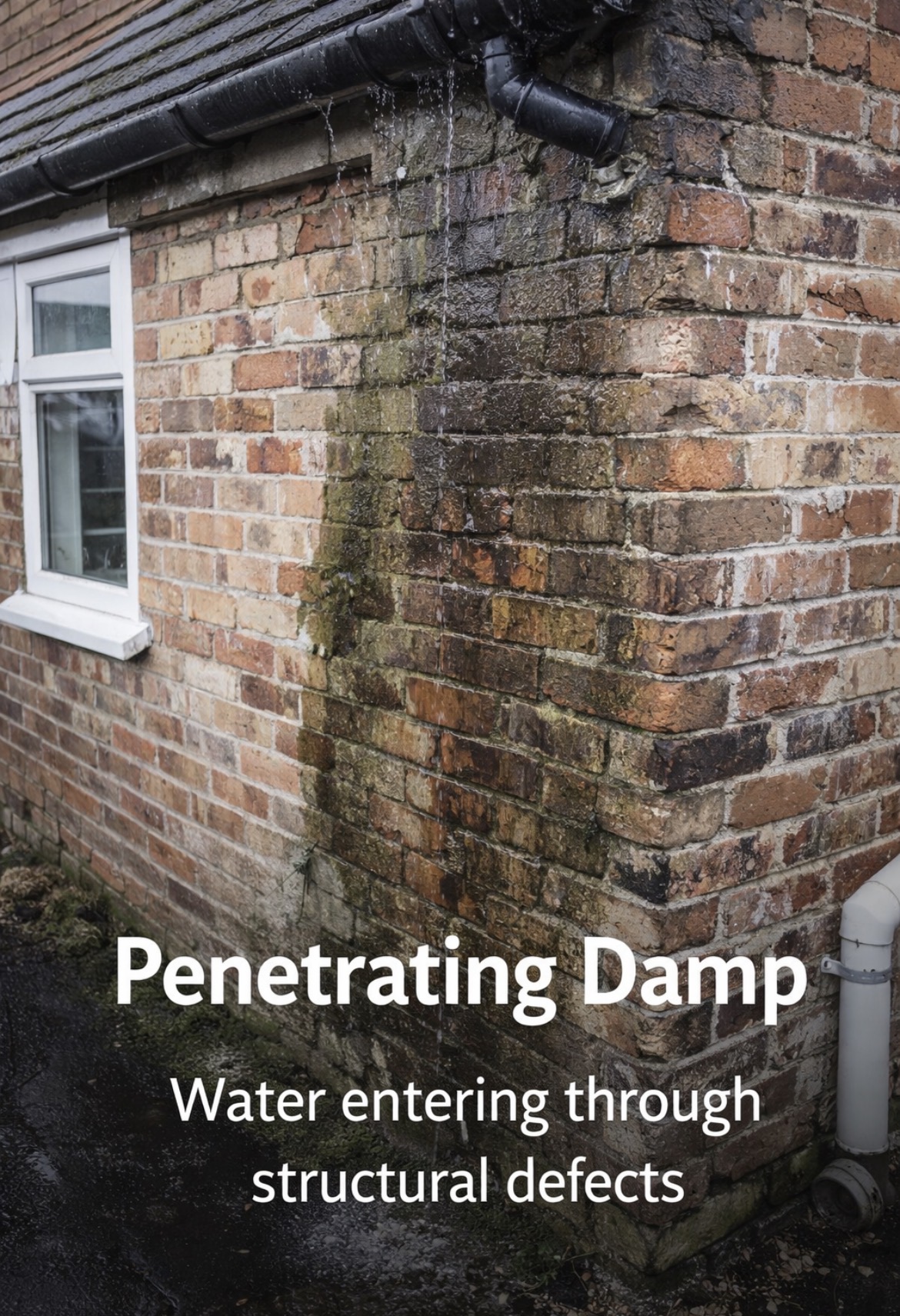
Penetrating damp occurs when water enters a building from the outside and moves through walls, roofs, or structural elements. Unlike rising damp, which comes from the ground, penetrating damp travels horizontally.
It is usually caused by defects in the building exterior.
What Causes Penetrating Damp?
Common causes include:
- Cracked brickwork
- Damaged pointing
- Faulty guttering
- Broken roof tiles
- Leaking window seals
- Cavity wall insulation issues
Water enters through structural weaknesses and soaks into walls.
Signs of Penetrating Damp
Penetrating damp often appears as:
- Damp patches on walls
- Dark staining
- Peeling paint
- Blistered plaster
- Mould in isolated areas
- Damp patches that worsen after rain
It is often localised rather than widespread.
How Is It Different From Rising Damp?
Penetrating damp:
- Can appear at any height
- Often linked to rain
- Appears on external walls
Rising damp:
- Starts at ground level
- Leaves tide marks
- Shows salt deposits
Correct diagnosis is essential.
How to Fix Penetrating Damp
Treatment depends on the source, but may include:
- Repairing brickwork
- Repointing mortar joints
- Fixing gutters and downpipes
- Replacing roof tiles
- Sealing window frames
Addressing the external defect is the priority.
Can Penetrating Damp Cause Mould?
Yes.
If moisture persists, mould may grow on affected internal surfaces.
However, structural repair is required to prevent recurrence.
Leave a Reply