
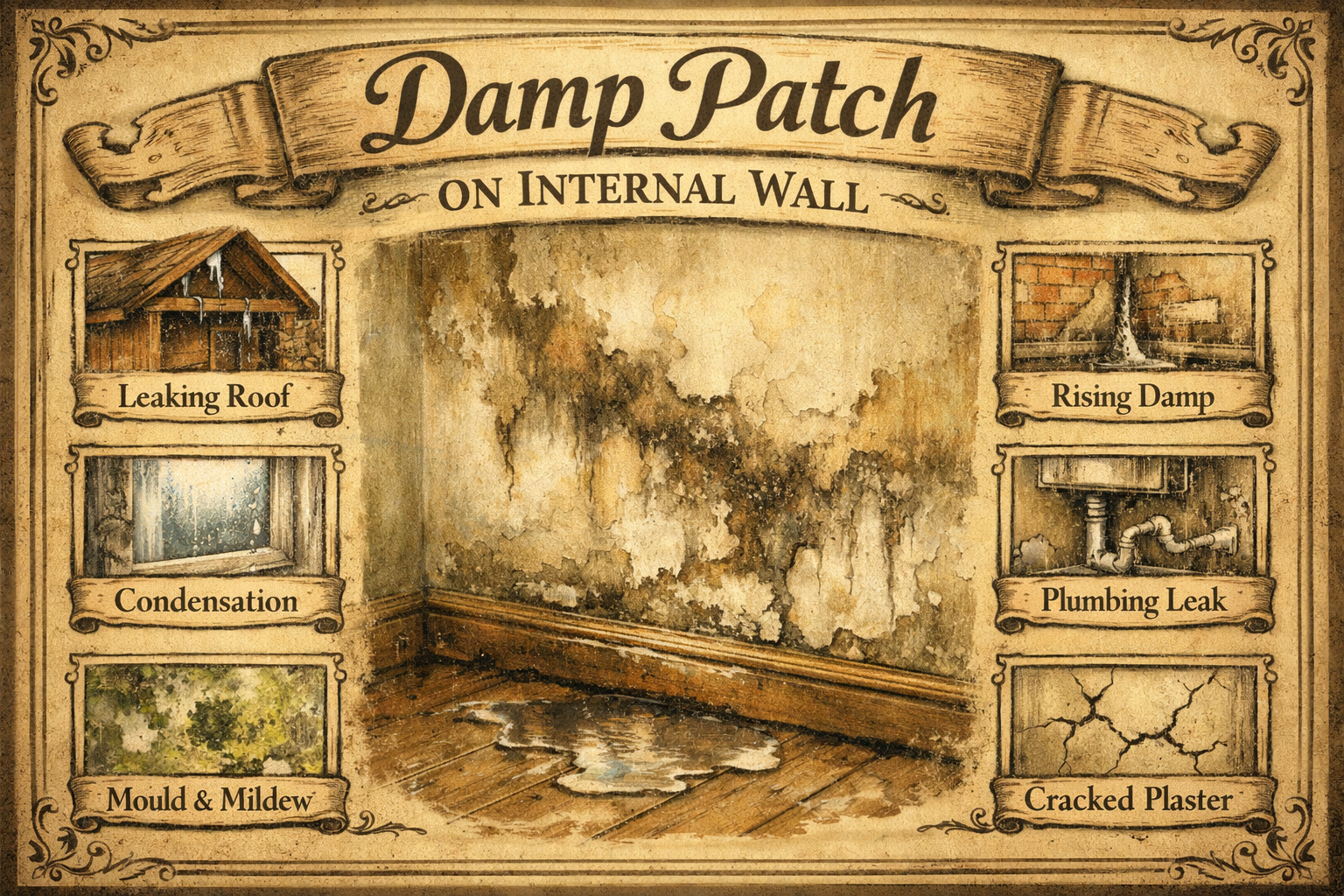
Damp patches on internal walls are one of the most common problems in UK homes, but they are often misdiagnosed. While the staining itself may look similar, the underlying causes can vary significantly — and getting it wrong can lead to wasted money and recurring issues.
The most frequent cause is condensation, particularly in modern homes where ventilation is limited. Warm air holds moisture, and when that air meets a colder internal wall surface, it condenses into water droplets. Over time, this creates visible damp patches, often accompanied by black mould. You’ll typically see this in bedrooms, living rooms, or corners of rooms where airflow is restricted.
However, not all internal wall damp is condensation. If the wall backs onto an external wall, penetrating damp is a strong possibility. Water can enter through defects such as cracked render, damaged pointing, or faulty guttering. This moisture then travels through the wall and appears internally. A key clue is whether the damp worsens after rainfall or appears as irregular patches rather than uniform condensation.
Another common but overlooked cause is hidden plumbing leaks. Internal walls often contain pipework for heating systems or water supply. Even a very slow leak can saturate plaster over time, leading to persistent damp patches that never fully dry out. If the damp area feels consistently wet to the touch, this should be investigated.
To properly diagnose the issue, ask:
- Does it worsen in cold weather (condensation)?
- Does it worsen after rain (penetrating damp)?
- Is it constantly wet regardless of conditions (leak)?
- Is there mould present (usually condensation)?
Fixing the issue depends entirely on the cause. For condensation, improving ventilation is key — opening windows, installing trickle vents, or using extractor fans can make a significant difference. Consistent heating also helps keep wall surfaces warmer, reducing condensation risk.
For penetrating damp, the solution lies outside. Repairs may include repointing brickwork, fixing cracks in render, or clearing gutters. Internal repairs alone will not solve the issue.
If a leak is suspected, it should be addressed immediately. Ignoring it can lead to structural damage and even timber decay in surrounding materials.
Preventative measures include maintaining airflow, monitoring humidity levels, and regularly inspecting both internal and external building elements. Damp on internal walls is rarely random — there is always a cause, and identifying it early is the key to a lasting fix.
Leave a Reply