
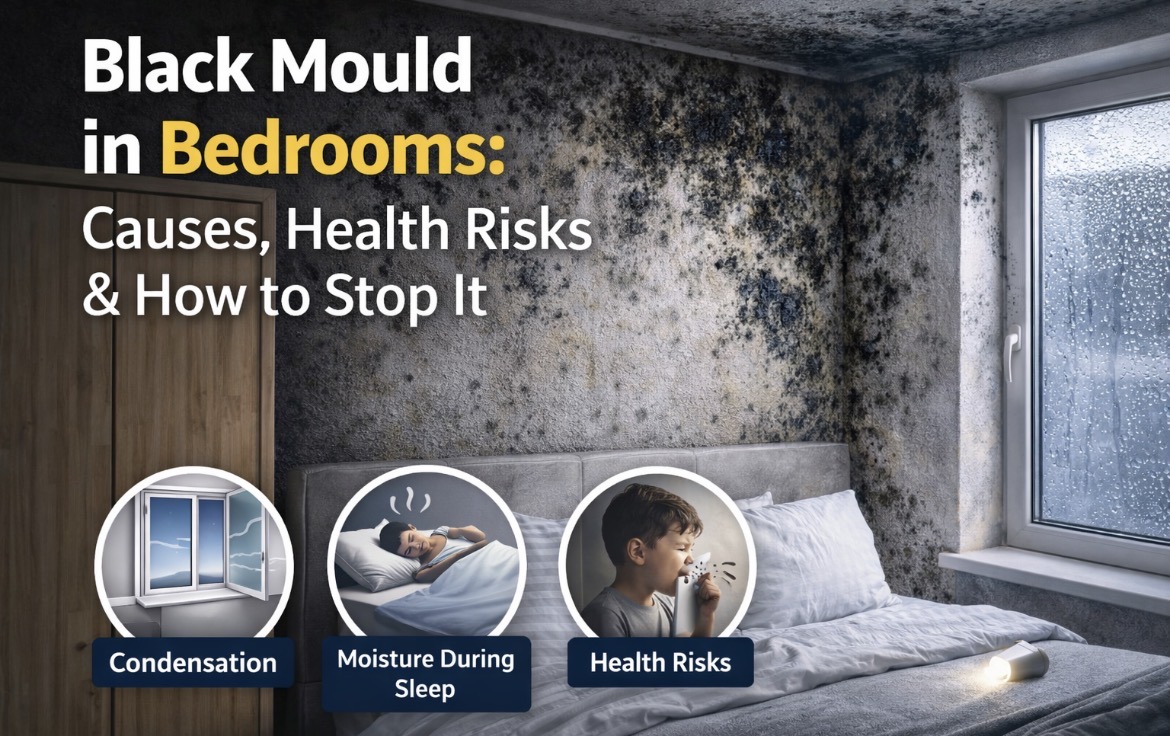
Black mould in bedrooms is one of the most common household problems, particularly during colder months. It often appears in corners, behind wardrobes, around windows or on external walls.
Because bedrooms are enclosed spaces where people spend many hours sleeping, mould in this area should never be ignored.
Why Does Black Mould Appear in Bedrooms?
Bedrooms naturally produce moisture through breathing overnight. Two adults can release significant moisture into the air while sleeping.
When this warm air meets cold walls or windows, condensation forms — creating ideal conditions for mould growth.
Common causes include:
- Poor ventilation
- Cold external walls
- Windows rarely opened
- Furniture pushed against walls
- Inconsistent heating
Is Bedroom Mould Dangerous?
Mould exposure in bedrooms can be more concerning because of prolonged exposure during sleep.
Possible symptoms include:
- Night-time coughing
- Worsened asthma
- Blocked nose in the morning
- Headaches
- Irritated eyes
Children and people with respiratory conditions may be more affected.
If symptoms improve when away from the room, mould may be contributing.
Where Does Bedroom Mould Usually Form?
Look for:
- Upper corners of external walls
- Around window frames
- Behind wardrobes
- Along ceiling edges
- On cold north-facing walls
Mould behind furniture is particularly common due to trapped air.
How to Stop Mould in Bedrooms
1. Improve Airflow
Open windows daily, even during winter, for short periods.
2. Keep Furniture Slightly Away from Walls
Leave a small gap to allow circulation.
3. Maintain Consistent Heating
Avoid letting rooms get very cold overnight.
4. Reduce Moisture in the Home
Avoid drying clothes in bedrooms.
5. Use a Dehumidifier if Needed
Especially during colder months.
Should You Clean It Yourself?
Small areas can usually be treated safely with appropriate mould cleaner.
However, if mould covers a large area or keeps returning, the underlying cause must be addressed.
Cleaning alone will not solve condensation-related mould.
When to Seek Professional Advice
If mould spreads rapidly, has a strong damp smell, or is linked to visible water damage, further investigation may be required.
Persistent mould may indicate insulation or ventilation problems.
Final Thoughts
Black mould in bedrooms is usually caused by condensation and poor ventilation. Because people spend many hours sleeping in these rooms, it’s important to address both the mould and the moisture causing it.
Improving airflow and maintaining consistent warmth are often the most effective long-term solutions.
Leave a Reply