
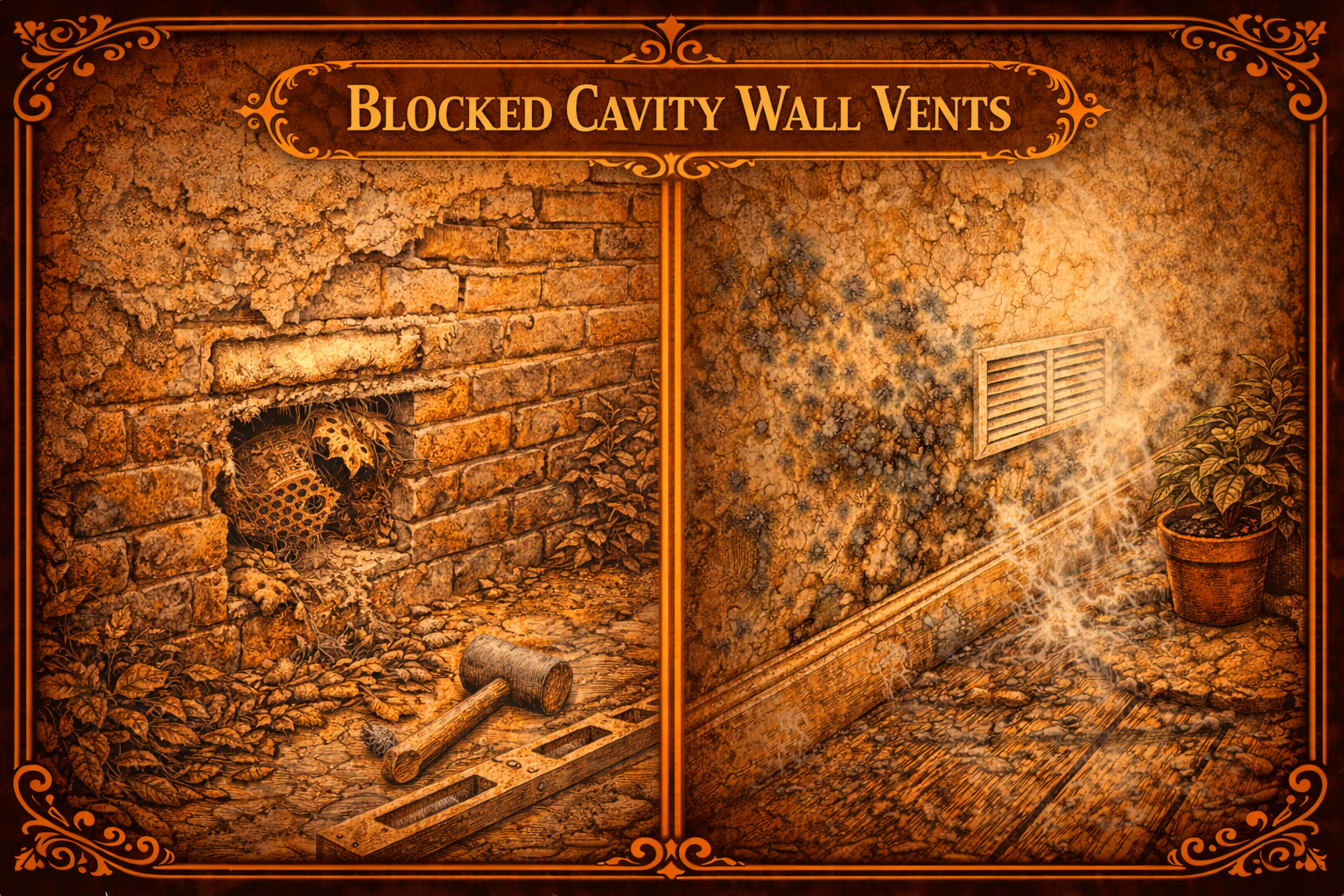
Cavity wall vents are designed to allow airflow within the cavity space between the inner and outer walls of a building. These vents help remove moisture and reduce the risk of damp problems developing inside the wall structure. When cavity wall vents become blocked, airflow is restricted and moisture may begin to accumulate.
Cavity walls are commonly used in modern construction to improve insulation and reduce moisture penetration from outside walls. However, the cavity space still requires ventilation to allow moisture to escape. Vents installed at the top and bottom of walls help maintain airflow through the cavity.
Blocked cavity wall vents can occur for a variety of reasons. Dirt, debris, insect nests, or building materials may obstruct the ventilation openings. In some cases, external renovations such as rendering, insulation installation, or landscaping work may accidentally cover or block the vents.
When airflow inside the cavity is restricted, moisture can become trapped between the walls. This may eventually lead to damp patches appearing on internal walls or cause insulation materials inside the cavity to become wet.
Over time, trapped moisture can also affect the structural materials within the wall. Brickwork, mortar, and insulation may deteriorate if exposed to prolonged damp conditions.
Signs of blocked cavity wall vents may include damp patches on internal walls, mould growth near corners, or a musty smell within certain rooms of the property. In some cases, external walls may also show signs of moisture staining.
Inspecting cavity wall vents usually involves checking the external walls of the property for visible ventilation openings. These vents should remain clear and unobstructed to allow air to move freely through the cavity.
Clearing debris or removing obstructions from cavity wall vents can help restore airflow and reduce moisture levels inside the wall structure. Regular inspection of ventilation openings can help prevent damp problems from developing in the future.
Leave a Reply