
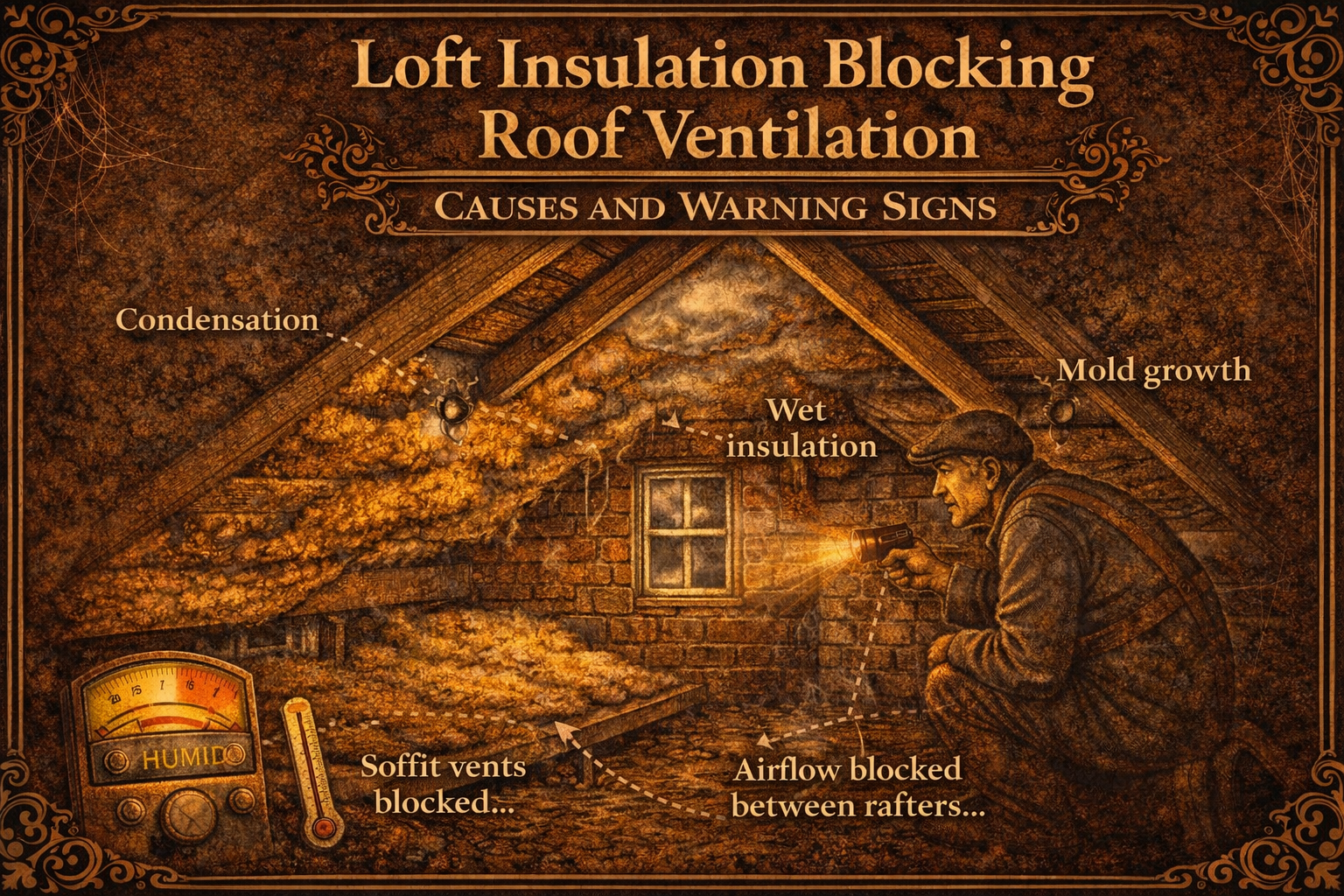
Loft insulation is an important part of improving home energy efficiency. However, problems can occur when insulation is installed incorrectly and blocks essential roof ventilation.
Roof spaces rely on airflow to remove moisture and prevent condensation. When insulation blocks vents or airflow paths, moisture can build up in the loft and cause damp problems.
Why Roof Ventilation Is Important
Most pitched roofs rely on ventilation to allow moisture to escape from the loft space.
Sources of moisture in a loft include:
- warm air rising from the home below
- bathroom and kitchen humidity
- natural moisture from building materials
Roof vents, soffit vents, and ridge ventilation allow air to circulate and carry this moisture away.
How Insulation Can Block Ventilation
Problems often occur when loft insulation is installed too tightly against the roof structure.
Common issues include:
- insulation covering soffit vents
- insulation pushed into the eaves
- insulation blocking airflow between rafters
- poorly installed insulation boards
When ventilation is blocked, moisture becomes trapped inside the loft.
Signs of Ventilation Problems in a Loft
When roof ventilation is restricted, several warning signs may appear.
These can include:
- condensation forming on roof timbers
- damp insulation material
- mould growth on rafters
- musty smells in the loft
- water droplets on roofing felt
If left untreated, trapped moisture can eventually damage timber roof structures.
Fixing Ventilation Problems
Solutions usually involve restoring proper airflow within the loft space.
Possible measures include:
- installing ventilation trays
- clearing insulation away from eaves
- improving roof vent systems
- adjusting insulation placement
Ensuring adequate ventilation helps prevent condensation and protects the roof structure.
Leave a Reply