
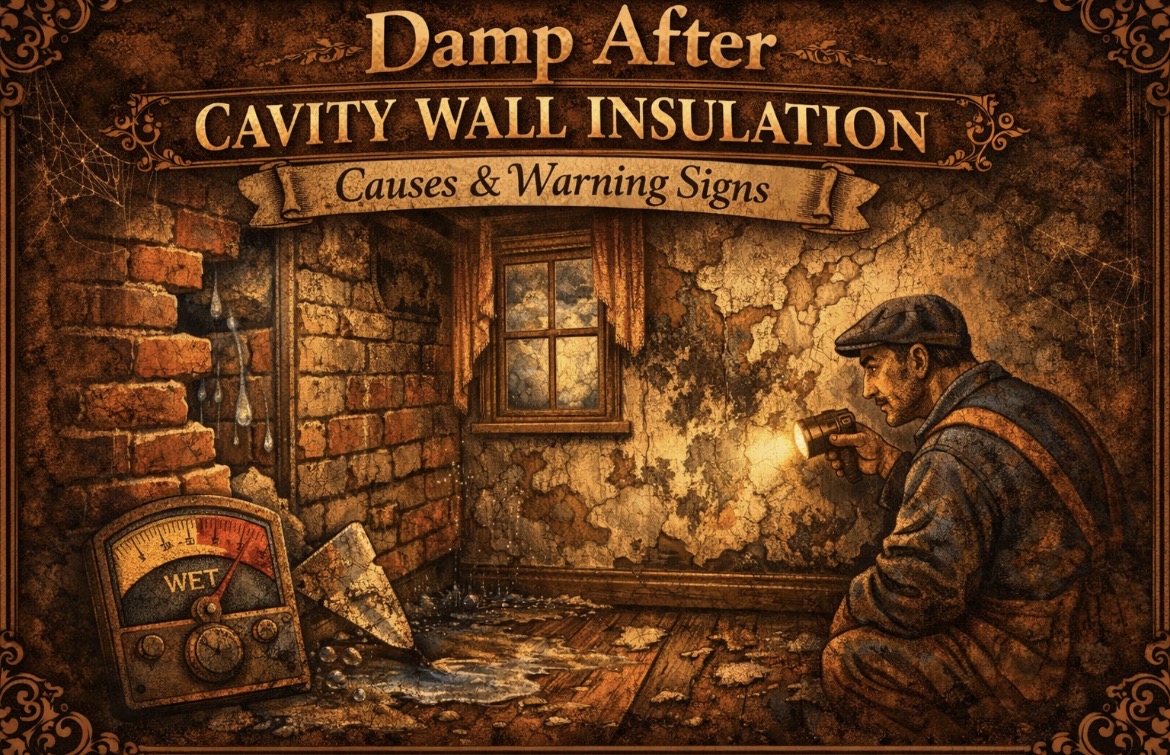
Cavity wall insulation can improve energy efficiency, but in some homes it can also cause serious damp problems. Many UK homeowners report damp patches, mould growth, and cold walls after insulation has been installed.
This usually happens when moisture becomes trapped in the cavity or when the insulation material allows water to bridge across the wall.
Understanding the causes can help identify whether cavity wall insulation is responsible for the problem.
Why Cavity Wall Insulation Can Cause Damp
Cavity walls were originally designed with an air gap between the inner and outer wall. This gap helps prevent rainwater from reaching the inside of the property.
When insulation is injected into the cavity, this space is filled with material such as:
- mineral wool
- polystyrene beads
- foam insulation
If the property is exposed to heavy weather or the walls are unsuitable for insulation, the material can allow moisture to travel across the cavity.
In some cases, the insulation itself can absorb water and hold it against the internal wall.
Common Signs of Damp After Cavity Wall Insulation
Homeowners often notice problems months or even years after installation.
Typical signs include:
- damp patches on internal walls
- black mould forming on external walls
- cold or clammy walls
- peeling paint or wallpaper
- musty smells in rooms
The damp often appears on walls facing prevailing wind and rain.
Homes Most at Risk
Not every property is suitable for cavity wall insulation.
Properties more likely to develop problems include:
- homes in exposed coastal or windy locations
- properties with cracked external brickwork
- narrow cavity walls
- older buildings with porous bricks
If these issues exist, rainwater can penetrate the outer wall and travel through the insulation.
How to Fix Damp Caused by Cavity Wall Insulation
Solutions depend on the severity of the problem.
Possible remedies include:
Improving external wall protection
Repairing damaged brickwork or repointing mortar joints can help reduce water penetration.
Installing better ventilation
Reducing indoor humidity can help prevent mould growth.
Removing the insulation
In severe cases, contractors may recommend removing the cavity insulation entirely using specialist extraction equipment.
This is sometimes the only permanent solution if the insulation is saturated with moisture.
When to Seek Professional Advice
If damp started appearing after cavity wall insulation was installed, a specialist survey may be needed to confirm the cause.
A qualified surveyor can inspect the cavity and determine whether the insulation is contributing to the problem.
Early investigation can prevent further damage to internal walls and finishes.
Leave a Reply