
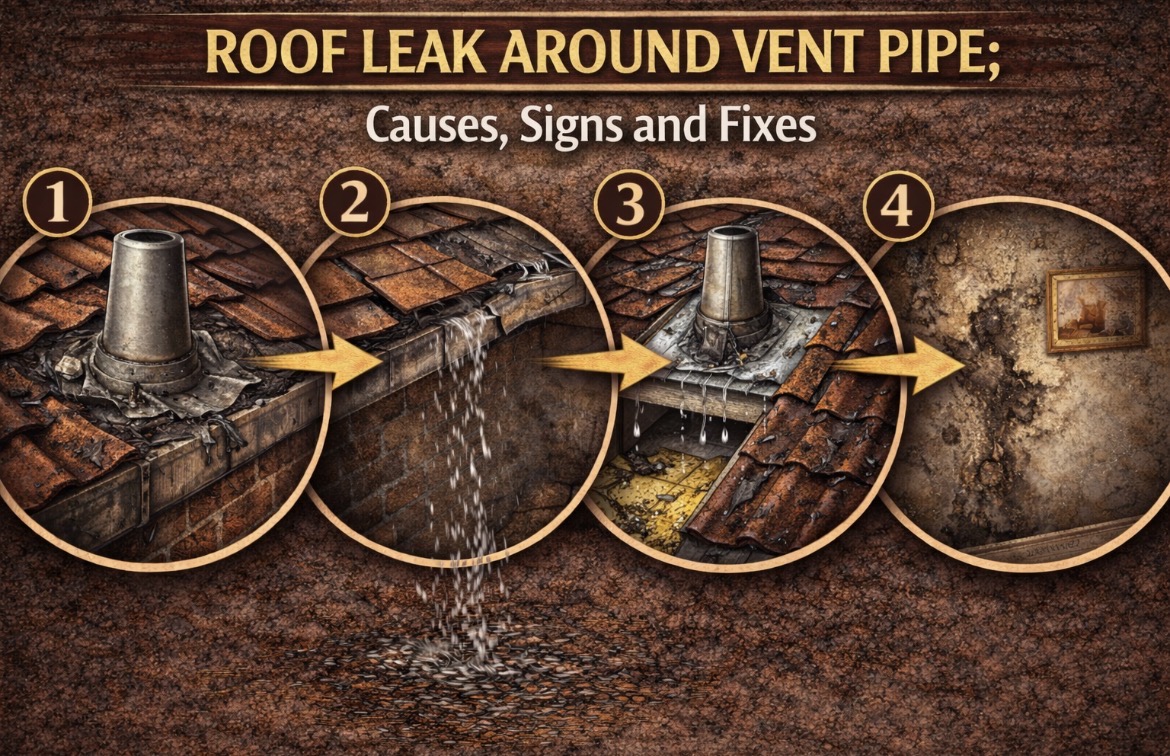
A roof vent pipe allows air to escape from plumbing systems and is an essential part of most homes. However, the area around a vent pipe can sometimes develop leaks, especially if the waterproof seal around the pipe becomes damaged or worn.
If you notice water stains on the ceiling near a vent pipe location or dampness in the loft, the leak may be coming from the roof penetration around the pipe.
Understanding the common causes can help identify the issue early and prevent further damage to the roof structure.
Signs of a Roof Leak Around a Vent Pipe
Leaks around vent pipes are not always immediately obvious. In many cases, the water enters slowly and appears inside the property some distance from the pipe.
Common warning signs include:
- Water stains on ceilings near bathrooms or kitchens
- Damp patches in the loft around the vent pipe
- Dripping water during heavy rain
- Mould or mildew forming near the ceiling
- Damp insulation around the pipe penetration in the attic
Leaks may become more noticeable during prolonged rainfall or after storms.
Common Causes of Vent Pipe Roof Leaks
1. Damaged or cracked pipe flashing
Flashing is the waterproof seal installed around the base of the vent pipe where it passes through the roof.
Many vent pipes use a rubber or lead flashing boot to prevent water from entering the roof.
Over time this flashing can crack, split, or deteriorate due to weather exposure and UV damage.
This is one of the most common causes of leaks around vent pipes.
2. Loose or damaged roof tiles
Roof tiles surrounding the pipe may become loose or cracked due to age, wind, or storm damage.
If tiles shift out of position, rainwater can enter beneath the roofing materials and travel along the roof structure before appearing inside the home.
3. Poor installation
If the vent pipe flashing was not installed correctly when the roof was built or repaired, gaps may exist around the pipe base.
Water can enter these gaps and slowly penetrate the roof structure.
Poor installation is often revealed during heavy rainfall.
4. Sealant failure
Roofing sealants used around flashing and roof penetrations can deteriorate over time.
When sealant cracks or separates from the flashing, small gaps may allow rainwater to enter.
5. Blocked or damaged vent pipe
Although less common, a damaged vent pipe or blockage can sometimes cause moisture problems around the roof penetration.
This may allow water to collect around the base of the pipe and eventually enter the roof.
How Serious Is a Vent Pipe Leak?
Even small leaks should be taken seriously.
Water entering through a roof penetration can damage:
- Roof timbers
- Loft insulation
- Ceiling plasterboard
- Internal decorations
If left untreated, the moisture can also lead to mould growth and timber decay.
Early repair usually prevents more costly damage later.
Temporary Fixes for a Vent Pipe Leak
Some temporary measures may help reduce water entry until a permanent repair is carried out.
Possible short-term solutions include:
- Applying roofing sealant around small flashing gaps
- Clearing debris around the pipe area
- Checking surrounding tiles for visible damage
These solutions should only be considered temporary until proper repairs are made.
When to Call a Roofing Professional
If water continues to enter the roof during rainfall or signs of damp appear in the loft, it may be necessary to have the roof inspected.
A roofing professional can determine whether the flashing, roof tiles, or vent pipe itself requires repair or replacement.
Early inspection can prevent further structural damage to the roof.
Preventing Vent Pipe Roof Leaks
Regular roof inspections can help reduce the risk of leaks around vent pipes.
Preventative maintenance may include:
- Inspecting roof penetrations after storms
- Checking flashing around pipes and chimneys
- Replacing cracked or damaged tiles
- Ensuring roof sealants remain intact
Maintaining these areas helps keep the roof watertight.
Final Thoughts
A roof leak around a vent pipe is usually caused by damaged flashing, worn sealant, or nearby roof tile problems.
Although these leaks often start small, they can lead to more serious roof damage if left unresolved.
Identifying the cause early can help prevent costly repairs and protect the roof structure from long-term moisture damage.
Leave a Reply