
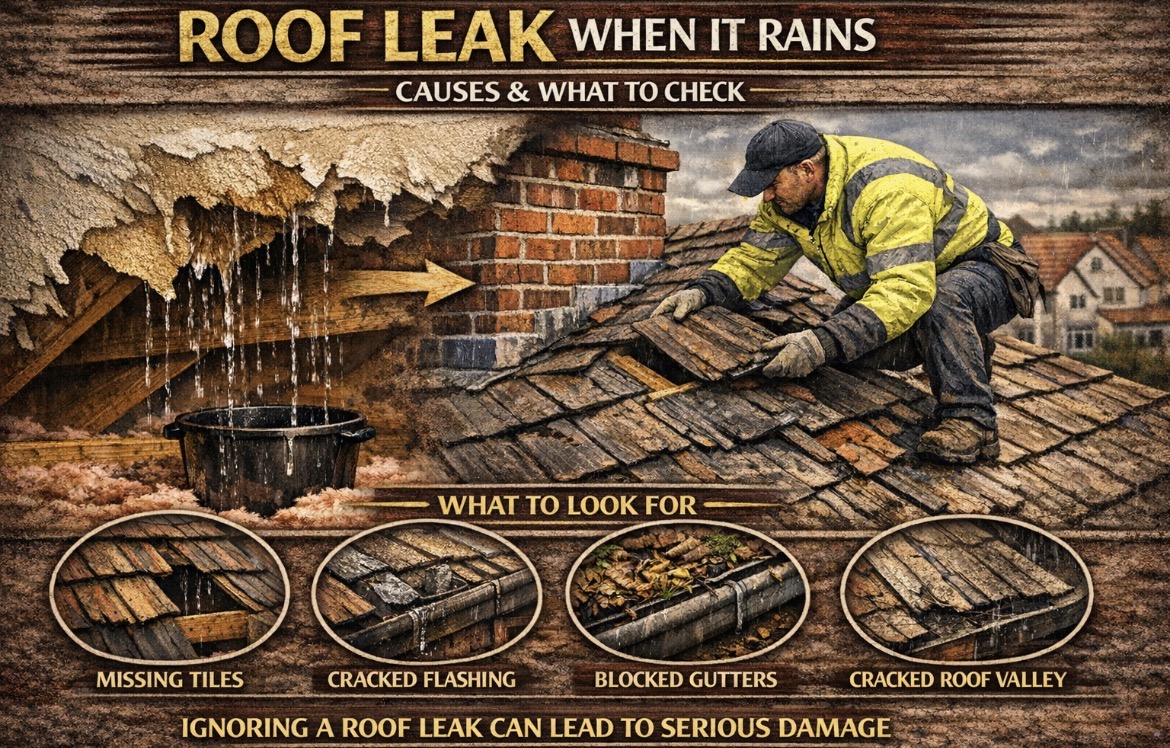
A roof that leaks during rainfall is usually a sign that water is penetrating the external roof covering or flashing. Even small defects can allow water to travel along rafters and appear somewhere completely different inside the property.
Roof leaks should be investigated quickly, as ongoing water penetration can lead to timber decay, mould growth, and internal plaster damage.
Common Causes of Roof Leaks
Missing or Broken Roof Tiles
Tiles can crack, slip, or break during storms or strong winds. When this happens, rainwater can enter the roof structure.
Signs include:
- Damp patches on ceilings
- Water dripping in loft spaces
- Visible gaps in roof tiles
Damaged Lead Flashing
Flashing seals joints where roofs meet chimneys, walls, or dormers.
If flashing becomes loose or cracked, rainwater can enter around these vulnerable junctions.
Overflowing gutters can force water back under the roof edge.
This often causes:
- Damp walls
- Rotting fascia boards
- Water entering loft spaces
Cracked Roof Valleys
Roof valleys carry a large volume of rainwater.
If the lining becomes damaged or deteriorates, water can penetrate the roof beneath the tiles.
Signs of a Roof Leak Inside the House
Typical indicators include:
- Brown ceiling stains
- Damp patches on walls
- Peeling paint
- Musty smells in loft spaces
These symptoms are often confused with penetrating damp or condensation, so identifying the source is important.
What to Check Safely
From ground level you can look for:
- Missing tiles
- Sagging guttering
- Moss blocking valleys
- Debris in gutters
Avoid climbing onto the roof unless trained and equipped.
When to Call a Professional
A roofing contractor should be contacted if:
- Water is actively entering the property
- Structural timbers appear wet or rotten
- Ceiling plaster is bulging or sagging
Early repair usually prevents much more expensive structural damage.
2. Missing Roof Tiles: A Small Problem That Causes Big Damage
Permalink
/missing-roof-tiles/
Meta description
Missing roof tiles can quickly lead to roof leaks and damp problems. Learn the warning signs and how to prevent serious roof damage.
Why Missing Roof Tiles Matter
A single missing roof tile can allow rainwater to enter the roof structure.
Once water gets beneath the tile covering it can travel along roof timbers before appearing inside the house.
This often results in ceiling stains, damp insulation, and timber decay.
Why Roof Tiles Go Missing
Common reasons include:
Storm Damage
Strong winds can lift tiles from the roof, particularly on exposed properties.
Old Fixings
Older roofs often rely on nails or mortar that deteriorates over time.
Frost Damage
Water trapped in tiles can freeze and cause cracking.
Signs a Tile Is Missing
You may notice:
- A visible gap on the roof
- Debris or broken tiles on the ground
- Water staining on ceilings
- Damp loft insulation
Sometimes the problem is only visible from the loft, where daylight can be seen through the roof covering.
How Quickly Should It Be Fixed?
Missing tiles should be repaired as soon as possible.
Even a small gap can allow significant rainwater entry during heavy weather.
Prompt repair usually prevents:
- Internal damp problems
- Structural timber damage
- Expensive ceiling repairs
Preventing Roof Problems
Regular visual checks from ground level can help identify early defects.
Look for:
- Slipped tiles
- Moss build-up
- Damaged flashing
- Blocked gutters
Early maintenance can significantly extend the life of a roof.
Leave a Reply