
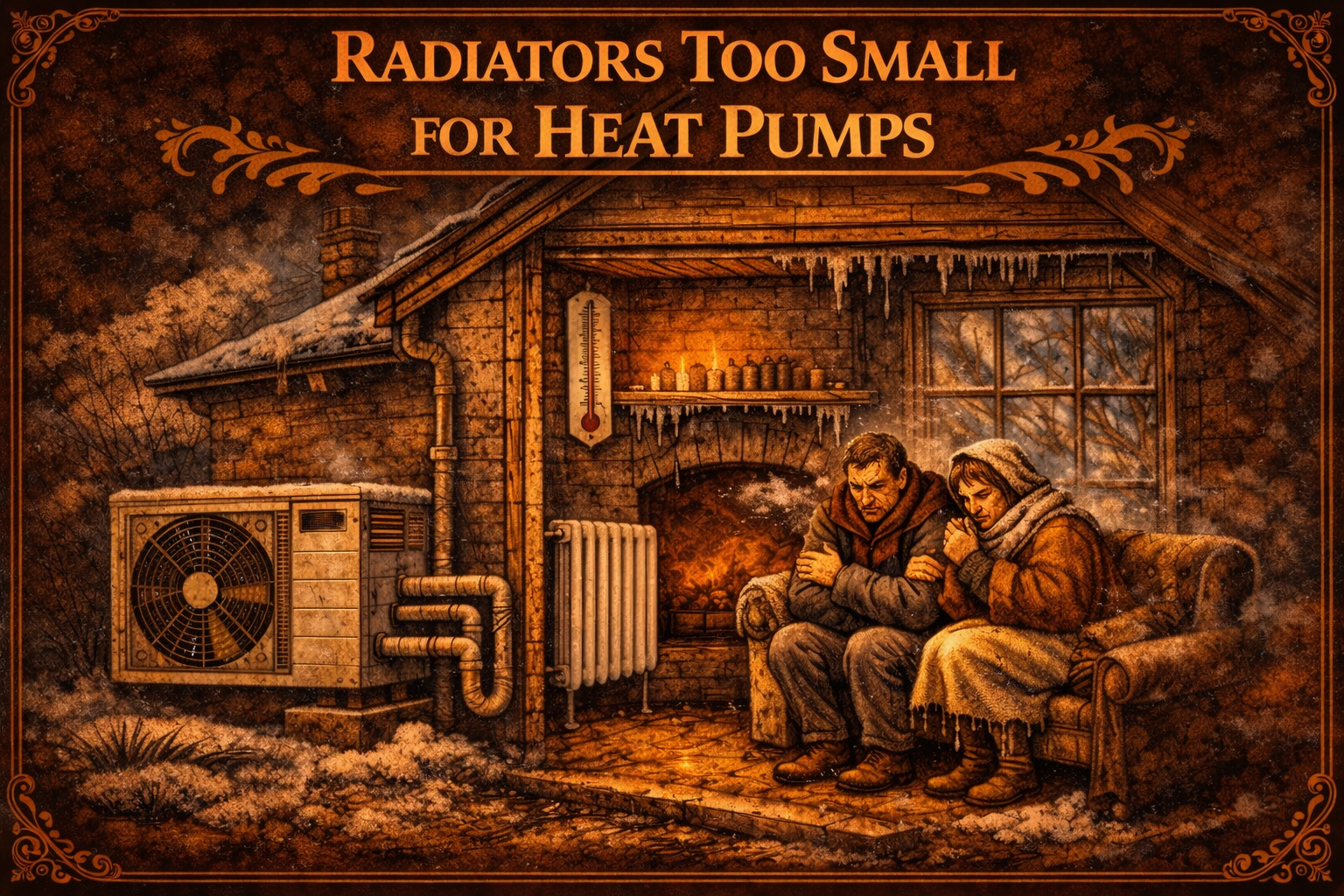
Heat pumps operate at lower temperatures than traditional gas boilers. Because of this, radiators must often be larger in order to deliver the same amount of heat into a room.
If existing radiators are too small, homeowners may find their house remains cold even when the heating system is running continuously.
This issue is commonly reported in properties that have switched from gas boilers to heat pump systems without upgrading the radiators.
Why Radiator Size Is Important
Traditional boilers typically heat water to temperatures between 65°C and 80°C. This allows relatively small radiators to heat rooms quickly.
Heat pumps usually operate at much lower temperatures, often between 35°C and 55°C.
Because the water temperature is lower, radiators must have a larger surface area to transfer sufficient heat into the room.
If radiators are too small, they simply cannot release enough heat to warm the space.
Signs Radiators May Be Undersized
Several symptoms can indicate that radiators are too small for a heat pump system.
These include:
- rooms taking a long time to warm up
- radiators feeling only slightly warm
- certain rooms remaining colder than others
- the heat pump running constantly
- thermostat temperatures not being reached
These problems are particularly noticeable during colder winter weather.
How Radiator Size Is Assessed
Heating engineers can calculate the correct radiator size for each room using heat loss calculations.
These calculations consider factors such as:
- room size
- insulation levels
- window size and type
- external wall exposure
This helps determine whether existing radiators can provide enough heat.
How the Problem Is Fixed
If radiators are too small, several solutions may be used:
- replacing radiators with larger models
- installing additional radiators
- using fan-assisted radiators designed for low-temperature systems
- installing underfloor heating systems
Once the heating emitters are correctly sized, the heat pump system can operate much more effectively.
Leave a Reply