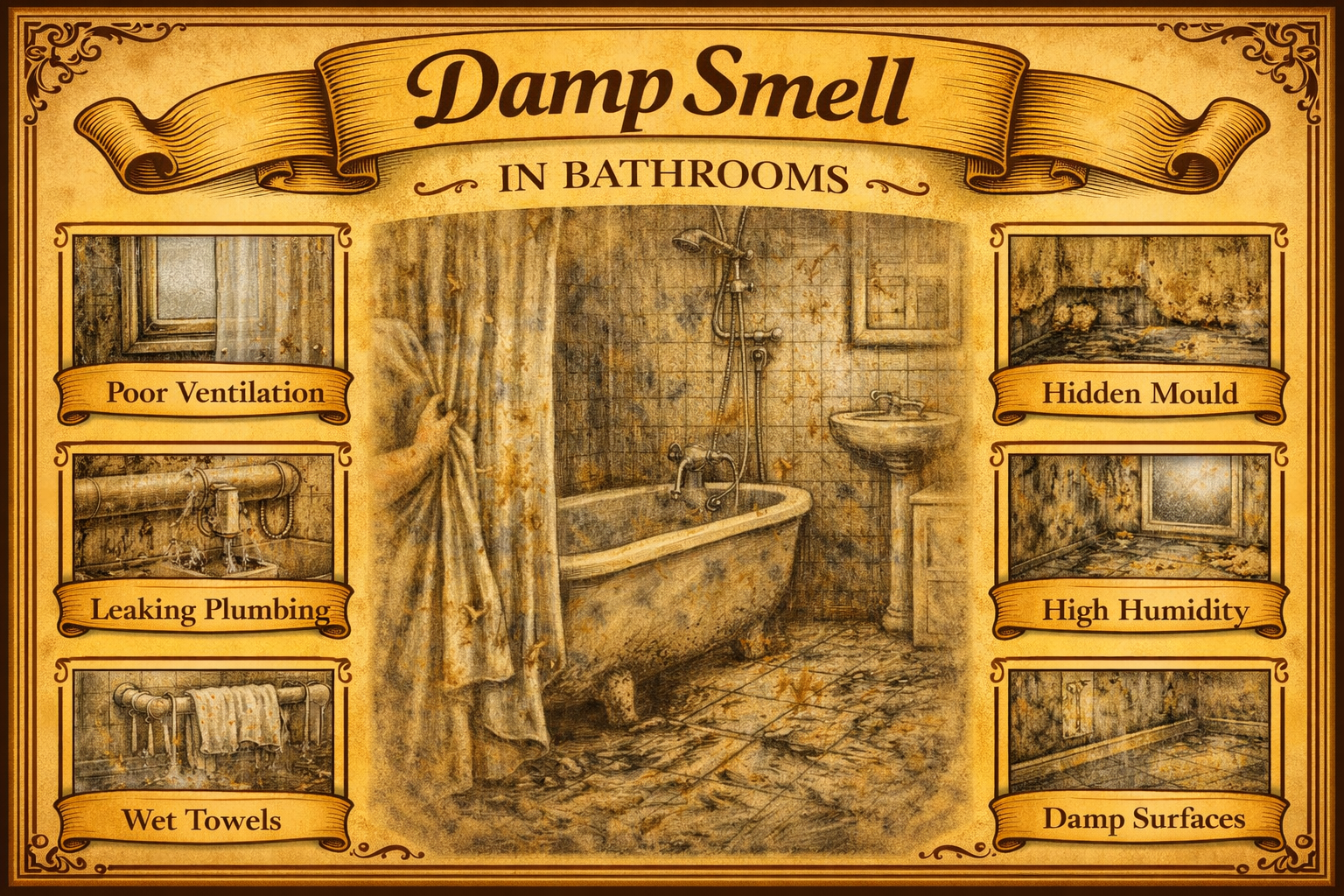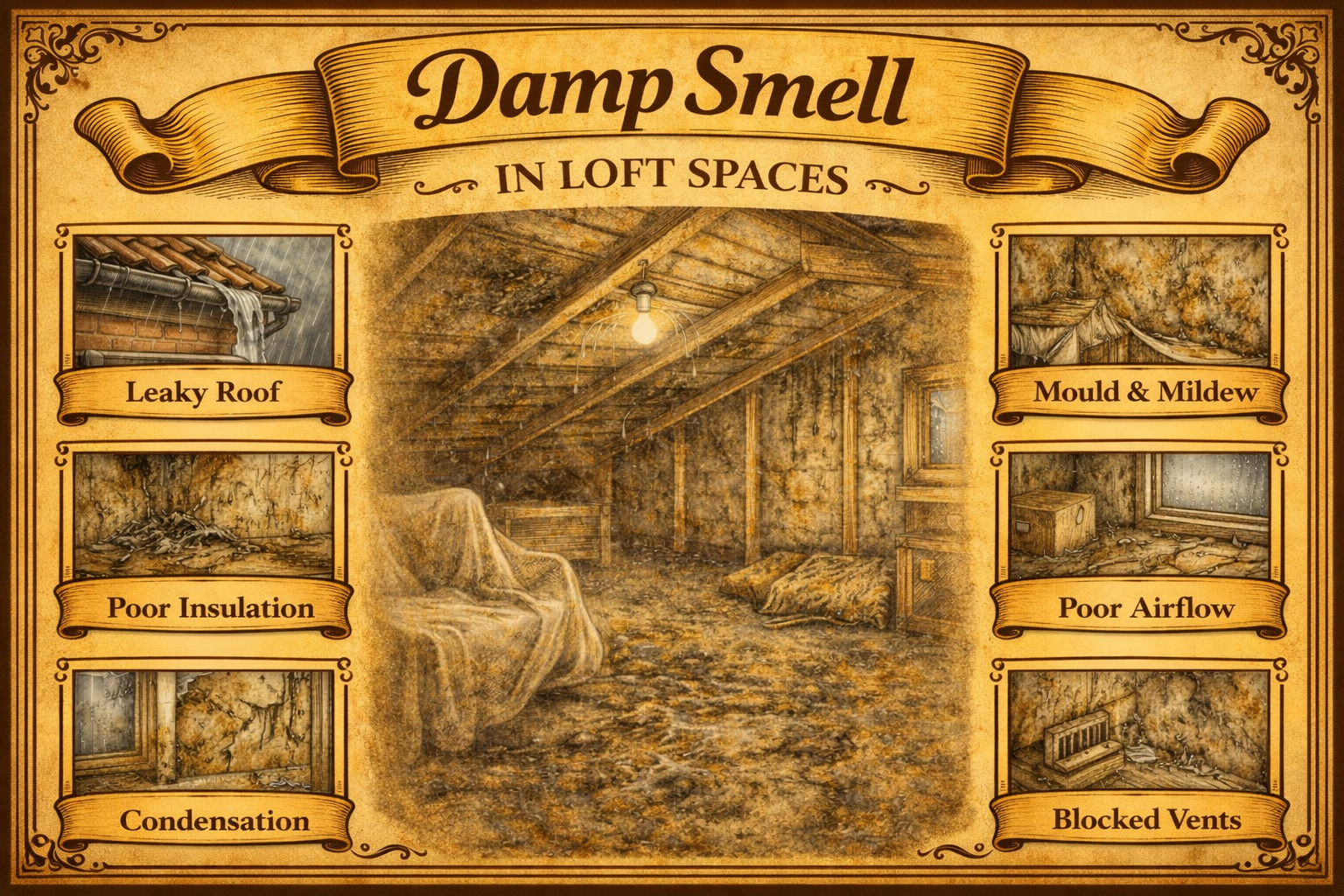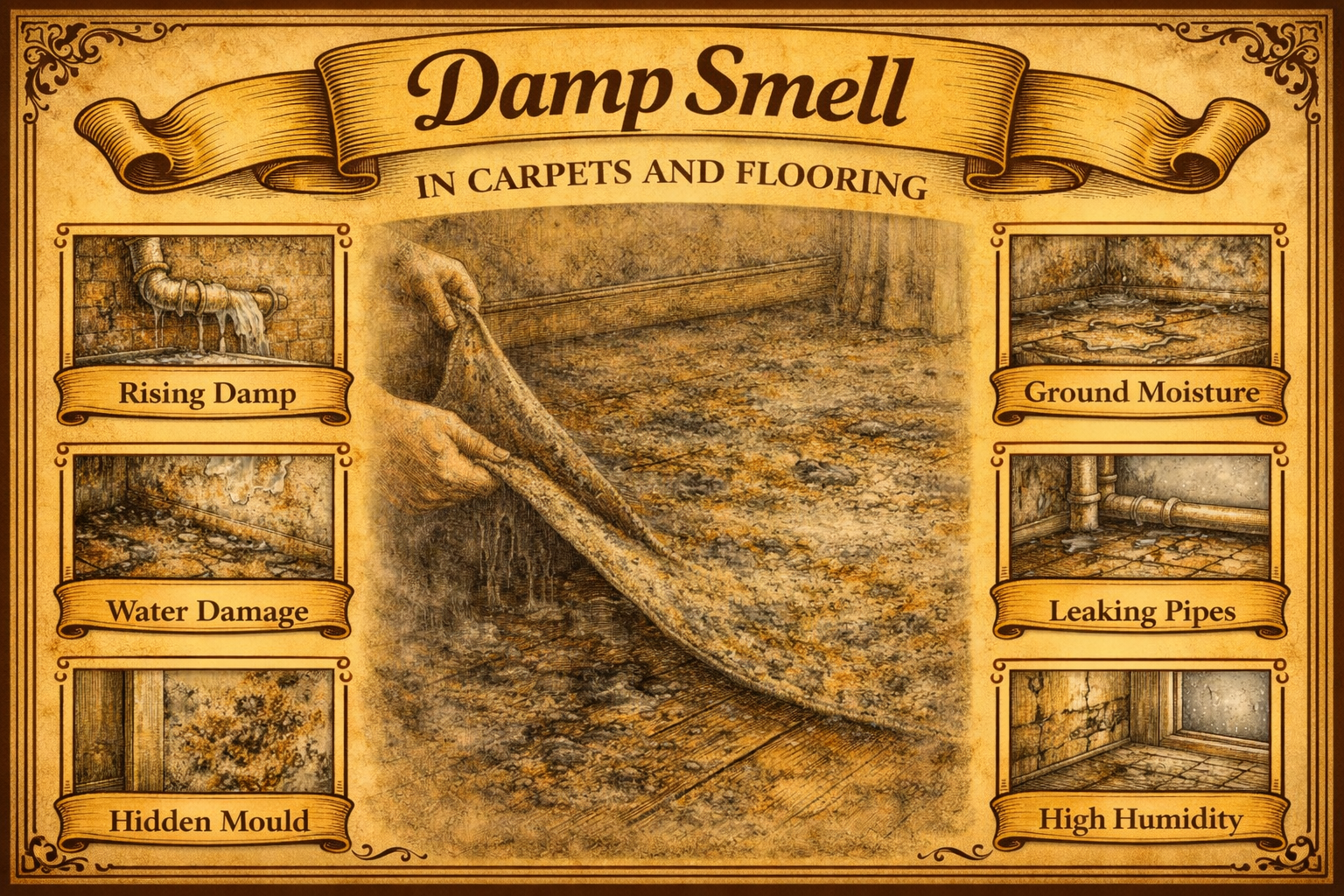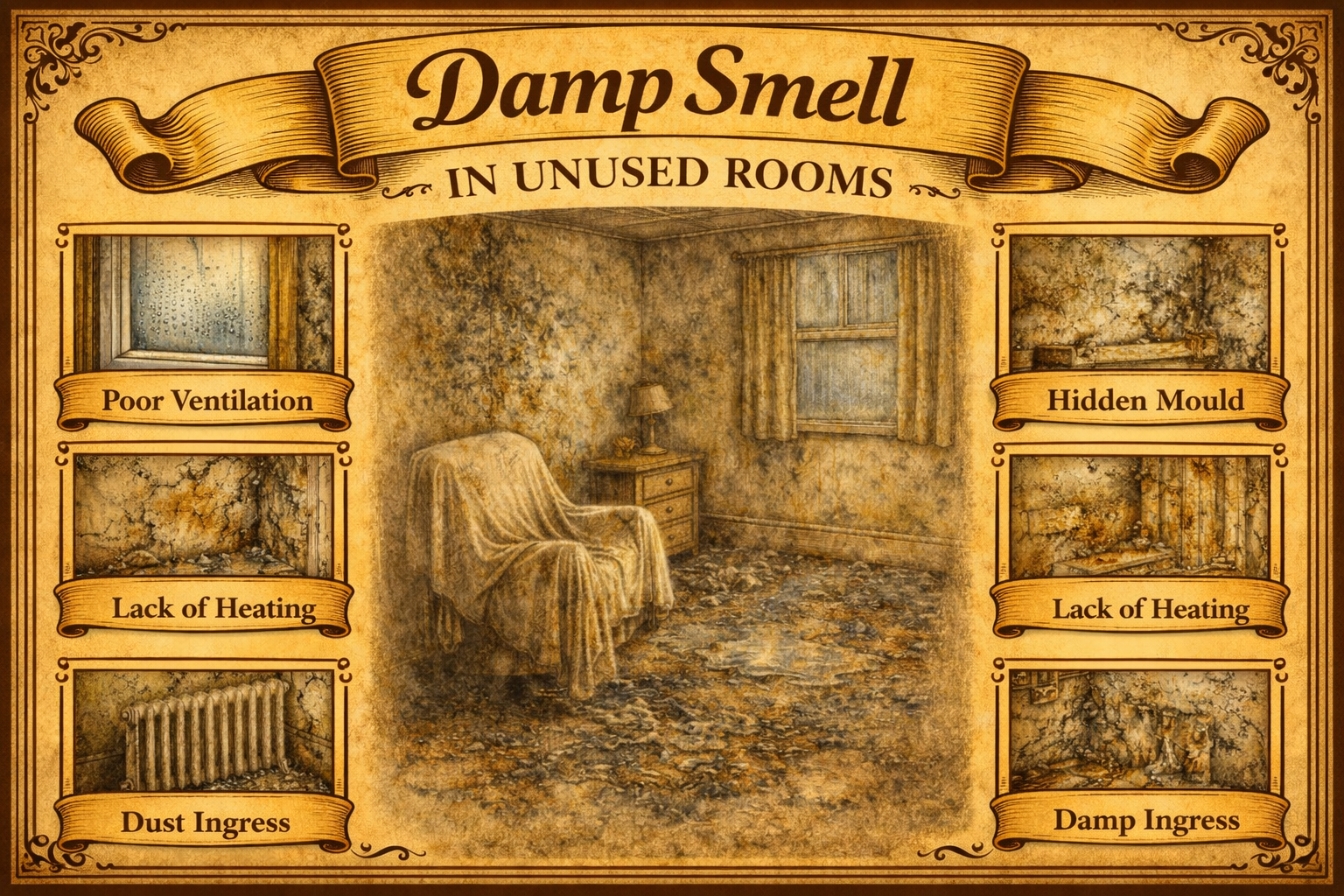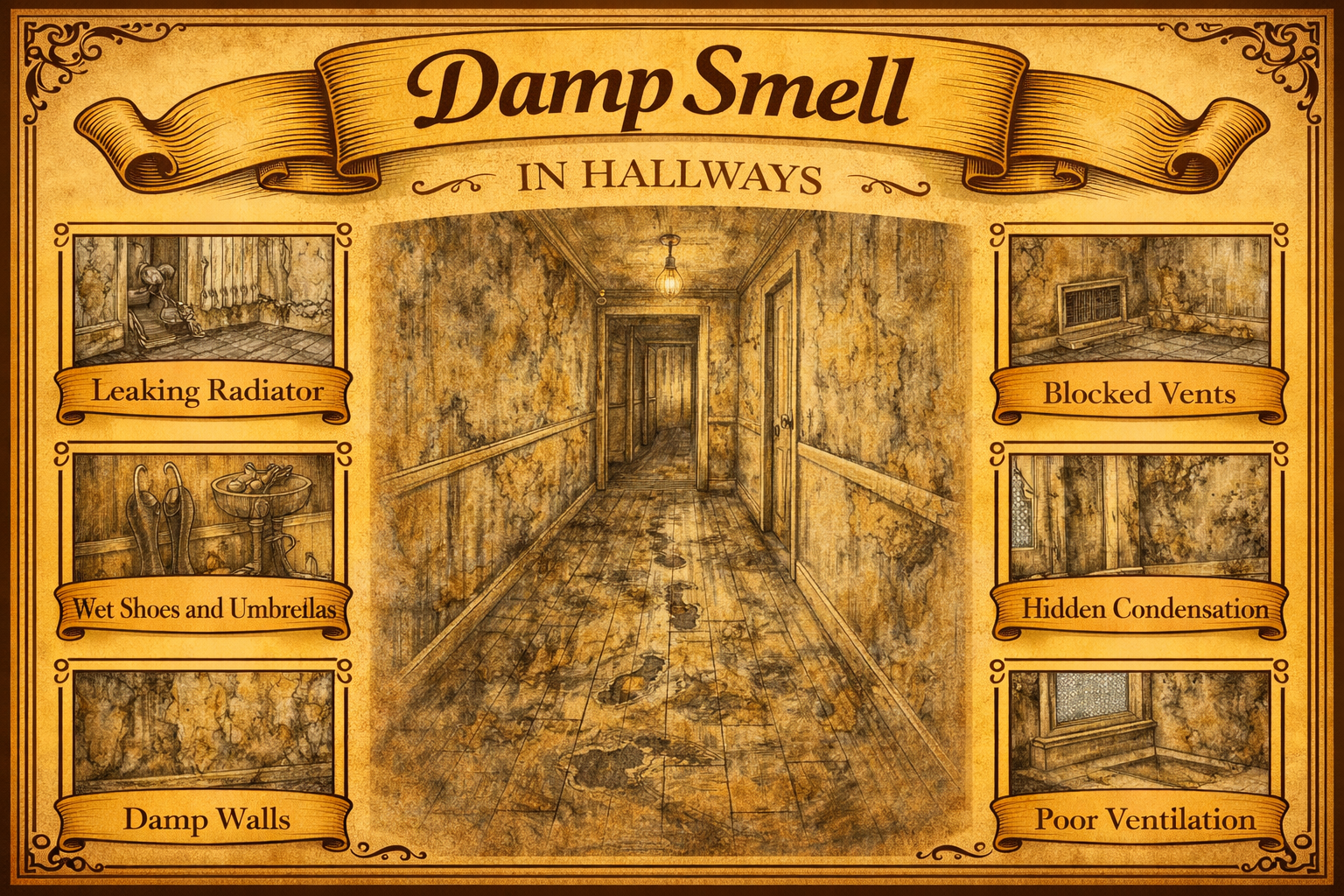
A damp smell in hallways is often caused by moisture accumulating in areas of the home that receive little ventilation or sunlight. Hallways are frequently enclosed spaces with limited windows, which means humid air can remain trapped for long periods.
Because hallways connect multiple rooms, moisture from other parts of the house can also circulate through the space. Over time this can create damp conditions that lead to mould growth and musty odours.
Condensation is one of the most common causes of damp smells in hallways. When warm air from heated rooms moves into cooler hallway spaces, it can condense on walls, ceilings, or floors. If this moisture does not dry properly, it can gradually affect plaster, paint, and decorative finishes.
Hallways are also often located near entrance doors, which may allow cold air to enter the property. The temperature difference between indoor air and cooler surfaces can increase the likelihood of condensation forming.
Another possible cause is penetrating damp from external walls. If the hallway is located near an outside wall, moisture may enter through damaged brickwork, defective pointing, or leaking gutters.
Common causes of damp smells in hallways include:
- Poor ventilation and limited airflow
- Condensation forming on cooler surfaces
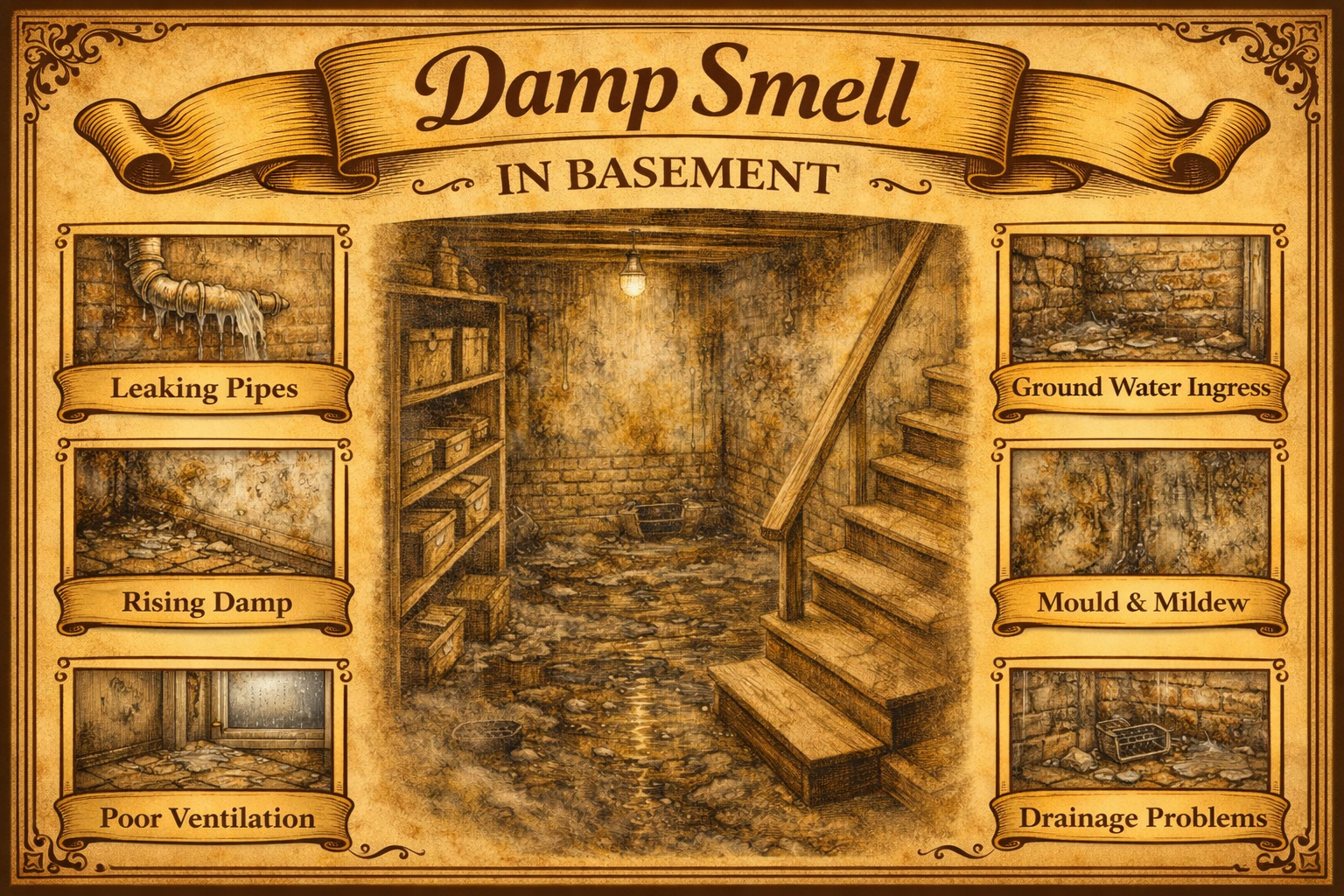
- Moisture entering from nearby rooms such as kitchens or bathrooms
- Penetrating damp from external walls
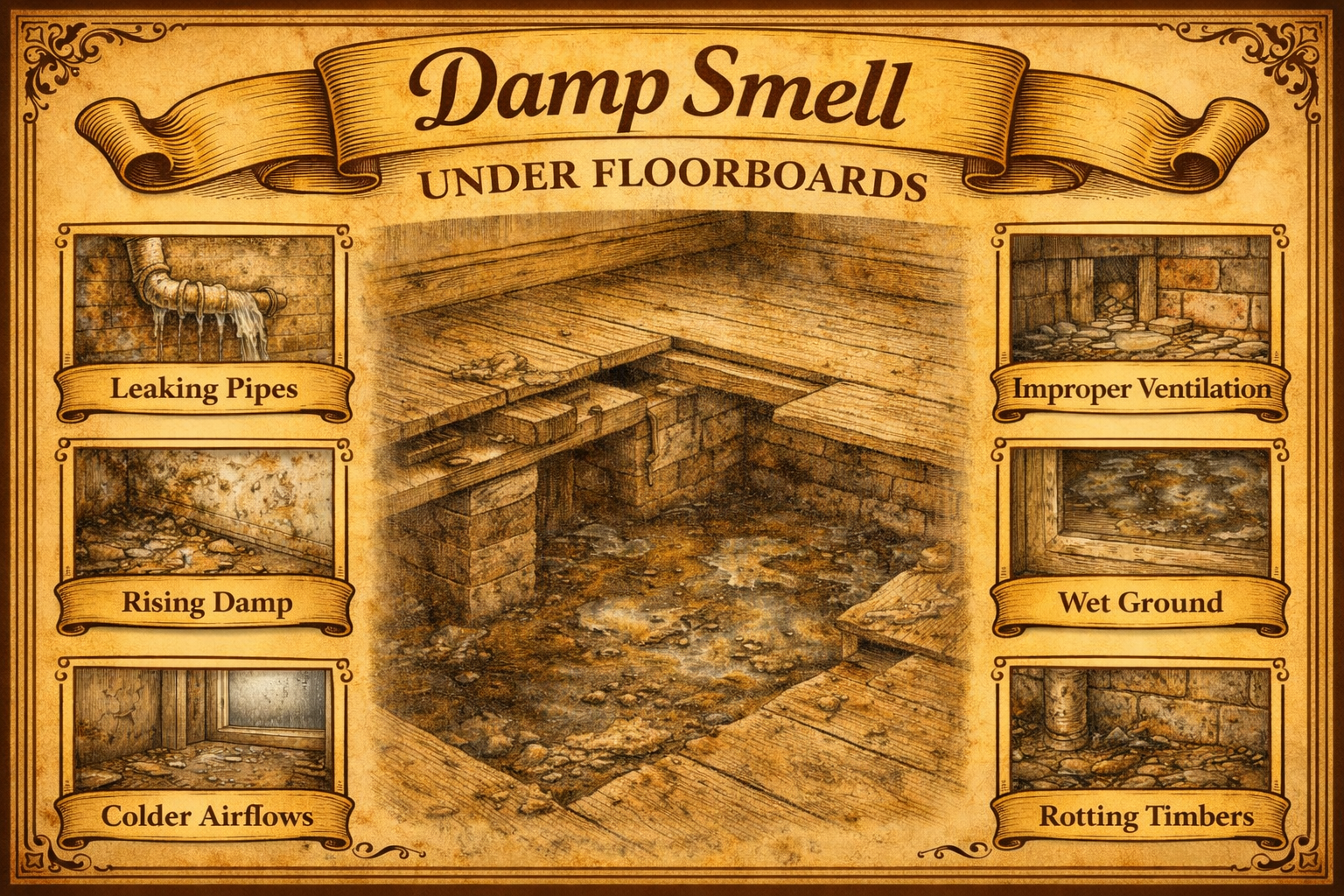
- Damp carpets or flooring materials
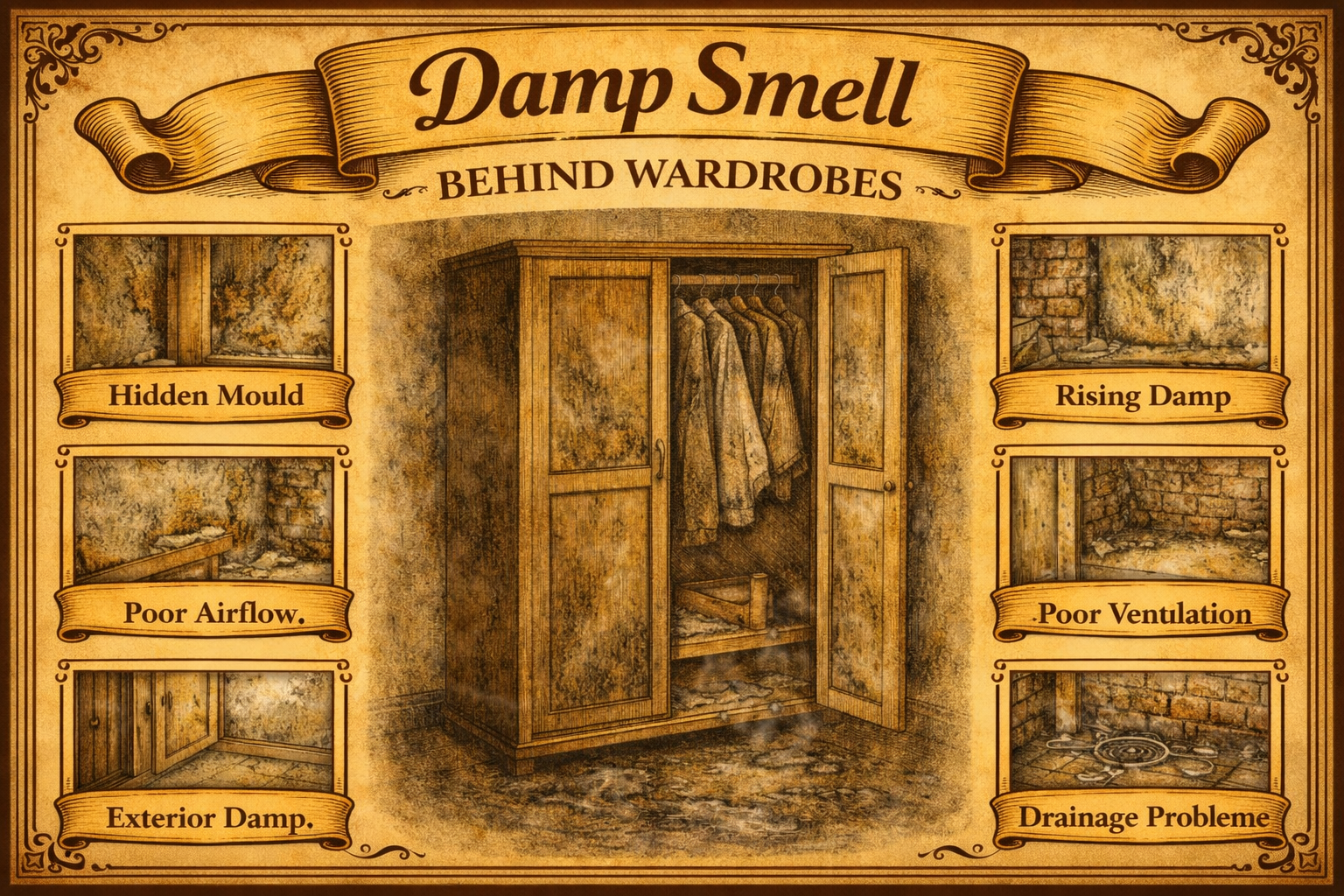
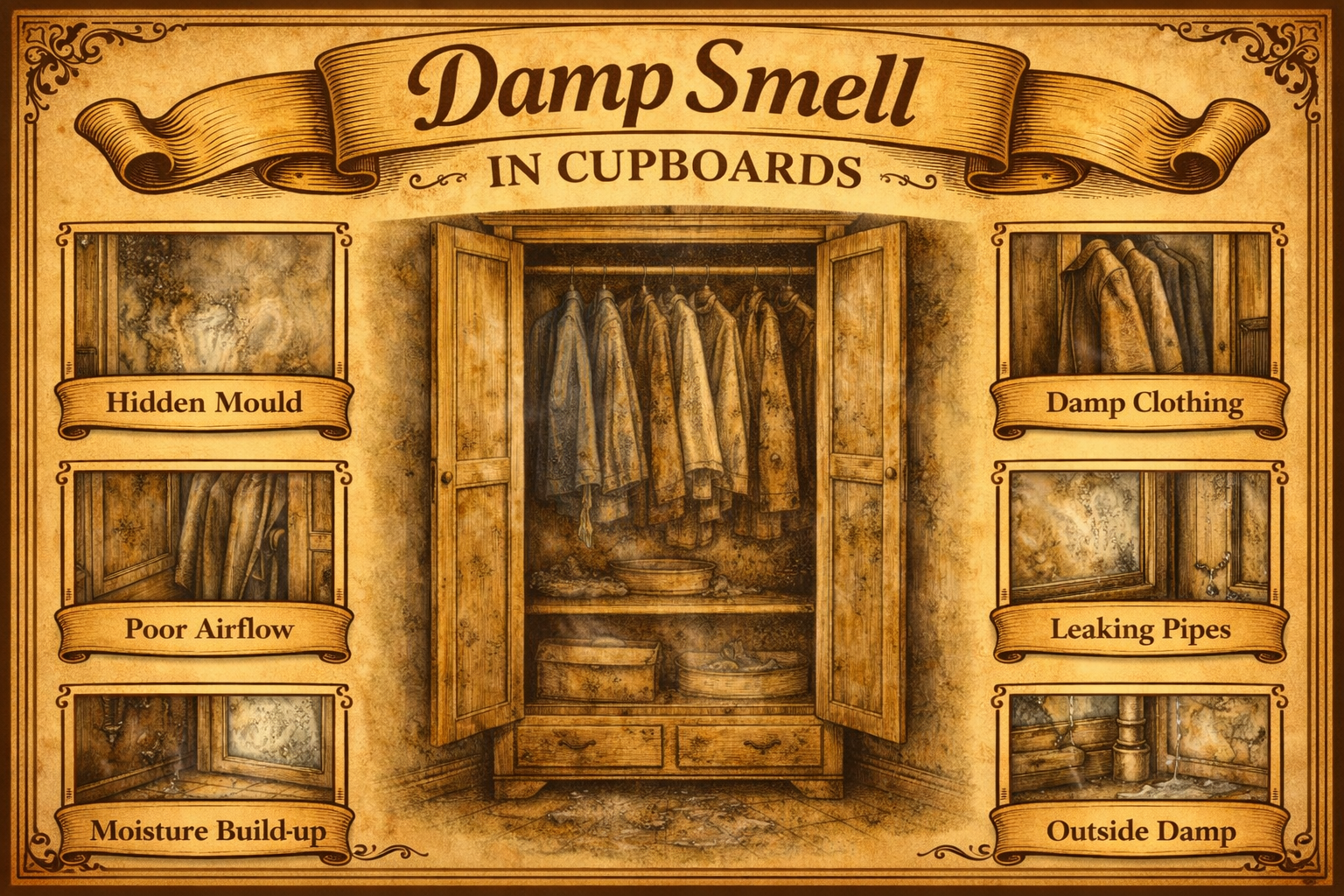
- Mould growth behind furniture or skirting boards
Because hallways are often transitional spaces rather than main living areas, damp problems may not be noticed until the smell becomes more obvious.
The Solution: How to Remove Damp Smells from Hallways
Reducing humidity levels and improving airflow can help eliminate damp smells in hallways.
Opening nearby windows regularly can help improve ventilation throughout the property and prevent moisture from becoming trapped in hallway spaces. Ensuring that air vents are not blocked can also help maintain airflow.
If condensation is forming on walls or ceilings, maintaining a consistent indoor temperature may help prevent cold surfaces from attracting moisture. Even gentle heating can help keep hallway surfaces warm enough to reduce condensation.
Regular cleaning is also important. Removing mould from walls, ceilings, or skirting boards can help eliminate the source of damp smells. Carpets or rugs that have absorbed moisture should also be cleaned and allowed to dry thoroughly.
Furniture or storage units placed against walls should be positioned slightly away from the surface to allow air to circulate and prevent moisture from becoming trapped.
When to Call a Specialist
If damp smells continue despite improving ventilation and cleaning affected areas, the problem may be related to moisture entering the structure of the building.
Penetrating damp from external walls can allow rainwater to enter brickwork and gradually affect internal surfaces. Leaking gutters, damaged pointing, or cracked render can all allow moisture to pass through walls and produce persistent damp smells indoors.
Signs that professional investigation may be necessary include:
- Damp patches appearing on hallway walls or ceilings
- Peeling paint or wallpaper
- Mould spreading across surfaces
- Cold or wet areas on walls
- Damp smells that become stronger after rainfall
A damp specialist or building surveyor can inspect the property to identify whether external moisture is entering the building fabric.
Addressing structural damp problems early can prevent further damage and help eliminate persistent damp smells throughout the home.