
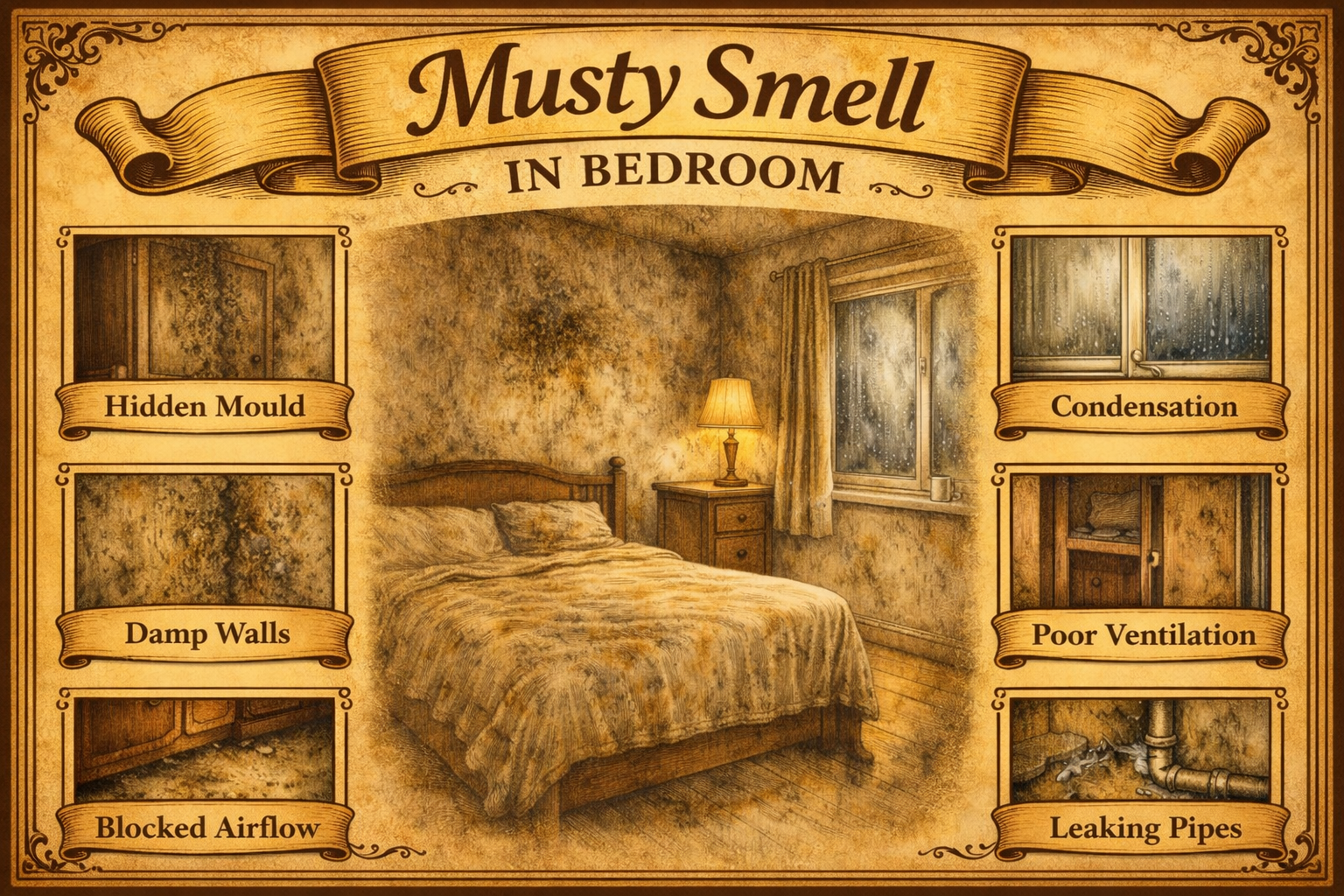
A musty smell in a bedroom is usually a sign that excess moisture is present somewhere in the room. The distinctive stale or earthy odour is typically caused by mould, mildew, or bacteria growing in damp conditions. Even if visible damp patches are not immediately obvious, the smell often indicates that moisture has accumulated in hidden areas such as walls, flooring, furniture, or fabrics.
Bedrooms are particularly prone to damp smells because they often contain many materials that absorb moisture. Carpets, mattresses, bedding, curtains, and upholstered furniture can all trap humidity from the air. Over time this trapped moisture can create the conditions needed for mould and mildew to grow, producing the familiar musty smell.
Another major cause of damp smells in bedrooms is condensation. While sleeping, people release moisture through breathing and perspiration. This increases the humidity level in the room overnight. When warm moist air comes into contact with colder surfaces such as windows, external walls, or poorly insulated corners, condensation can form. If this moisture is not allowed to dry properly, it can gradually soak into plaster, wallpaper, and wooden surfaces.
Poor ventilation can make the problem worse. Many bedrooms remain closed for long periods, particularly during colder months when windows are rarely opened. Without fresh air circulation, humidity builds up inside the room and damp conditions can develop.
Furniture placement can also contribute to the issue. Large items such as wardrobes, beds, or cabinets positioned tightly against external walls can trap moisture and prevent airflow. This creates cold areas where condensation forms more easily and mould can develop unnoticed.
Common causes of musty smells in bedrooms include:
- Condensation forming on cold walls or windows
- Poor ventilation and stale air circulation
- Mould growth behind wardrobes or beds
- Damp carpets or underlay
- Moisture entering from roof leaks or damaged gutters
- Penetrating damp through external brickwork
In some cases, the smell may be strongest in certain areas of the room, such as near the floor, behind furniture, or in corners where airflow is limited.
The Solution: How to Remove the Musty Smell
The most effective way to remove a musty smell is to address the moisture source rather than simply masking the odour with air fresheners.
Improving ventilation is often the simplest and most effective solution. Opening bedroom windows regularly allows humid air to escape and fresh air to circulate. Ensuring that air vents are not blocked can also help improve airflow and reduce humidity levels.
Furniture should be moved slightly away from external walls to allow air to circulate behind wardrobes, beds, and cabinets. Even a small gap can help reduce condensation and prevent mould forming in hidden areas.
If condensation is the main cause of the problem, maintaining a steady indoor temperature can help reduce the amount of moisture forming on cold surfaces. Keeping rooms gently heated during colder weather can prevent walls and windows from becoming cold enough for condensation to form.
Visible mould should be cleaned using appropriate mould removal products. Surfaces should then be thoroughly dried to prevent mould returning. In addition, fabrics such as curtains, bedding, or carpets that have absorbed moisture may need to be washed or aired out.
Using a dehumidifier may also help in rooms that regularly experience high humidity levels. Reducing moisture in the air can prevent damp conditions from developing again.
When to Call a Specialist
If a musty smell continues to return despite improving ventilation and removing visible mould, the problem may be caused by a more serious damp issue within the building structure.
Persistent damp smells can indicate problems such as penetrating damp from external walls, leaking roofs, or water entering through damaged gutters or brickwork. These issues allow moisture to enter the wall structure, where it can remain trapped and gradually affect internal surfaces.
Warning signs that may indicate a larger damp problem include:
- Damp patches appearing on walls or ceilings
- Peeling paint or wallpaper
- Mould spreading across large areas
- Persistent cold or wet patches on walls
- A strong musty smell that never fully disappears
A damp specialist or building surveyor can investigate the property and determine the source of the moisture. Identifying the cause early can prevent further structural damage and help restore a healthy indoor environment.
Leave a Reply