
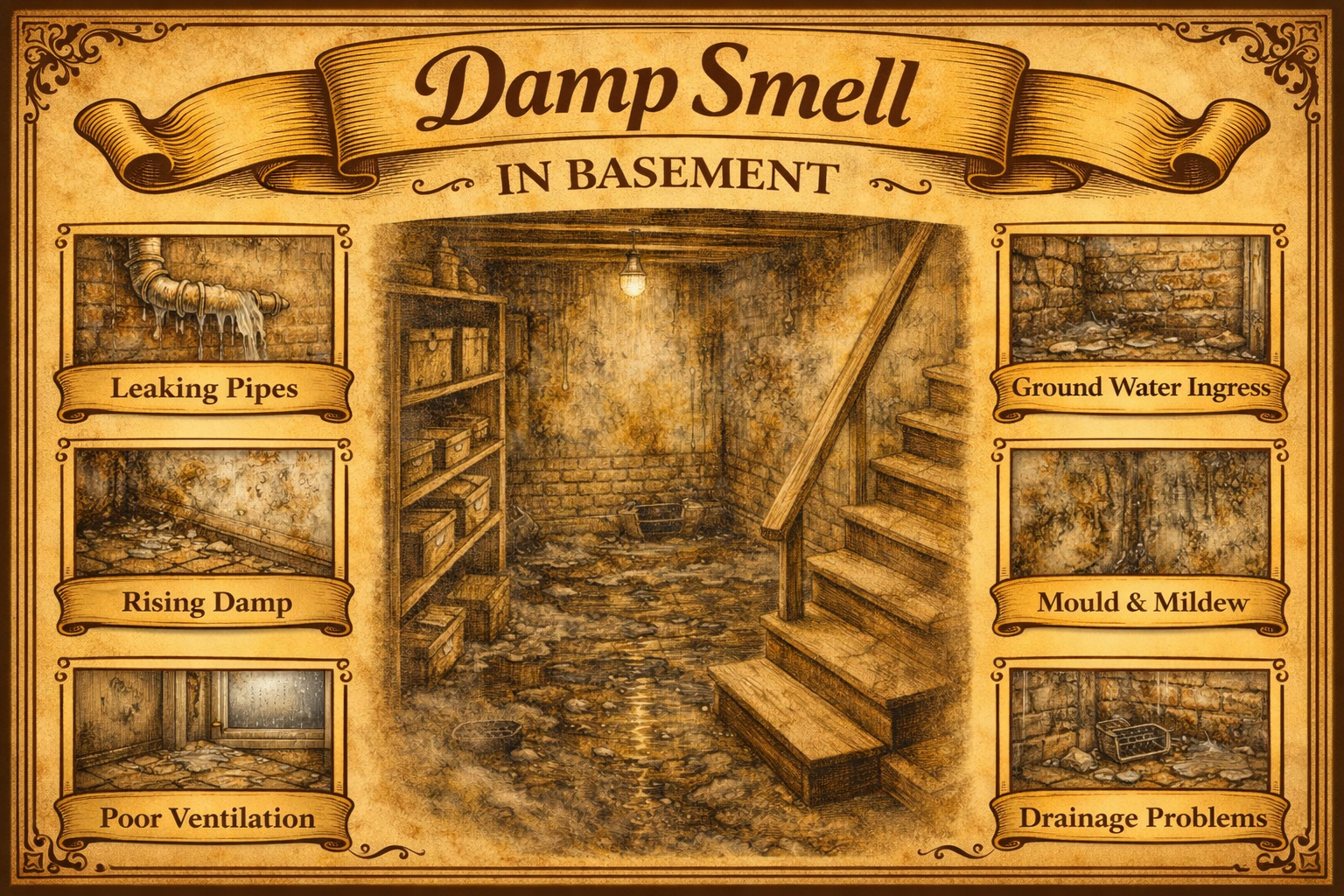
A damp smell in a basement is a common issue in many homes and is usually caused by excess moisture accumulating in the lower levels of a building. Basements are particularly vulnerable to damp problems because they are located below ground level, where moisture from the surrounding soil can affect walls and floors.
The smell is typically musty or earthy and may become stronger when the space has been closed for long periods or after heavy rainfall. Even when no visible damp patches are present, a persistent damp smell often indicates that moisture is present somewhere in the structure.
One of the most common causes of basement damp smells is ground moisture penetrating basement walls or floors. Because basements are surrounded by soil, moisture can gradually pass through masonry or concrete if waterproofing systems are inadequate or damaged.
Another contributing factor is poor ventilation. Basements often have limited airflow compared to upper floors, which means moisture can remain trapped inside the space. Without proper ventilation, humidity levels can rise and allow mould and mildew to develop.
Condensation can also contribute to damp smells in basements. Cold walls and floors may cause moisture in the air to condense on surfaces, especially if the basement is used for storage or laundry.
Common causes of damp smells in basements include:
- Moisture penetrating through basement walls
- Poor ventilation or stale air
- Condensation forming on cold surfaces
- Groundwater pressure against basement walls
- Leaks from plumbing or drainage systems
- Mould growth on walls, floors, or stored items
Because basements are often used for storage, damp smells may also affect cardboard boxes, furniture, or fabrics kept in the space.
The Solution: How to Reduce Damp Smells in Basements
The most effective way to remove damp smells in a basement is to control moisture levels and improve ventilation.
Increasing airflow can help reduce humidity and allow damp surfaces to dry. Installing ventilation fans or opening windows regularly can help circulate fresh air and prevent moisture buildup.
Using a dehumidifier can also be effective in reducing humidity levels in basement spaces. By removing excess moisture from the air, a dehumidifier can help prevent mould growth and eliminate damp odours.
If condensation is the primary issue, improving insulation on basement walls or pipes may help prevent cold surfaces from attracting moisture.
Cleaning mould from walls and surfaces can also help remove the immediate source of damp smells. However, the underlying moisture problem must still be addressed to prevent the smell from returning.
In some cases, improving drainage around the outside of the property can help reduce the amount of groundwater reaching the basement walls.
When to Call a Specialist
Persistent damp smells in a basement may indicate a more serious waterproofing or structural issue.
If moisture is entering through basement walls or floors, professional waterproofing solutions may be required. This could involve installing drainage membranes, sump pumps, or tanking systems designed to prevent groundwater from entering the basement.
Warning signs that may require professional investigation include:
- Water stains or damp patches on basement walls
- White powder deposits on brickwork (efflorescence)
- Visible mould spreading across surfaces
- Standing water or pooling on the floor
- Damp smells that worsen after rainfall
A damp specialist or building surveyor can assess the basement structure and recommend appropriate waterproofing or drainage solutions.
Addressing basement damp problems early can prevent damage to the building structure and improve air quality throughout the home.
Leave a Reply