
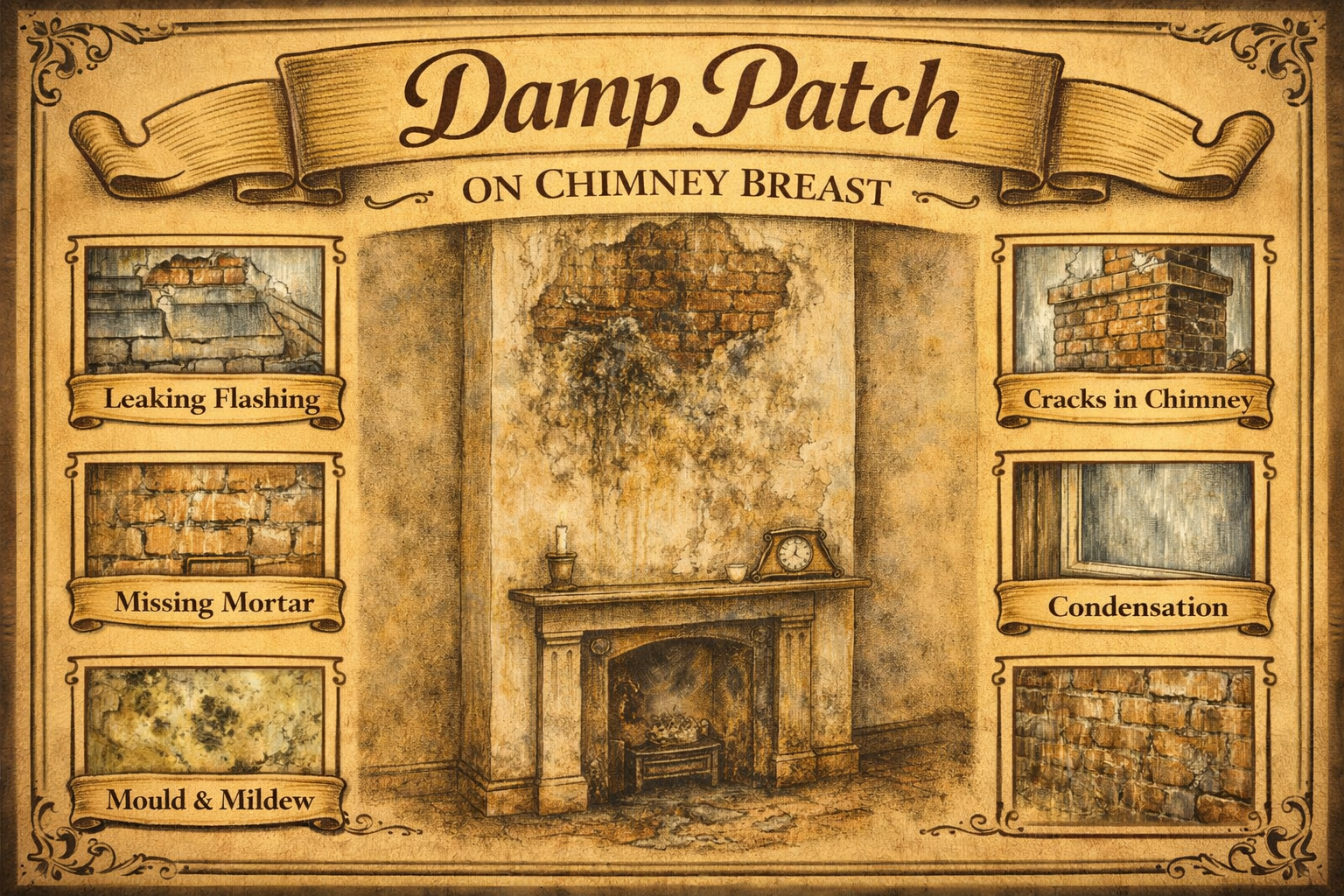
Damp patches on chimney breasts are a well-known issue, particularly in older properties. Unlike standard walls, chimney breasts are exposed to unique conditions that make them especially vulnerable to moisture problems.
One of the most common causes is rainwater ingress from the chimney stack. Defects such as damaged flashing, cracked chimney pots, or deteriorated mortar joints can allow water to enter the structure. This moisture then travels down the chimney breast and appears internally as damp patches.
Another frequent cause is unused fireplaces leading to condensation. When a chimney is no longer in use, airflow is reduced or eliminated. This creates a cold, stagnant environment where moisture can accumulate. Over time, condensation forms inside the flue and seeps into the surrounding masonry.
A third factor is hygroscopic salts. Chimneys often contain residues from years of burning fuel. These salts can absorb moisture from the air, creating damp patches even in the absence of active water ingress. This type of damp can be persistent and confusing to diagnose.
Typical signs include:
- Damp patches on the chimney breast wall
- Staining or discolouration
- A musty smell
- Damp that persists regardless of weather conditions
To identify the cause, consider whether the damp worsens after rain (likely ingress), appears in unused chimneys (condensation), or seems constant (salts).
Repairing the issue depends on the cause. For rain ingress, external repairs such as repointing the chimney stack, repairing flashing, or installing a chimney cap may be required.
For condensation, improving ventilation is key. Installing a chimney vent or air brick can help maintain airflow and reduce moisture buildup.
If salts are the issue, removing contaminated plaster and replacing it with a salt-resistant render may be necessary.
Chimney-related damp is often a combination of factors, so a thorough inspection is essential. Addressing the problem early can prevent further damage and improve the condition of the surrounding structure.
Leave a Reply