
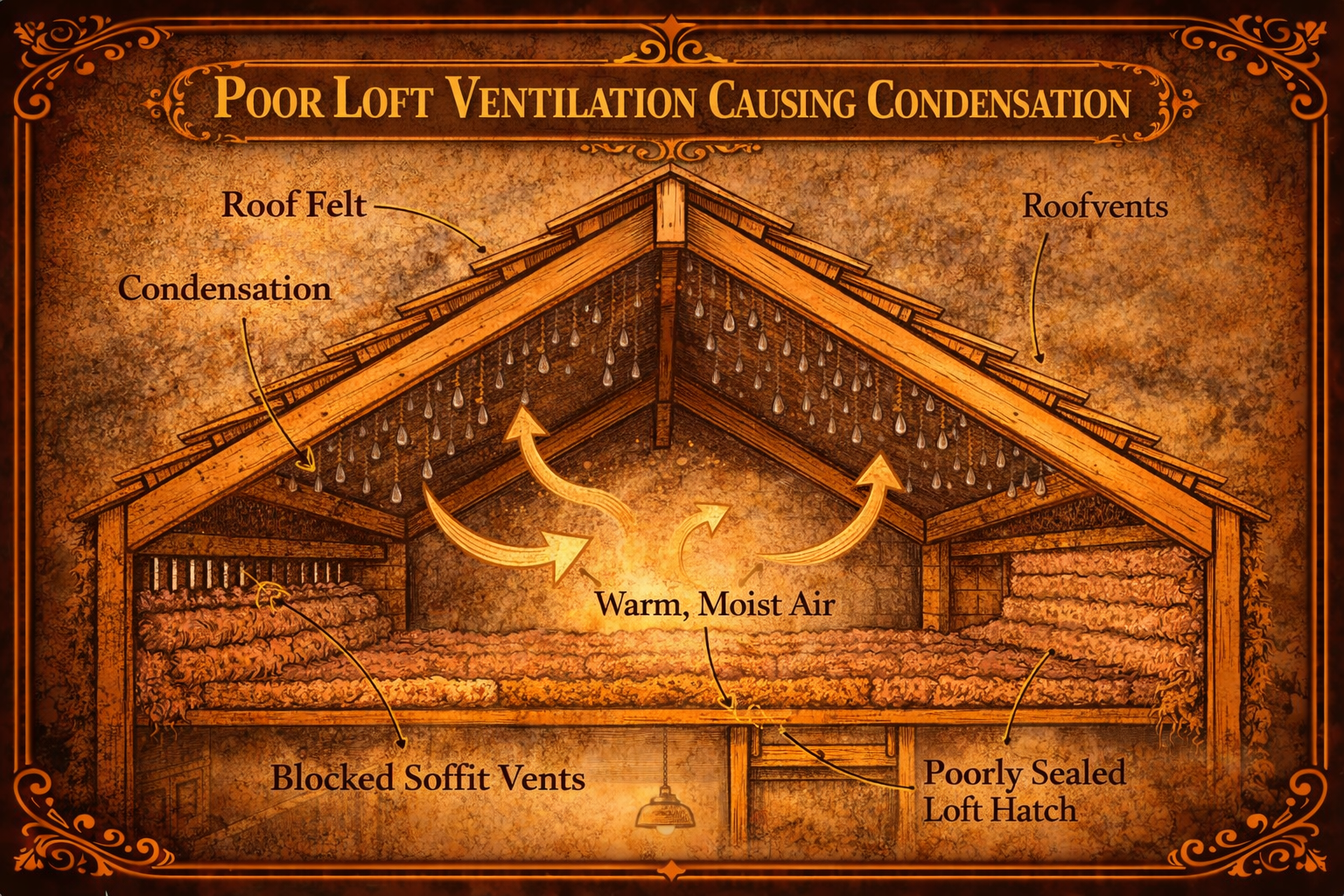
Poor loft ventilation is one of the most common causes of condensation problems in homes, particularly during colder months. When warm, moist air from inside the house rises into the loft space but cannot escape properly, it condenses on cold surfaces such as roof felt, rafters, and timbers. Over time this moisture can lead to damp conditions, mould growth, and even timber decay if the issue is not addressed.
Condensation occurs when warm air carrying moisture meets a cold surface. In most homes, moisture is constantly being produced through everyday activities such as cooking, showering, drying clothes indoors, and even breathing. This warm air naturally rises and can enter the loft through small gaps around loft hatches, ceiling lights, or poorly sealed ceiling penetrations. Without adequate ventilation to allow this moist air to escape, it becomes trapped in the loft space.
Signs of poor loft ventilation often appear as water droplets on roof felt, damp insulation, or black mould forming on rafters and timbers. Homeowners may also notice a musty smell coming from the loft. In severe cases, condensation can drip onto insulation or ceilings below, sometimes being mistaken for a roof leak.
Several factors can contribute to inadequate loft ventilation. Older homes may not have been designed with sufficient ventilation openings, while modern upgrades such as increased insulation can reduce natural airflow. Blocked soffit vents, missing air bricks, or poorly installed insulation that covers ventilation gaps can also prevent air from circulating properly.
Improving ventilation is usually the most effective way to resolve condensation problems in lofts. This can often be achieved by installing or clearing soffit vents, roof vents, or ridge vents that allow fresh air to enter and moisture to escape. Ensuring insulation does not block airflow at the eaves is also essential, as this area is where much of the ventilation occurs.
In addition to improving loft ventilation, reducing the amount of moisture entering the loft can also help. Ensuring extractor fans in bathrooms and kitchens vent properly outside, sealing gaps around loft hatches, and improving general home ventilation can significantly reduce moisture levels.
If left untreated, persistent condensation can damage roof timbers and create conditions suitable for mould growth, which may affect indoor air quality. For this reason, identifying and addressing poor loft ventilation early is important to protect both the structure of the property and the health of occupants.
Leave a Reply