
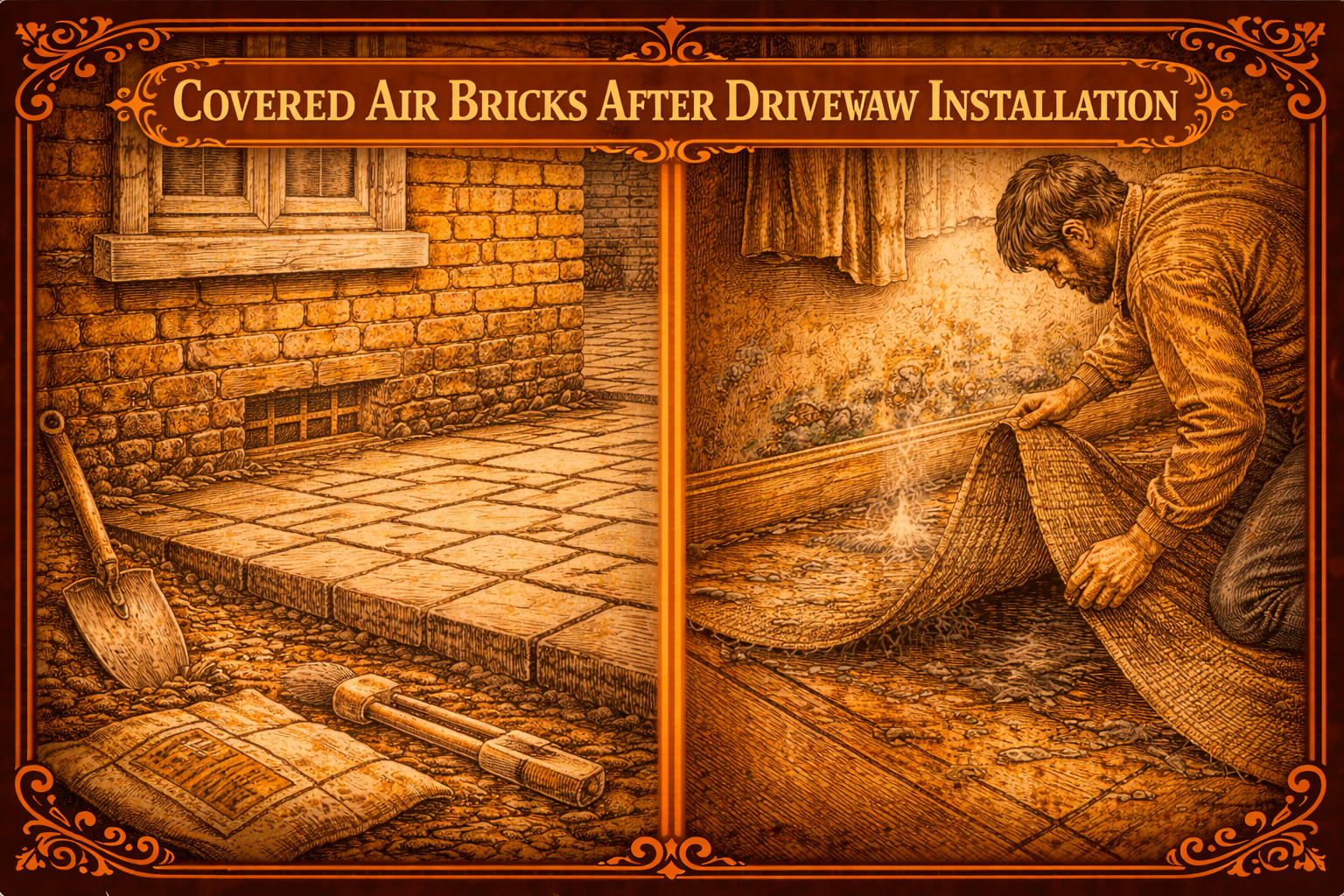
Air bricks are designed to provide ventilation to areas of a property such as suspended timber floors or wall cavities. However, during home improvement projects such as driveway installations, patios, or paving work, these vents can sometimes become covered or partially blocked. When this happens, airflow is reduced and moisture may begin to accumulate.
One of the most common causes of covered air bricks is the installation of new driveways or external paving that raises the ground level around the property. If the new surface is installed too high, it can cover the air brick completely or restrict airflow into the vent.
Air bricks are typically positioned above the original ground level to allow fresh air to circulate beneath the property. When external surfaces are raised above this level, ventilation openings can become buried or blocked, preventing proper airflow.
Without adequate ventilation beneath suspended floors, moisture from the ground can become trapped. This damp environment can lead to mould growth, timber decay, and musty smells inside the home. Over time, wooden floor structures such as joists and floorboards may begin to deteriorate.
In some cases, homeowners may not realise that driveway or patio work has blocked ventilation openings. The problem may only become apparent months or years later when signs of dampness begin to appear inside the property.
Typical warning signs include damp patches near the base of walls, condensation beneath floors, or a persistent musty smell inside the house. In properties with suspended timber floors, floorboards may also begin to feel soft or uneven as timber becomes damaged by moisture.
Checking whether air bricks have been covered usually involves inspecting the external walls of the property. Air bricks should remain clearly visible and positioned above the surrounding ground level.
If air bricks have been covered by new paving or driveway installations, modifications may be required to restore ventilation. This may involve lowering ground levels around the vent or installing extension vents that raise the airflow opening above the new surface level.
Ensuring air bricks remain clear and unobstructed is essential for maintaining proper ventilation beneath the property and preventing moisture-related damage.
Leave a Reply