
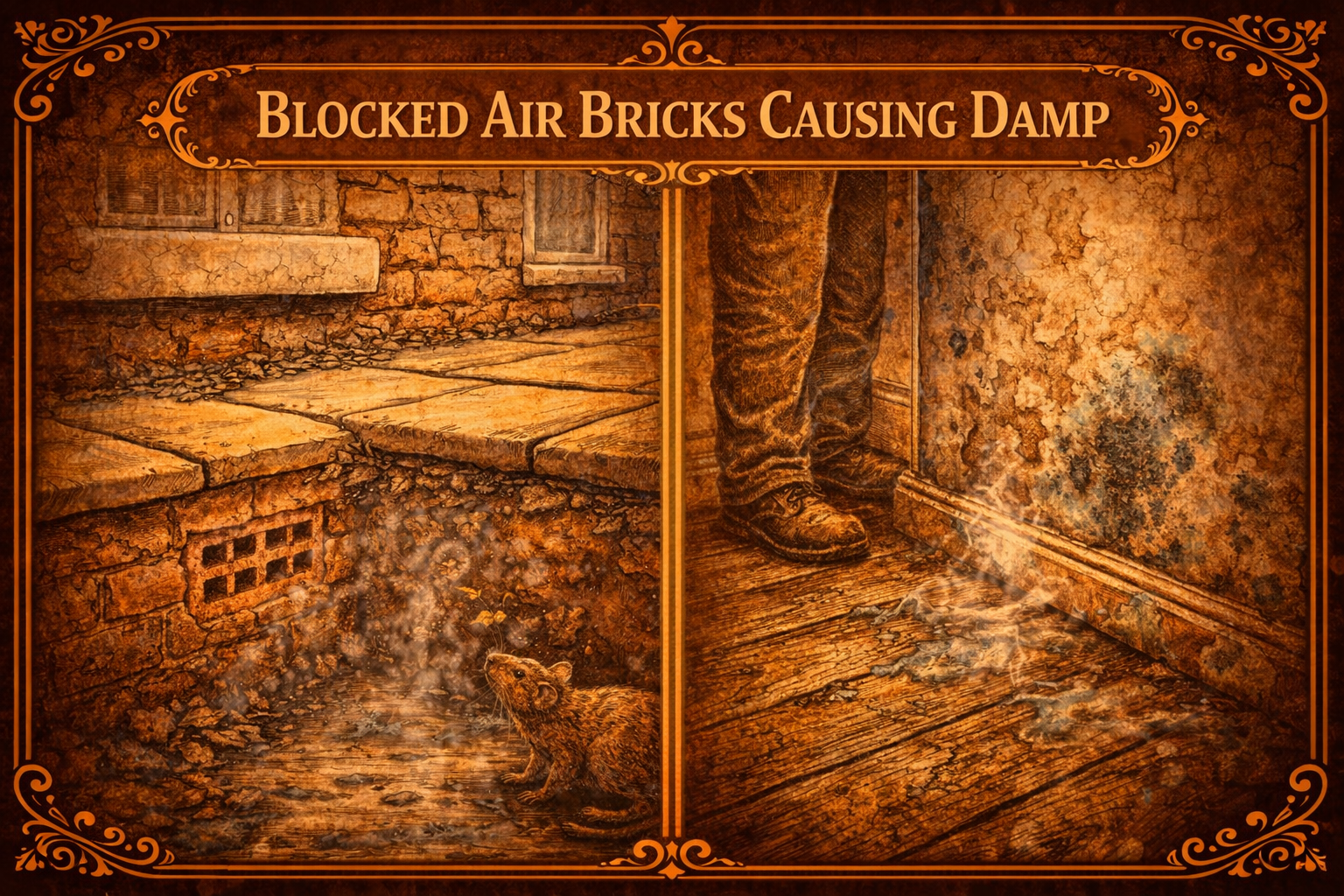
Air bricks are small vents installed in the external walls of many homes to allow air to circulate beneath suspended timber floors or inside wall cavities. When these vents become blocked, airflow is restricted and moisture can begin to build up. Over time, this trapped moisture can lead to damp problems, timber decay, and poor air quality inside the property.
One of the most common causes of blocked air bricks is external ground levels being raised. This can happen when patios, driveways, garden soil, or paving are installed too high against the wall of the house. If the air brick becomes partially or completely covered, the ventilation it provides is significantly reduced or stopped altogether.
Another common issue is debris blocking the vent itself. Leaves, dirt, insect nests, and cobwebs can accumulate inside air bricks, particularly if they have not been inspected for a long time. In some cases, insulation or building materials inside the property may also block the internal side of the vent.
When airflow beneath a suspended floor is reduced, moisture from the ground can become trapped under the floorboards. This creates a damp environment that can encourage mould growth and timber rot. Over time, wooden floor joists and floorboards may begin to deteriorate, potentially leading to structural problems if the issue is not addressed.
Signs of blocked air bricks causing damp may include musty smells, damp patches near the base of walls, or a cold and humid atmosphere inside the home. In properties with suspended timber floors, occupants may also notice floors becoming soft, uneven, or creaky as timber begins to deteriorate.
Identifying blocked air bricks usually involves inspecting the exterior of the property. Air bricks should be visible and positioned above the ground level, allowing clear airflow into the wall or subfloor area. If they appear buried, blocked, or covered by external surfaces, ventilation may be restricted.
In many cases the solution is relatively straightforward. Clearing debris from air bricks and ensuring that ground levels remain below the vent openings can restore proper airflow. Protective grilles or covers may also be installed to prevent future blockages from insects or debris.
Maintaining clear air bricks is an important part of preventing damp and moisture-related problems in homes with suspended floors or ventilated cavities.
Leave a Reply