
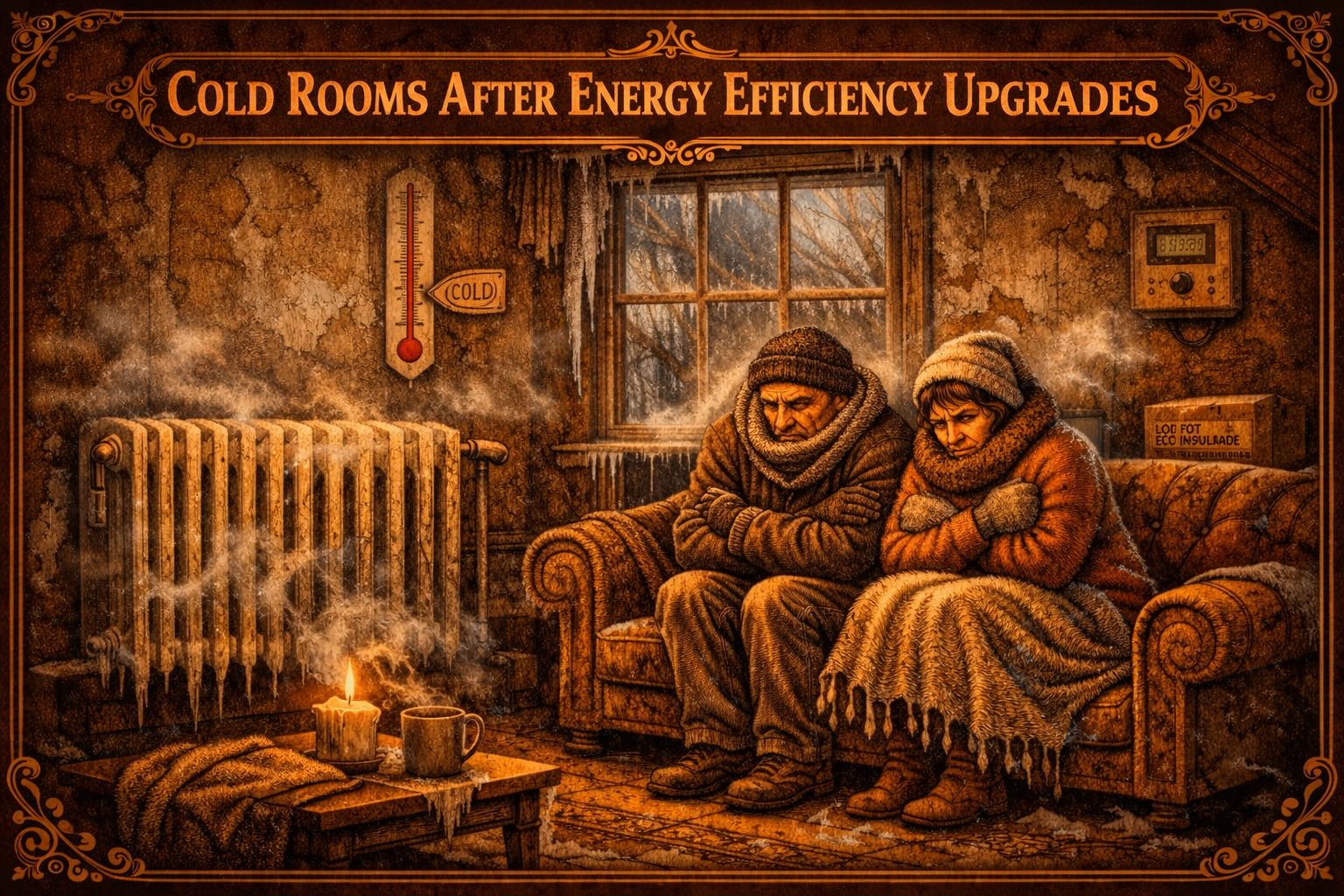
Energy efficiency upgrades are designed to make homes warmer and reduce heating costs. However, some homeowners find that certain rooms feel colder after improvements such as insulation upgrades, new heating systems or ventilation changes.
This can happen when the upgrades alter how heat moves through the property. In some cases the heating system may not be properly balanced or the insulation may create uneven temperature distribution within the home.
While energy efficiency improvements usually improve comfort, poor installation or system design can occasionally lead to unexpected heating problems.
Why Some Rooms Become Colder
Several factors can cause rooms to feel colder after energy efficiency work has been completed.
Common causes include:
- insulation installed unevenly throughout the property
- heating systems that are not correctly balanced
- radiators that are undersized for the room
- blocked ventilation causing condensation and damp
- thermal bridging where heat escapes through structural elements
These issues can cause some areas of the house to retain less heat than others.
Signs of Uneven Heating in the Home
Homeowners may notice:
- one room consistently colder than others
- difficulty heating certain parts of the property
- condensation forming in colder rooms
- higher humidity levels in poorly heated areas
- heating systems running constantly without improving comfort
These symptoms often suggest that the heating system or insulation has not been correctly designed for the building.
Investigating the Cause
Identifying the cause of cold rooms often involves examining both the heating system and the building structure.
Professionals may check:
- radiator sizes and heating output
- insulation coverage in walls and lofts
- airflow and ventilation within the property
- heat loss from external walls or windows
This assessment helps determine whether the problem is related to insulation, heating design or ventilation.
How Cold Room Problems Are Fixed
Solutions may include:
- upgrading radiators in colder rooms
- improving insulation coverage
- balancing the heating system
- addressing ventilation issues
Once these adjustments are made, temperature differences between rooms can usually be reduced.
Leave a Reply