
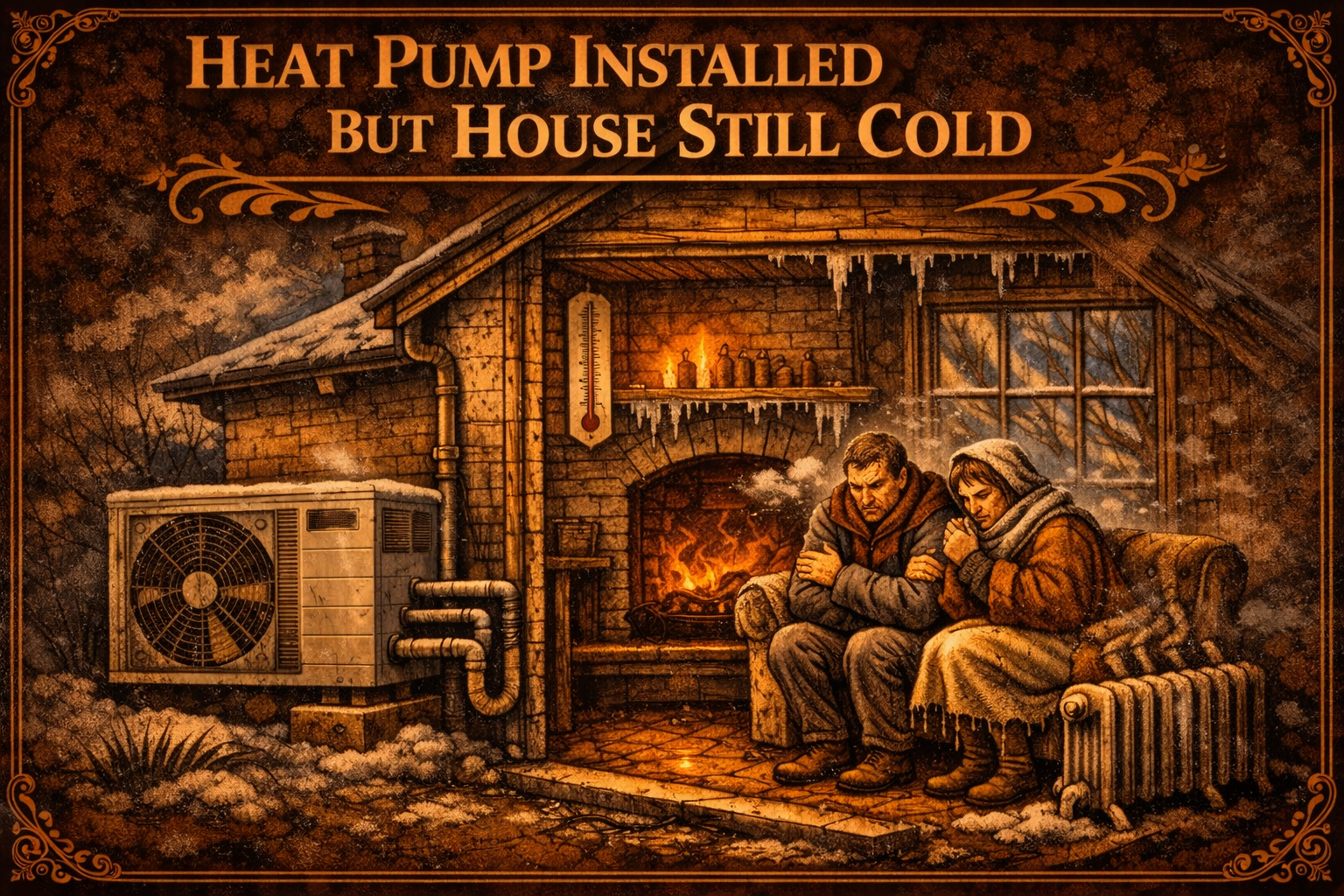
Heat pumps are designed to provide efficient heating for homes, but some homeowners find their property still feels cold even after a heat pump has been installed.
Unlike traditional gas boilers, heat pumps operate at lower temperatures and rely on the entire heating system being properly designed. If the system is not correctly configured, the heat pump may struggle to maintain comfortable indoor temperatures.
This problem is sometimes seen in homes that have undergone energy efficiency upgrades through government schemes or retrofit programmes.
Why Heat Pumps Sometimes Fail to Heat a Home Properly
A heat pump system must be carefully designed to match the heating requirements of the property.
If the system is undersized or poorly configured, it may not be able to provide enough heat to warm the home effectively.
Common causes include:
- heat pumps that are too small for the property
- insufficient insulation within the building
- radiators that are too small for low-temperature heating
- incorrect thermostat or system settings
- poorly balanced heating systems
In many cases the heat pump itself is functioning correctly, but the rest of the heating system has not been adapted to work with it.
Signs a Heat Pump System Is Not Performing Properly
Homeowners may notice several symptoms when a heat pump system is not working as expected.
These include:
- rooms remaining cold even when the heating is on
- the heat pump running constantly
- uneven temperatures between rooms
- increased electricity usage
- difficulty reaching thermostat settings
These symptoms often indicate that the heating system has not been properly designed for the property.
How the Problem Is Investigated
A heating engineer will usually carry out a system assessment to determine why the heat pump is not providing enough heat.
This may involve:
- calculating the heat loss of the building
- checking radiator sizes and output
- inspecting system controls and settings
- examining insulation levels within the property
This assessment helps identify whether the issue lies with the heat pump itself or with the overall system design.
How the Issue Is Resolved
Solutions depend on the cause of the problem but may include:
- upgrading radiators to larger models
- installing additional radiators
- improving insulation within the home
- adjusting system controls and flow temperatures
Once the system is correctly configured, heat pumps can provide efficient and consistent heating.
Leave a Reply