
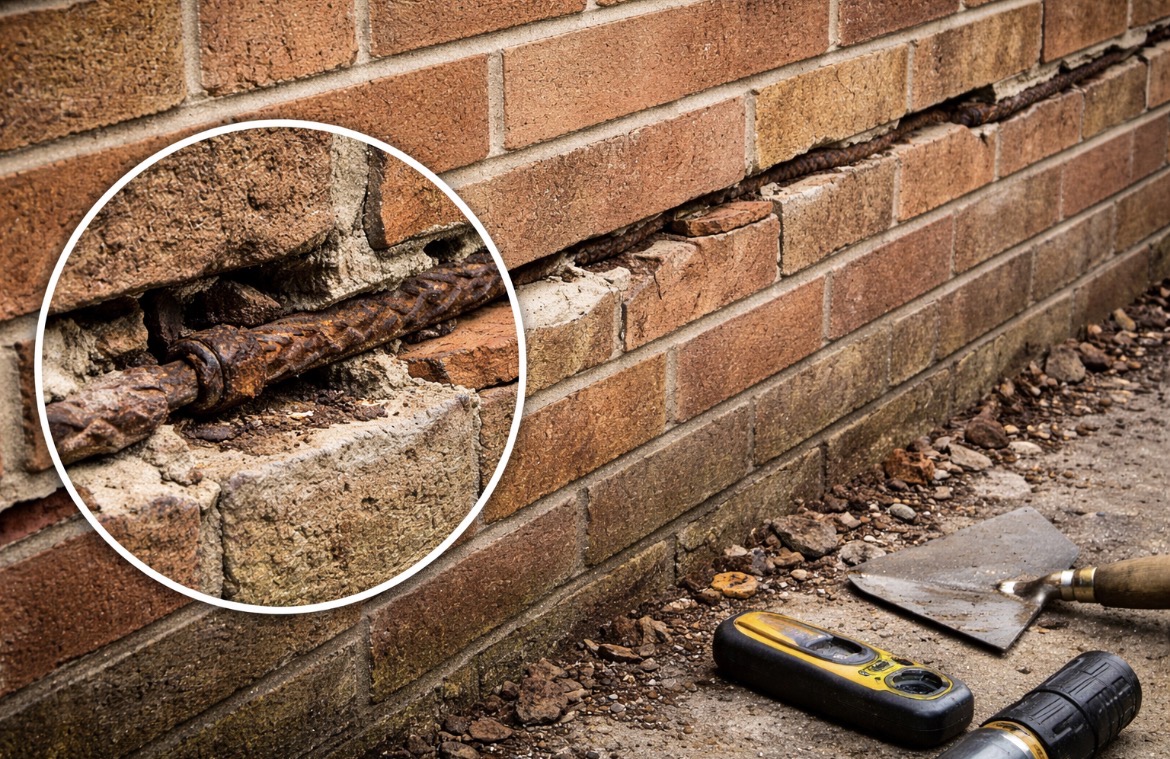
Cavity wall tie failure is a common issue in many UK homes, particularly those built between the 1920s and the 1990s. It often develops slowly and can go unnoticed for years — until visible cracking begins to appear in the brickwork.
Understanding the signs early can prevent more serious structural problems and unnecessary expense.
What Are Cavity Wall Ties?
Cavity wall ties are metal connectors installed between the inner and outer leaves of a cavity wall. Their job is to:
- Hold the two walls together
- Provide stability against wind loads
- Allow the wall to act as a single structural unit
When these ties corrode or fail, the outer leaf of brickwork can begin to move independently.
What Causes Cavity Wall Tie Failure?
The most common cause in UK properties is corrosion.
Older wall ties were often made from mild steel with inadequate corrosion protection. Over time, moisture within the cavity causes the metal to rust.
As steel corrodes, it expands. This expansion creates pressure within the mortar joints, leading to visible cracking in the brickwork.
Common contributing factors include:
- Poor-quality original ties
- Coastal exposure (salt accelerates corrosion)
- Inadequate cavity width
- Mortar bridging inside the cavity
Signs of Cavity Wall Tie Failure
The warning signs are usually visible externally.
Look for:
- Horizontal cracks following mortar joints
- Cracks at regular vertical intervals (often 900mm apart)
- Bulging brickwork
- Stepped cracking in the outer leaf
- Loose or lifting bricks
Internally, symptoms are less obvious but may include:
- Localised cracking around window or door openings
- Slight wall movement
If cracking appears evenly spaced across the elevation, wall ties are a likely cause.
How Serious Is It?
Cavity wall tie failure is not typically an emergency — but it should not be ignored.
If left untreated:
- The outer wall can become unstable
- Brickwork may begin to bow
- In extreme cases, sections of wall may require rebuilding
The earlier it is addressed, the simpler and cheaper the repair.
How Is It Diagnosed?
A proper diagnosis usually involves:
- Visual inspection of cracking patterns
- Metal detection scanning
- Drilling small inspection holes to check tie condition
A structural engineer or specialist contractor can confirm the issue.
It’s important not to assume all horizontal cracking is wall tie failure. Differential settlement or thermal movement can create similar patterns.
How Is Cavity Wall Tie Failure Repaired?
Modern repair does not usually involve rebuilding the wall.
Instead, new stainless steel remedial ties are:
- Inserted through the mortar joints
- Mechanically fixed into both leaves
- Installed at calculated spacing
The original corroded ties are often isolated to prevent further expansion.
After installation:
- Cracks are repointed
- Severely damaged bricks may be replaced
This approach restores structural stability without major demolition.
Repair Costs in the UK
Costs vary depending on property size and access, but typical price ranges are:
- Small elevation: £1,000–£2,000
- Semi-detached house: £2,500–£4,500
- Detached property: £4,000–£7,000+
Scaffolding, brick replacement and repointing can increase costs.
Always obtain multiple quotes and ensure contractors provide a guarantee.
When Should You Act?
You should seek professional assessment if:
- Cracks follow mortar joints horizontally
- Cracking appears at consistent spacing
- Brickwork shows outward movement
- Your property was built between 1920–1995
Early intervention prevents escalation.
Final Thoughts
Cavity wall tie failure is a well-understood and repairable issue in UK housing stock. While the cracking can look alarming, modern remedial systems are effective and relatively non-invasive.
The key is accurate diagnosis.
If you understand the signs and act early, this is a manageable structural issue — not a catastrophe.
Leave a Reply