
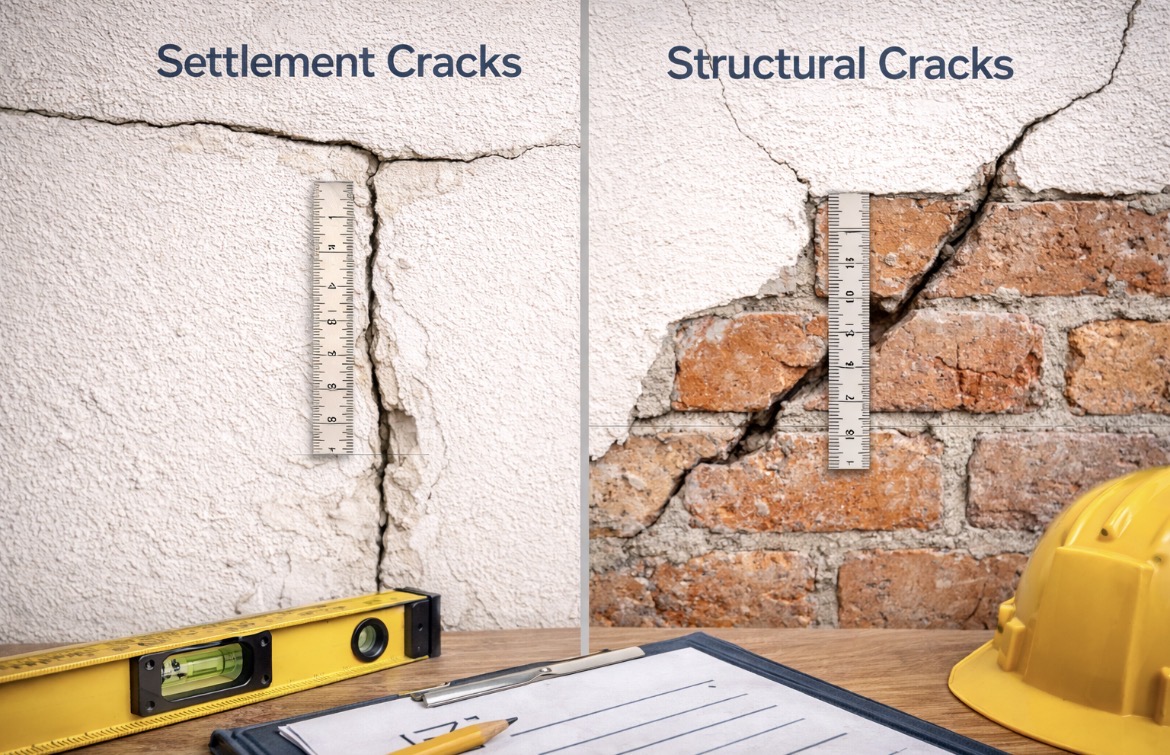
Not all wall cracks mean the same thing. Some are caused by normal settlement as a building adjusts over time, while others may indicate structural movement affecting the foundations or load-bearing elements. Understanding the difference between settlement cracks and structural cracks is essential before carrying out repairs.
Repairing the surface without identifying the cause can lead to recurring damage and unnecessary expense.
What Are Settlement Cracks?
Settlement cracks occur when a building naturally adjusts after construction. All properties settle slightly as materials dry, foundations bear weight, and structural components stabilise.
Settlement cracks typically:
- Appear within the first few years after construction
- Are thin, usually under 2–3mm wide
- Run vertically or slightly diagonally
- Appear around doors and windows
- Remain stable over time
These cracks are generally cosmetic and can usually be repaired once movement has stopped.
What Are Structural Cracks?
Structural cracks are caused by movement that affects the stability of the building itself. This movement may involve foundation shifts, ground shrinkage, heave, or failure of load-bearing elements.
Structural cracks often:
- Exceed 3–5mm in width
- Form diagonal or stair-step patterns in brickwork
- Continue to widen over time
- Appear both internally and externally
- Reoccur after repair
- Coincide with sticking doors, misaligned windows or uneven floors
Unlike settlement cracks, structural cracks require investigation before cosmetic repair.
How Settlement and Structural Cracks Differ
Settlement cracks are usually minor, stable and limited to plaster or surface finishes. They tend to appear as part of a building’s natural adjustment process and do not typically worsen once the structure has settled.
Structural cracks are more serious. They are often wider, affect masonry rather than just plaster, and may show signs of progression. Structural cracks can indicate ongoing movement, meaning the underlying cause must be identified before repairs are carried out.
Monitoring the crack over several months is often the clearest way to determine whether it is stable or progressive.
How to Tell Which Type You Have
Consider the following:
- Has the crack widened recently?
- Is it visible on the exterior of the property?
- Does it follow mortar joints?
- Are there other cracks nearby?
- Are doors or windows beginning to stick?
If the crack is small and unchanged over time, it is more likely settlement-related. If it grows, spreads, or affects brickwork, structural movement may be involved.
When to Seek Professional Advice
You should consider professional assessment if:
- Cracks exceed 5mm
- Multiple cracks appear suddenly
- Brickwork shows bulging
- Floors slope noticeably
- Gaps develop between walls and ceilings
A structural engineer or building surveyor can confirm whether movement is active and recommend appropriate action.
Final Thoughts
Most cracks in homes are settlement-related and harmless. However, distinguishing between cosmetic settlement cracks and structural cracks is crucial before undertaking repairs. Monitoring size, pattern and progression over time provides the clearest indication of whether further investigation is necessary.
Addressing the underlying cause — not just the visible crack — prevents recurring issues and ensures repairs are effective.
Leave a Reply