
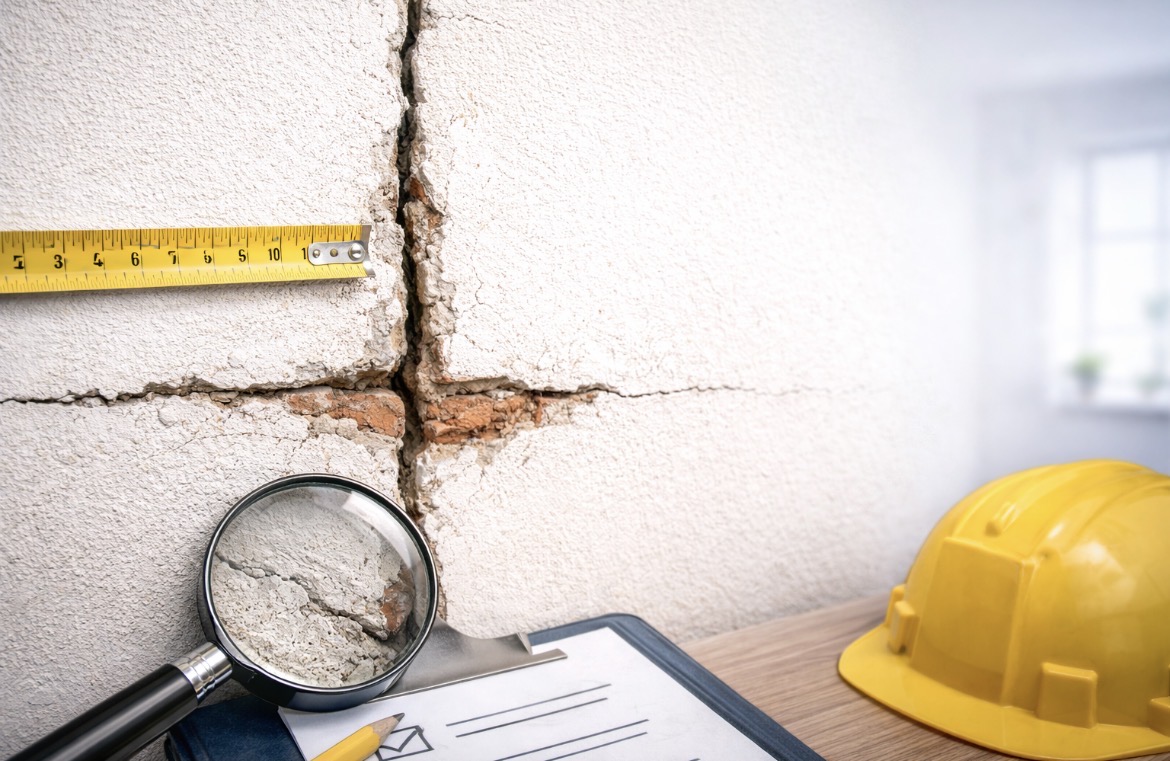
Vertical cracks in walls are among the most common types of cracking found in homes. In many cases, they are harmless and caused by natural settlement or plaster shrinkage. However, depending on their size, location and progression, vertical cracks can sometimes indicate structural movement.
Understanding the difference between cosmetic and structural cracking is essential before carrying out repairs.
What Do Vertical Cracks Look Like?
Vertical cracks:
- Run straight up and down
- Often appear near corners of rooms
- Commonly form above doors and windows
- May follow plasterboard joints
- Can appear in both plaster and brickwork
Cracks confined to plaster are usually less concerning than those affecting masonry.
Common Causes of Vertical Cracks
1. Normal Settlement
All buildings settle slightly over time. Minor vertical cracks often form as materials adjust.
2. Plaster Shrinkage
As plaster dries, fine vertical cracking can occur, particularly in newer properties.
3. Thermal Movement
Expansion and contraction due to temperature changes can cause straight-line cracking.
4. Foundation Movement
More serious vertical cracks may develop if part of the foundation shifts.
5. Structural Alterations
Removing load-bearing walls or poor workmanship can lead to stress cracks.
When Are Vertical Cracks a Concern?
A vertical crack may require further investigation if:
- It is wider than 3mm
- It widens toward the top or bottom
- It runs through brickwork
- It continues to grow over time
- It appears alongside other cracks nearby
- Doors or windows begin sticking
Cracks that affect both internal and external walls in the same location may suggest movement within the structure.
Cosmetic vs Structural Vertical Cracks
Cosmetic cracks:
- Hairline or under 1mm wide
- Limited to plaster
- Do not change over time
Structural cracks:
- Wider and deeper
- Visible externally
- Continue to widen
- Reappear after repair
Monitoring is often the best first step.
How to Monitor a Vertical Crack
- Measure its width with a ruler.
- Mark the top and bottom with a pencil and date them.
- Take clear photos every few months.
- Check nearby walls externally.
- Note any changes in door or window alignment.
If the crack widens noticeably, professional advice may be needed.
Final Thoughts
Most vertical cracks in walls are cosmetic and caused by normal building movement. However, larger cracks that progress or affect masonry should not be ignored. Identifying the pattern and monitoring changes over time helps determine whether simple cosmetic repair is sufficient or whether further structural assessment is required.
Leave a Reply