
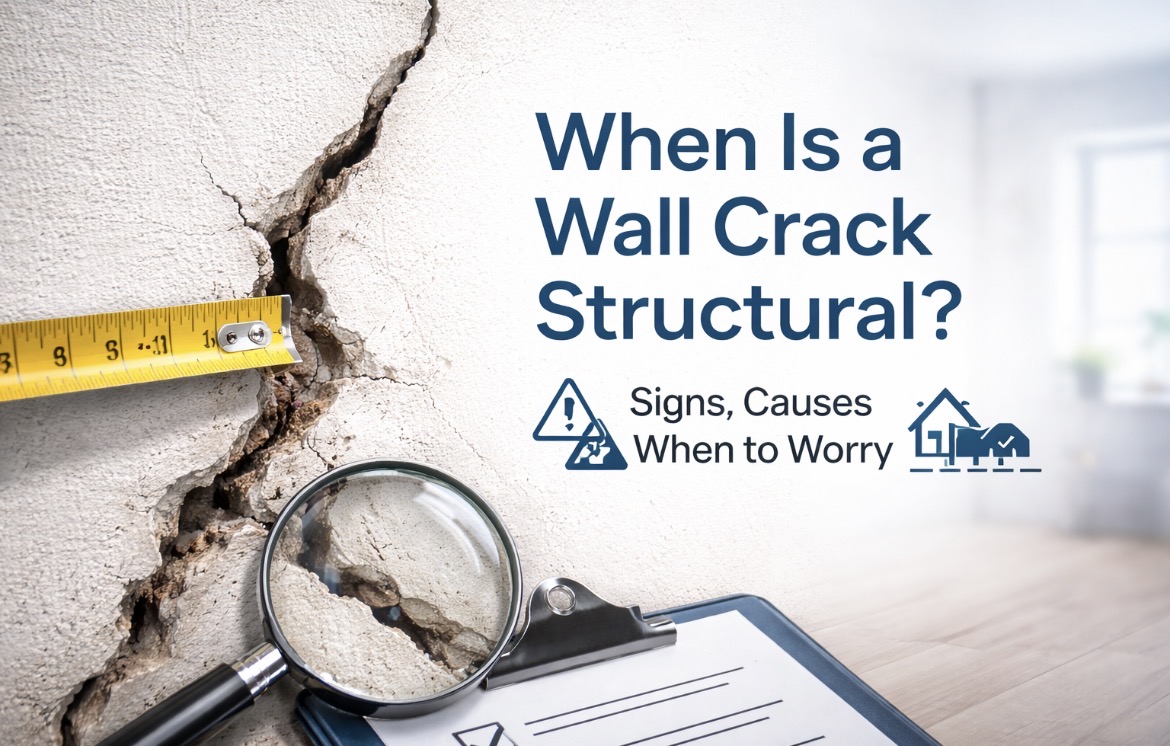
Wall cracks are common in homes of all ages. Many are cosmetic and caused by normal settlement or plaster shrinkage. However, some cracks can indicate structural movement affecting the building’s stability. Understanding the difference is essential before deciding on repairs.
What Makes a Crack Structural?
A crack is more likely to be structural if it:
- Is wider than 3mm
- Continues through brickwork rather than just plaster
- Appears in a diagonal or stair-step pattern
- Gets wider over time
- Is accompanied by sticking doors or windows
- Appears on both internal and external walls in the same area
Structural cracks usually indicate movement within the building’s foundations, walls, or load-bearing elements.
Common Causes of Structural Cracks
Structural cracking is often linked to:
- Subsidence (ground movement beneath foundations)
- Heave (ground expansion)
- Settlement in newer properties
- Lintel failure above doors or windows
- Cavity wall tie failure
- Foundation movement due to drainage issues
These issues affect the structure itself rather than just the surface finish.
Cosmetic vs Structural Cracks
Cosmetic cracks typically:
- Are hairline (less than 1mm wide)
- Appear in plaster only
- Follow straight lines along plasterboard joints
- Do not worsen over time
Structural cracks tend to:
- Widen
- Follow brick mortar joints
- Reappear after repair
- Be visible externally
Monitoring the crack over several months can help determine whether movement is ongoing.
How to Check If a Crack Is Getting Worse
You can:
- Measure the width with a ruler.
- Mark the end of the crack with pencil and date it.
- Take photographs every few months.
- Look for changes in alignment around doors and windows.
If the crack widens noticeably or new cracks appear nearby, further investigation may be needed.
When to Seek Professional Advice
You should consider professional assessment if:
- Cracks are wider than 5mm
- Brickwork is bulging
- Gaps are visible between walls and ceilings
- Floors appear uneven
- Multiple cracks appear suddenly
A structural engineer or building surveyor can confirm whether movement is active and recommend appropriate repairs.
Final Thoughts
Most wall cracks are not serious. However, identifying the warning signs early can prevent unnecessary cosmetic repairs and ensure that any underlying structural issue is addressed properly. The key is to assess the size, pattern, location and progression of the crack before deciding on the correct solution.
Leave a Reply