
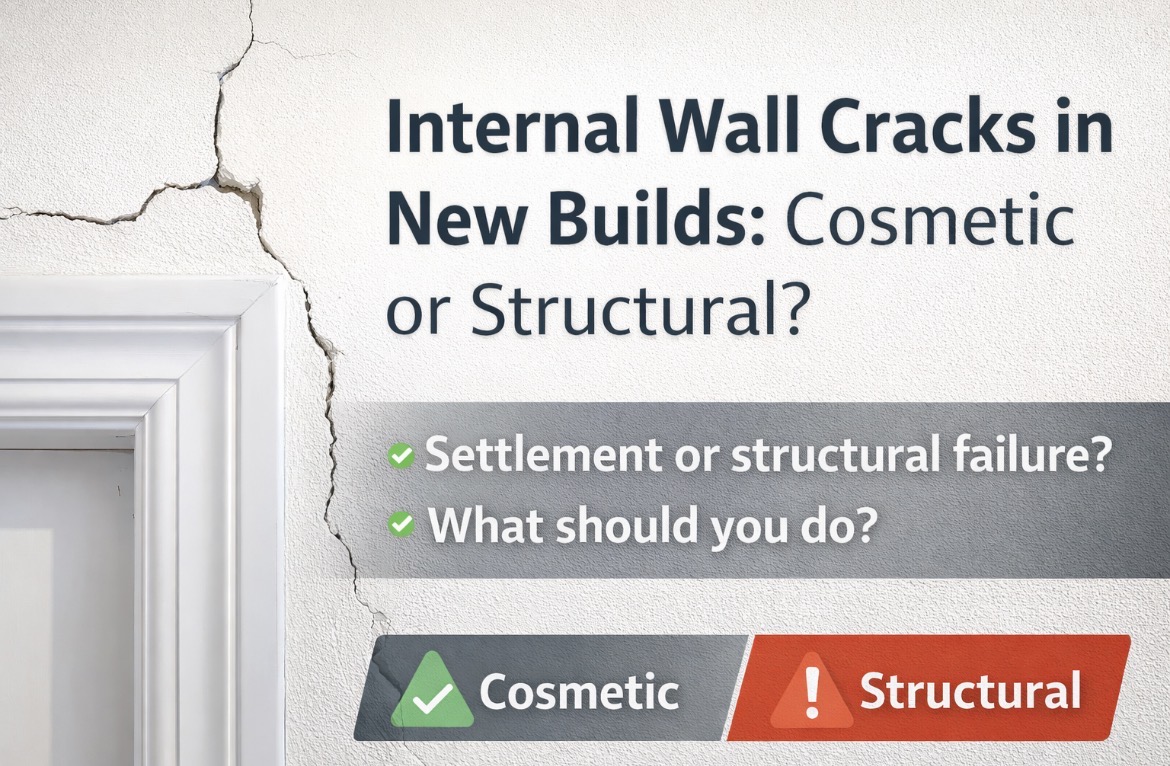
Noticed a crack appearing on your internal wall? Maybe above a door frame, along a ceiling joint, or running vertically down freshly painted plaster?
Before you panic — most internal cracks in new builds are completely normal. However, some can indicate movement that needs professional attention.
In this guide, we’ll explain what causes internal wall cracks, when they’re harmless, and when you should investigate further.
Common Types of Internal Wall Cracks
Hairline Shrinkage Cracks
These are very fine cracks, usually less than 1mm wide. They often appear as plaster dries out after construction and are extremely common in new homes.
Cause: Drying shrinkage of plaster or joint compound.
Solution: Apply flexible filler, sand smooth, and repaint.
Cracks Above Doors and Windows
Cracks often appear at the corners of door frames and window openings.
Cause: Timber frame movement or slight settlement as the structure adjusts during the first year or two.
Solution: Rake out the crack, reinforce with mesh tape if needed, and re-skim.
Plasterboard Joint Cracking
These cracks usually appear in straight lines where plasterboards meet, especially along ceilings.
Cause: Poor taping and jointing, insufficient board fixing, timber movement, or roof truss uplift.
Solution: Re-tape and refinish the joint properly.
Vertical or Diagonal Cracks
These require closer attention, especially if they widen over time.
Cause: Settlement, foundation movement, or structural stress.
Solution: Monitor the crack. If it exceeds 3mm in width or continues to grow, seek professional advice.
Why Do Internal Cracks Appear in New Builds?
New homes go through a settling phase during the first 12 to 24 months. Materials dry out, timber shrinks, and the building adjusts under its own weight.
Common reasons include:
- Timber frame shrinkage
- Dot and dab adhesive movement
- Roof truss uplift
- Temperature changes
- Moisture drying out
- Poor workmanship during plastering or drylining
The majority of cracks are cosmetic rather than structural.
When Should You Be Concerned?
Cracks under 1mm wide are usually cosmetic shrinkage and can be filled and repainted.
Cracks between 1mm and 3mm may indicate movement. These should be monitored for several months to see if they change.
Cracks wider than 3mm, stair-step cracks, or cracks that continue to grow may suggest structural movement and should be inspected professionally.
If you notice doors sticking, windows becoming misaligned, or multiple cracks appearing suddenly, do not ignore it.
Simple Fixes You Can Try
For cosmetic cracks:
- Open the crack slightly with a scraper.
- Apply a quality flexible filler.
- Sand smooth once dry.
- Repaint the surface.
- Allow proper drying time before redecorating fully.
If a crack keeps returning, reinforcement tape and a proper re-skim may be required.
Professional Insight
Many internal cracks are not structural failures. They are often the result of how the drylining or plastering was installed.
Insufficient screws, incorrect adhesive depth, rushed taping, or poor joint finishing can all lead to cracking later on.
Understanding the cause is more important than simply filling the crack.
Unsure About a Crack in Your Home?
If you are unsure whether your crack is cosmetic or something more serious, get professional advice before carrying out major repairs.
A clear assessment can save unnecessary worry — and prevent minor issues becoming bigger problems later.
Leave a Reply