
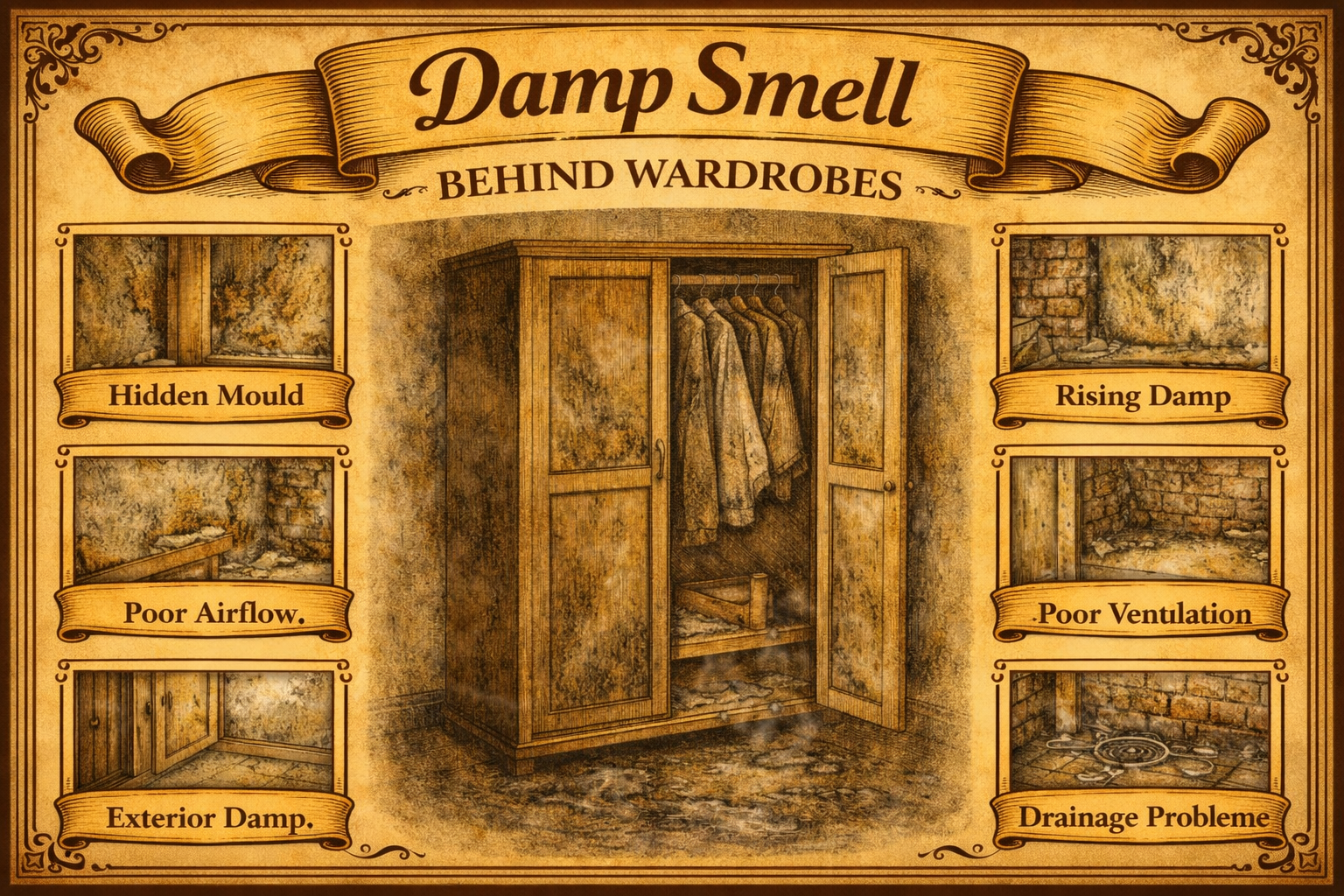
A damp smell behind wardrobes is a common problem in many homes and is usually caused by moisture becoming trapped between the wardrobe and the wall. Because wardrobes are often placed directly against walls with little or no space for air circulation, the area behind them can become cold and poorly ventilated. This creates the perfect environment for condensation and mould growth.
The smell is usually described as musty or stale and may only become noticeable when the wardrobe is moved or when the doors are opened. In some cases, clothing stored inside the wardrobe may also begin to smell damp if moisture levels remain high.
External walls are particularly prone to this issue. These walls are often colder than internal walls, especially during colder months. When warm indoor air comes into contact with these cold surfaces, condensation can form. If a wardrobe is placed tightly against the wall, the trapped air behind it cannot circulate properly, allowing moisture to remain on the surface for long periods.
Over time this trapped moisture can lead to mould growth on walls, wallpaper, and even the back panels of the wardrobe itself. In severe cases, the wall surface may develop visible damp patches or discoloured areas.
Common causes of damp smells behind wardrobes include:
- Condensation forming on cold external walls
- Poor air circulation behind furniture
- Mould growth on walls or wardrobe panels
- High indoor humidity levels
- Penetrating damp from damaged external walls
- Leaks from roofs or gutters affecting the wall cavity
Because the area behind wardrobes is rarely inspected, damp problems can remain hidden for long periods before they are discovered.
The Solution: How to Remove Damp Smells Behind Wardrobes
The most effective way to solve damp smells behind wardrobes is to improve airflow and reduce moisture levels around the wall.
The first step is to carefully move the wardrobe away from the wall to inspect the area behind it. If mould is present, the affected surfaces should be cleaned using appropriate mould removal products. The wall should then be allowed to dry thoroughly before the wardrobe is placed back.
Creating space between the wardrobe and the wall is essential for improving air circulation. Leaving a gap of several centimetres allows air to flow behind the furniture and prevents moisture from becoming trapped.
Improving ventilation in the room can also help reduce humidity levels. Opening windows regularly or using extractor fans in nearby bathrooms can help remove moisture from the indoor air.
If condensation is the main cause of the damp smell, maintaining a consistent room temperature can help prevent cold surfaces from attracting moisture. Gentle heating during colder months can reduce the likelihood of condensation forming on external walls.
Using a dehumidifier may also help reduce moisture levels in rooms that regularly experience high humidity.
When to Call a Specialist
If the damp smell continues to return after improving ventilation and cleaning the affected area, the problem may be related to damp entering the wall structure itself.
Penetrating damp from damaged brickwork, cracked render, or leaking gutters can allow water to enter external walls. This moisture can gradually move through the wall and affect the internal surface behind wardrobes.
Warning signs that may require professional investigation include:
- Damp patches repeatedly appearing behind furniture
- Mould returning soon after cleaning
- Peeling wallpaper or paint on external walls
- Cold or wet areas on the wall surface
- A strong damp smell that persists throughout the room
A damp specialist or building surveyor can investigate the wall structure and determine whether moisture is entering the property from outside. Identifying the cause early can help prevent further damage to internal walls and furniture.
Leave a Reply