
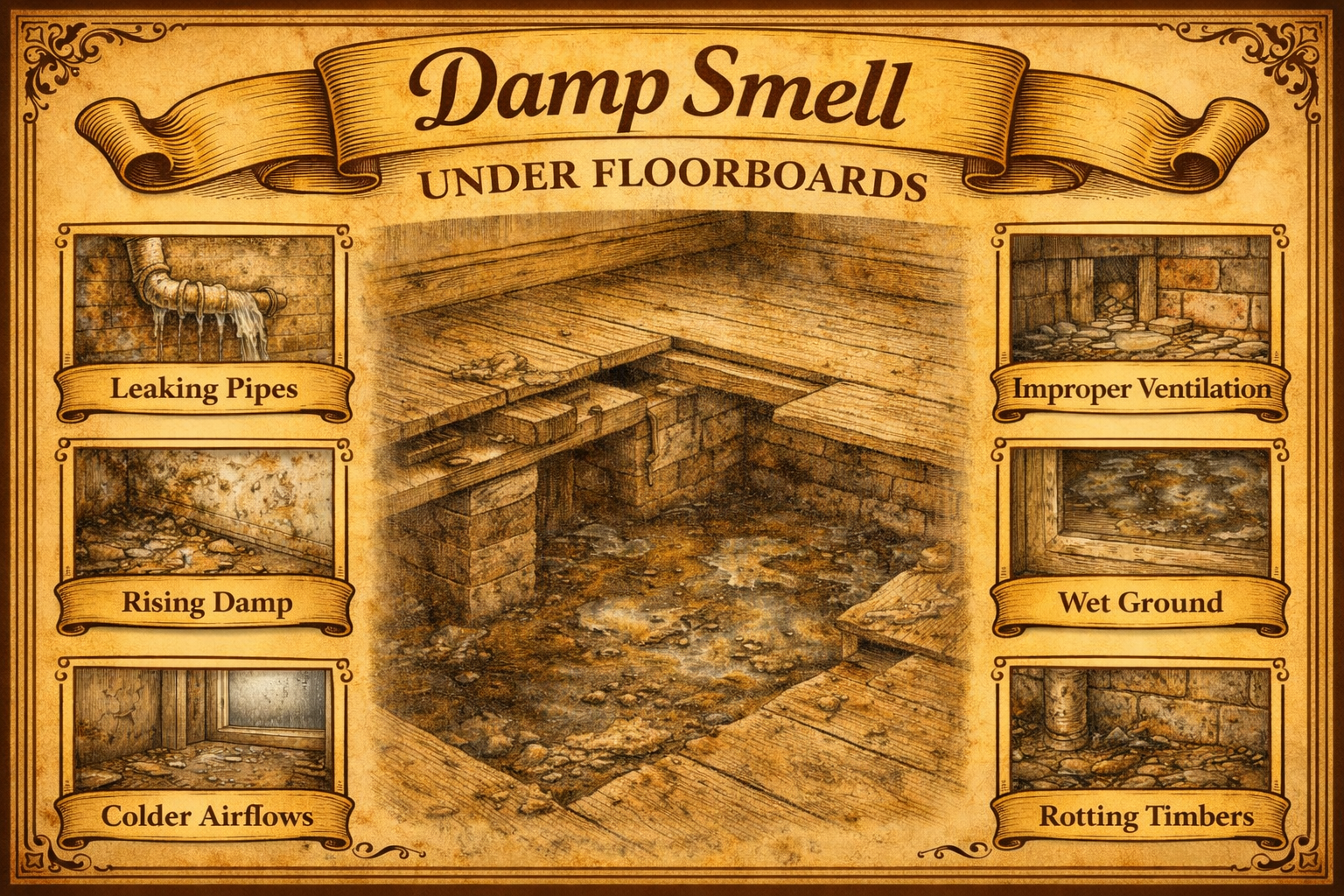
A damp smell coming from beneath floorboards is often a sign that moisture has built up in the subfloor area beneath a property. This space, sometimes referred to as the subfloor void, is common in many homes with suspended timber floors. If moisture becomes trapped in this area, it can create the perfect environment for mould, mildew, and timber decay.
The smell is typically described as musty, earthy, or stale. It may become more noticeable when walking across the floor, when heating is turned on, or when the room has been closed for a long time. In some cases, the smell can spread throughout the entire ground floor of the property.
One of the most common causes of damp smells beneath floorboards is poor subfloor ventilation. Homes with suspended timber floors rely on air bricks or ventilation openings in external walls to allow air to circulate beneath the floor. If these vents become blocked by soil, plants, or debris, moisture can build up in the subfloor space.
Another cause is ground moisture rising into the subfloor void. If the ground beneath the house remains damp, the moisture can evaporate into the enclosed space beneath the floorboards. Without adequate ventilation, this moisture becomes trapped and creates damp conditions.
Leaking plumbing pipes can also contribute to damp smells under floors. Even a slow leak from a pipe can introduce enough moisture to allow mould and bacteria to grow in hidden areas.
Common causes of damp smells beneath floorboards include:
- Blocked or insufficient air bricks
- Poor subfloor ventilation
- Ground moisture rising into the subfloor void
- Plumbing leaks beneath the floor
- Timber decay or fungal growth
- Water ingress from external walls
Because this area is hidden beneath the floor, the problem may go unnoticed until the smell becomes strong or other signs of damp appear.
The Solution: How to Remove Damp Smells from Under Floors
The first step in solving a damp smell under floorboards is identifying the source of moisture. Simply masking the smell will not address the underlying issue.
Improving subfloor ventilation is often the most effective solution. Air bricks should be checked to ensure they are not blocked by soil, vegetation, or debris. These vents allow fresh air to circulate beneath the floor, helping moisture evaporate and preventing damp conditions.
If airflow is restricted, clearing the vents or installing additional air bricks may significantly improve ventilation beneath the floor.
Checking for plumbing leaks is also important. Pipes running beneath the floor should be inspected to ensure they are not dripping or leaking. Even small leaks can create damp conditions over time.
If the ground beneath the house is particularly damp, installing a moisture barrier or improving drainage around the property may help reduce the amount of moisture entering the subfloor void.
In some cases, lifting a floorboard to inspect the subfloor area can help determine whether mould growth, wet timber, or standing water is present.
When to Call a Specialist
Persistent damp smells under floorboards may indicate more serious issues affecting the structural timber or the building’s ventilation system.
If the smell remains strong despite improving ventilation or addressing minor leaks, there may be timber decay or fungal growth present in the floor structure. Wet rot or other forms of timber decay can develop in persistently damp environments and may weaken structural timbers.
Signs that professional investigation may be needed include:
- Soft or springy floorboards
- Visible mould or fungal growth under the floor
- Persistent damp smells throughout the ground floor
- Timber that appears darkened or decayed
- Condensation forming inside air vents
A damp specialist or building surveyor can inspect the subfloor void and identify the source of the moisture. They may recommend improvements to ventilation, repairs to damaged timbers, or drainage solutions to prevent further moisture buildup.
Addressing damp beneath floorboards early can help prevent structural damage and eliminate persistent damp smells in the home.
Leave a Reply