
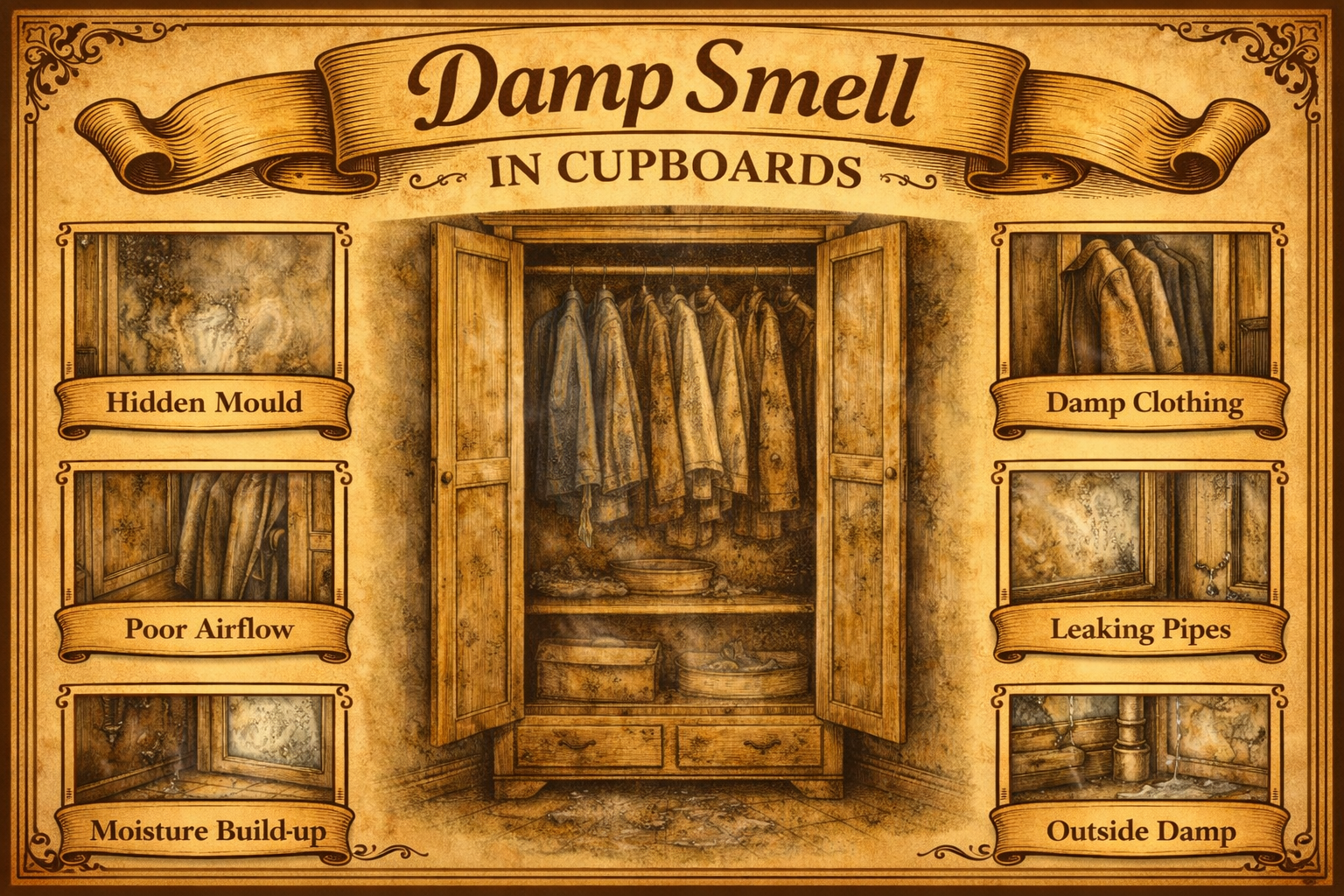
A damp smell in cupboards is a common issue in many homes and usually indicates that moisture has become trapped in an enclosed space. Because cupboards have limited ventilation, even small amounts of humidity can linger for long periods and create conditions where mould and mildew can grow.
The smell is typically described as musty, stale, or earthy and is often most noticeable when the cupboard door is opened after remaining closed for a long time.
Cupboards are particularly vulnerable to damp smells because they are often located against external walls or in cooler areas of the house. These surfaces tend to be colder than the surrounding room, which makes them more likely to attract condensation when warm indoor air meets the wall surface.
If moisture repeatedly forms on these cold surfaces, it can gradually soak into plaster, wood, or stored materials. Over time this can lead to mould growth and persistent damp smells.
Stored items can also contribute to the problem. Clothing, bedding, cardboard boxes, and paper items can absorb moisture from the air. When humidity levels remain high inside a cupboard, these materials may develop a musty smell themselves.
Common causes of damp smells in cupboards include:
- Condensation forming on cold external walls
- Poor ventilation inside the cupboard
- Mould growth on walls, shelving, or stored items
- Moisture trapped in clothing or fabrics
- Plumbing leaks hidden behind cupboard walls
- Penetrating damp entering through external brickwork
Built-in cupboards are especially prone to damp problems because they are often tightly fitted against walls, leaving little space for air circulation.
The Solution: How to Remove the Damp Smell
The first step in eliminating damp smells is to remove the source of moisture and allow the cupboard to dry out.
Start by emptying the cupboard completely so that all surfaces are exposed to air. Any visible mould should be cleaned using suitable mould treatment products and the surfaces wiped thoroughly. Allowing the cupboard to dry fully is essential before placing items back inside.
Improving ventilation is one of the most effective ways to prevent damp smells returning. Leaving cupboard doors open occasionally allows fresh air to circulate and reduces humidity levels inside the space.
Creating a small gap between stored items and the wall surface can also improve airflow. This prevents moisture from becoming trapped between objects and the wall.
Moisture absorbers or dehumidifiers can also help reduce humidity levels, particularly in cupboards that are located in colder areas of the house. These products can help prevent moisture building up in enclosed spaces.
Regularly airing out clothing and fabrics stored in cupboards can also prevent damp smells developing over time.
When to Call a Specialist
If damp smells continue to return after cleaning and improving ventilation, the moisture may be coming from inside the wall structure rather than the cupboard itself.
Cupboards located against external walls are particularly vulnerable to penetrating damp. Water may be entering the wall through damaged brickwork, defective pointing, cracked render, or leaking gutters. When moisture penetrates the wall structure, it can gradually affect internal surfaces and cause persistent damp smells.
Signs that professional investigation may be needed include:
- Damp patches appearing on cupboard walls
- Mould repeatedly returning after cleaning
- Warped or swollen wooden shelving
- A strong damp smell that quickly returns
A damp specialist or building surveyor can investigate the wall structure to identify the source of moisture. Addressing structural damp problems early can prevent further damage and help permanently eliminate damp smells inside cupboards.
Leave a Reply