
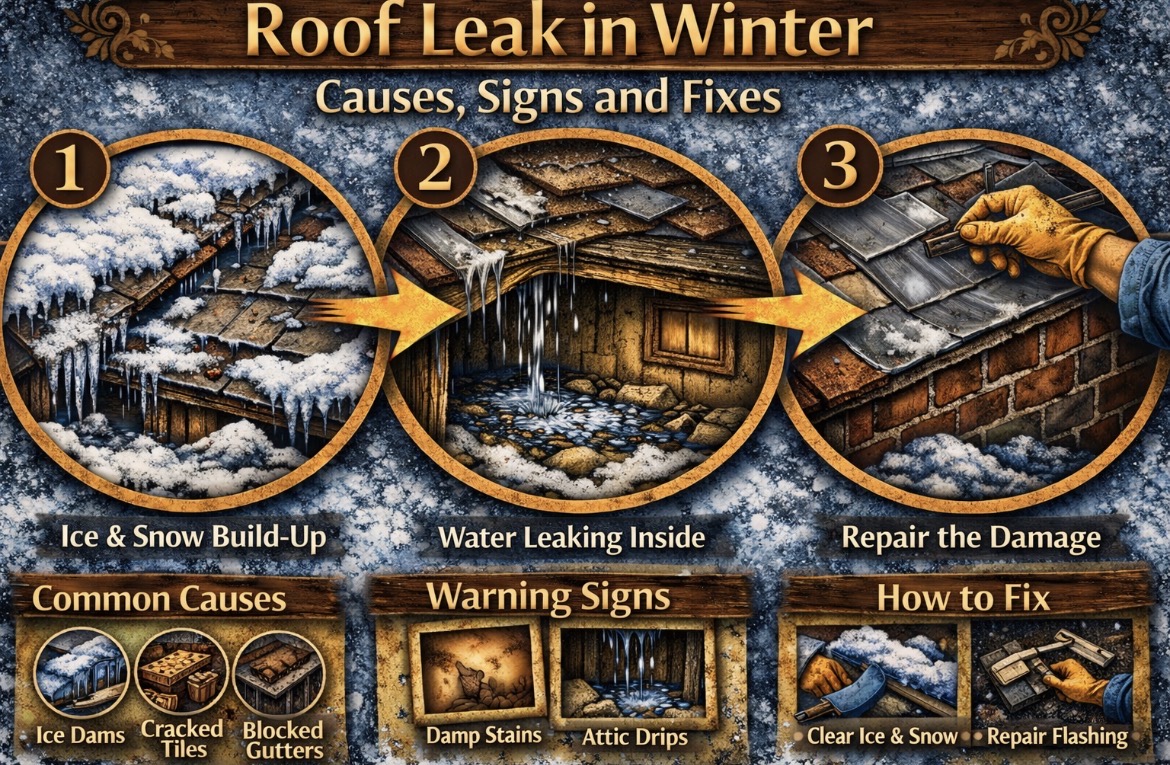
A roof leak in winter is a common issue for homeowners, especially during periods of heavy rain, snow, frost and strong winds. Cold temperatures can worsen small roof defects and allow water to enter the roof structure, often causing damp patches, ceiling stains and insulation damage.
Even a small winter leak should be investigated quickly, as ongoing water penetration can lead to timber rot, mould growth and costly structural repairs.
Understanding the common causes of roof leaks in winter can help you identify the problem early and prevent further damage to your home.
Common Causes of Roof Leaks in Winter
Several roofing problems are more likely to appear or worsen during winter months.
Damaged or Missing Roof Tiles
Cold weather, frost and strong winds can loosen or crack roof tiles. Once a tile is damaged or displaced, rainwater can easily penetrate the roof covering and travel into the loft space.
Ice and Frost Damage
Repeated freezing and thawing can expand small cracks in roof materials. Over time this can weaken tiles, flashing and mortar, allowing water to enter the roof structure.
Blocked Gutters
Leaves, moss and debris often accumulate in gutters during autumn. When winter rain arrives, blocked gutters can cause water to overflow and seep beneath roof tiles or into wall cavities.
Damaged Flashing
Flashing around chimneys, roof valleys and skylights can deteriorate over time. Winter storms and temperature changes may worsen existing gaps or cracks, allowing water to enter.
Condensation in the Loft
Not all winter roof leaks are caused by rain. Poor ventilation in the loft can lead to heavy condensation forming on cold surfaces. This moisture can drip onto insulation or ceilings and appear similar to a roof leak.
Warning Signs of a Winter Roof Leak
Winter roof leaks are not always immediately visible, but there are several signs that may indicate a problem.
Common warning signs include:
- Water stains on ceilings or walls
- Damp patches appearing after heavy rain
- Dripping water in the loft space
- Mould or musty smells in the attic
- Dark patches or damp insulation
- Missing or damaged roof tiles visible from outside
If these signs appear during winter, it is important to inspect the roof as soon as possible.
How to Fix a Roof Leak in Winter
The correct repair will depend on the cause of the leak.
Replace Damaged Tiles
Broken or slipped tiles should be replaced promptly to restore the waterproof barrier of the roof.
Repair Flashing
Cracked or loose flashing around chimneys, skylights and roof junctions should be resealed or replaced.
Clear Blocked Gutters
Cleaning gutters and downpipes allows rainwater to drain properly and prevents water from backing up under roof tiles.
Improve Loft Ventilation
Installing roof vents or improving airflow in the loft can reduce condensation problems during cold weather.
Temporary Repairs
If the leak appears during severe weather, temporary solutions such as roofing sealant or waterproof tape may reduce water ingress until permanent repairs can be completed.
Preventing Roof Leaks in Winter
Regular roof maintenance can help prevent many winter leaks.
Homeowners should consider:
- Inspecting the roof before winter arrives
- Clearing gutters and downpipes regularly
- Checking flashing around chimneys and skylights
- Replacing cracked or damaged tiles
- Ensuring loft spaces are properly ventilated
Preventative maintenance can significantly reduce the risk of winter roof leaks and protect the structure of the property.
Leave a Reply