
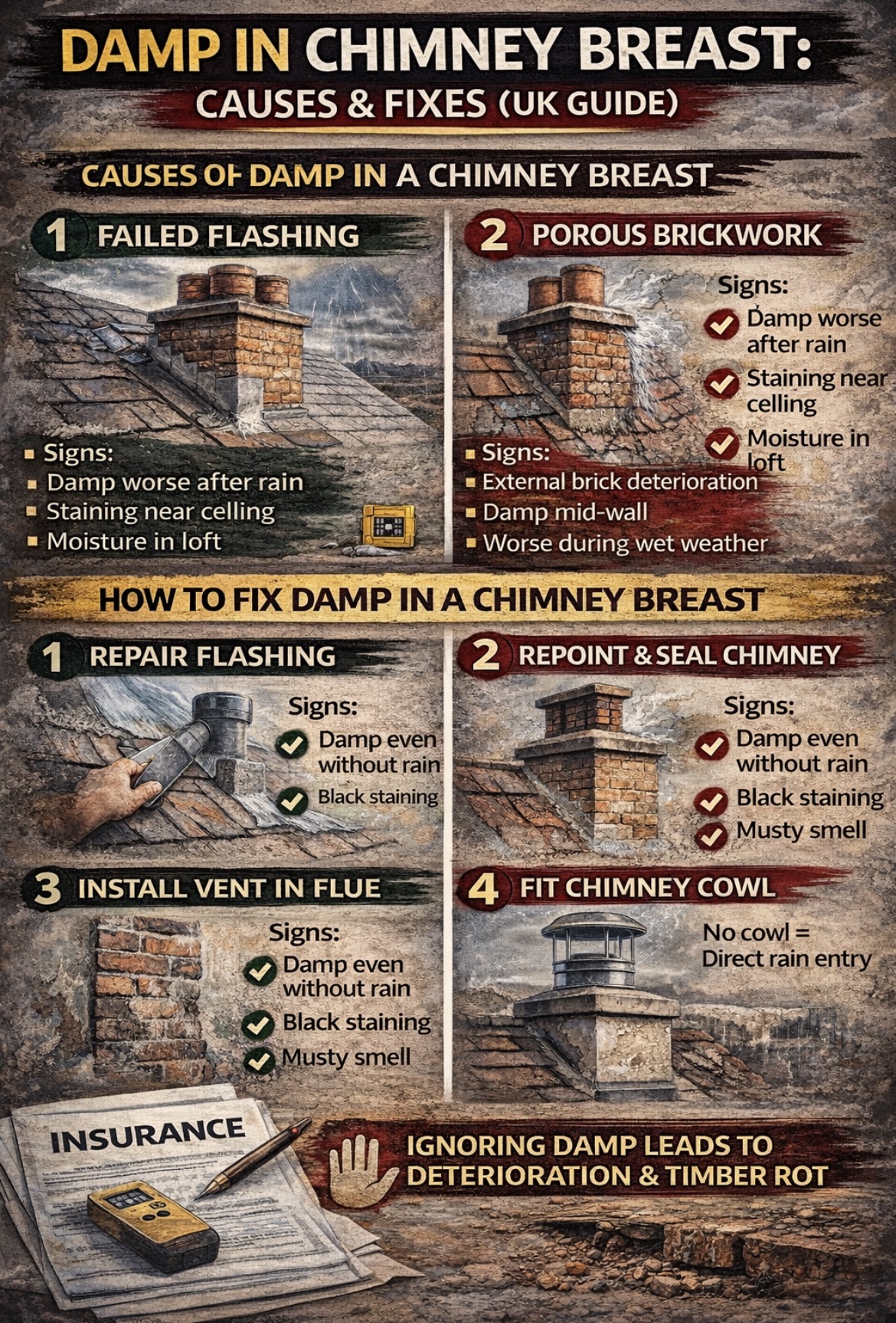
Damp in a chimney breast is a common problem, particularly in older UK properties and is often caused by penetrating damp. Staining, peeling wallpaper, crumbling plaster, or a musty smell around the chimney area often indicates trapped or penetrating moisture.
The cause can vary — from rainwater ingress to condensation in unused flues — so correct diagnosis is essential before carrying out repairs.
Why Are Chimney Breasts Prone to Damp?
Chimneys are exposed to:
- Heavy rainfall
- Wind-driven rain
- Temperature differences
- Internal condensation
- Failing flashing
- Porous brickwork
Unlike standard walls, chimneys are exposed on multiple sides and often extend above roof level, increasing vulnerability.
Common Causes of Damp in Chimney Breasts
Failed Flashing
Flashing seals the gap between the chimney stack and roof.
If damaged or lifted, water can enter and travel down the chimney breast.
Signs:
- Damp worse after heavy rain
- Staining near ceiling
- Moisture in loft near chimney
Porous Brickwork or Missing Pointing
Older chimney stacks often suffer mortar erosion.
This allows rainwater to soak into the stack and track downward.
Signs:
- External brick deterioration
- Damp appearing mid-wall
- Worse during wet weather
Blocked or Unused Chimney Flue (Condensation)
If a chimney is no longer used:
- Warm air from inside the house rises
- Meets cold air in the flue
- Condensation forms
- Moisture soaks into masonry
Signs:
- Damp even without rain
- Black staining
- Musty smell
- Issue worse in winter
Missing Chimney Cowl
A chimney cowl prevents rain entering directly.
Without one, water can fall straight down the flue.
How to Diagnose the Cause
Ask:
- Is it worse after rain? → Likely flashing or brickwork
- Is it constant, especially in winter? → Likely condensation
- Is the chimney unused and sealed at the bottom? → Moisture may be trapped
Roof-level inspection is often required for full diagnosis.
How to Fix Damp in a Chimney Breast
If Flashing Is Faulty:
- Repair or replace flashing
If Brickwork Is Porous:
- Repoint chimney stack
- Apply breathable water-repellent treatment
If Condensation Is the Issue:
- Install chimney vent
- Fit appropriate cowl
- Ensure airflow within the flue
Avoid:
- Simply replastering without fixing the cause
- Sealing the chimney entirely without ventilation
Can Damp in a Chimney Cause Structural Damage?
If ignored, it can lead to:
- Plaster failure
- Timber rot near roof level
- Internal mould growth
- Masonry deterioration
Early intervention usually prevents larger repair bills.
Final Thoughts
Damp in a chimney breast is common in UK homes and is usually caused by rain penetration or condensation within unused flues.
The key is identifying whether the moisture is entering from outside or forming internally.
Fix the source first — cosmetic repairs alone will not solve the issue.
Leave a Reply