
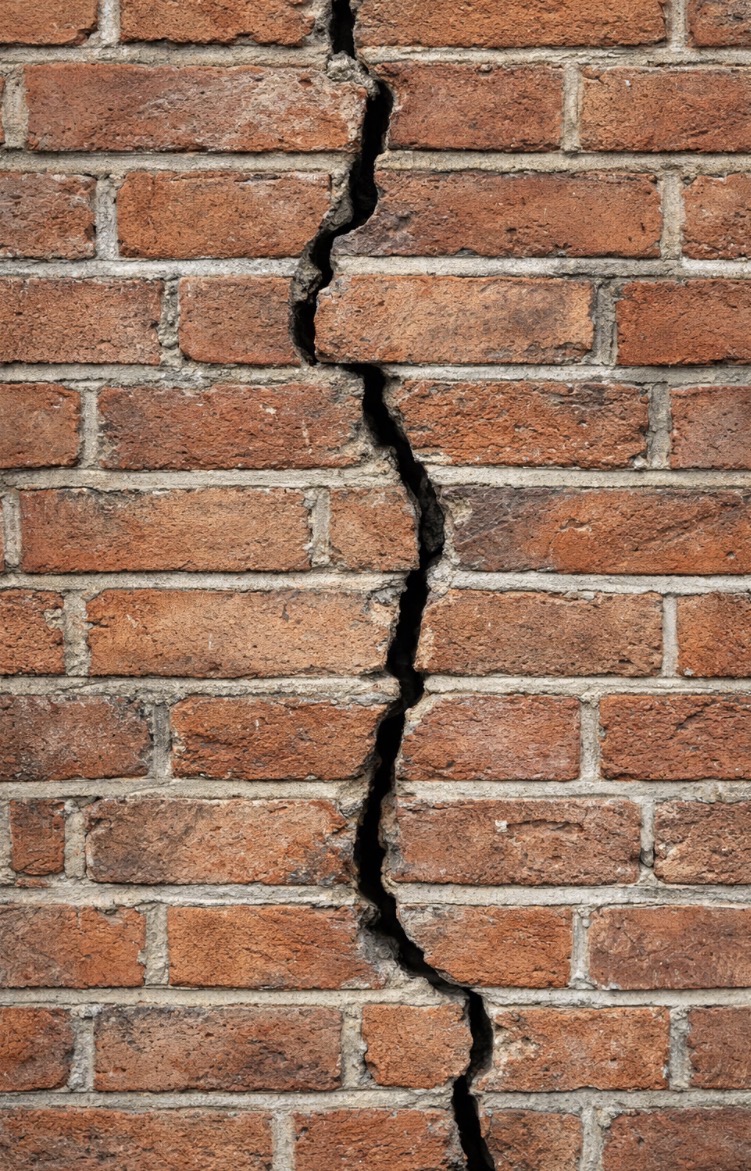
External brickwork cracks are one of the most common defects seen on houses in the UK. Some cracks are cosmetic and harmless, while others can indicate serious structural movement. Understanding what type of crack you are looking at, why it has formed, and what should be done about it can save you thousands in unnecessary repairs.
This guide explains external brickwork cracking in plain English, based on real construction practice.
What Do External Brickwork Cracks Look Like?
External cracks usually appear as:
- Vertical cracks running through bricks or mortar
- Stepped cracks following the mortar joints
- Horizontal cracks near floor levels
- Cracks around windows and doors
Hairline cracks are often cosmetic. Wider cracks, stepped cracking, or cracks that continue to grow should be investigated.
What Stage of Construction Usually Causes Brickwork Cracking?
Most external brickwork cracks can be traced back to problems during:
- Foundations and groundworks
- Bricklaying and workmanship
- Structural openings (windows and doors)
- Lack of movement joints
If something is wrong at an early stage, the defect often becomes visible months or years later.
Common Causes of External Brickwork Cracks
1. Foundation Movement
Poor ground conditions, shallow foundations, or inadequate compaction can allow the building to move.
2. Thermal Expansion and Contraction
Brickwork expands in hot weather and contracts in cold weather. Without movement joints, cracking can occur.
3. Poor Bricklaying Practice
Weak mortar, poor bonding, or badly aligned brickwork can lead to cracking.
4. Lintel or Opening Failure
If lintels over doors and windows are undersized or poorly installed, cracks often form above openings.
5. Cavity Wall Tie Issues
Missing, corroded, or poorly spaced wall ties can cause horizontal cracking.
Are External Brickwork Cracks Serious?
- Hairline cracks (less than 2mm) are usually cosmetic
- Cracks between 2mm–5mm should be monitored
- Cracks wider than 5mm may indicate structural movement
If cracks are getting wider or longer, professional advice is recommended.
How to Repair External Brickwork Cracks
Minor Cracks
- Rake out loose mortar
- Repoint with suitable mortar
- Allow to cure
Moderate Cracks
- Stitch crack using helical bars
- Repoint and finish
Severe Cracks
- Structural engineer inspection
- Possible foundation repairs or rebuilding sections
Could This Defect Have Been Prevented?
Yes. Most brickwork cracking is preventable through:
- Correct foundation design
- Proper movement joint placement
- Good quality workmanship
- Correct materials
Cutting corners during construction is a major cause of defects.
When Should You Call a Professional?
Call a professional if:
- Cracks exceed 5mm
- Cracks are stepped or diagonal
- Doors or windows are sticking
- Cracks are growing
Early advice is always cheaper than delayed repairs.
Ask a Question
Not sure what type of crack you have?
Leave a comment below describing:
- Crack width
- Location
- Age of property
Others may benefit from your question and shared solutions.
Leave a Reply