
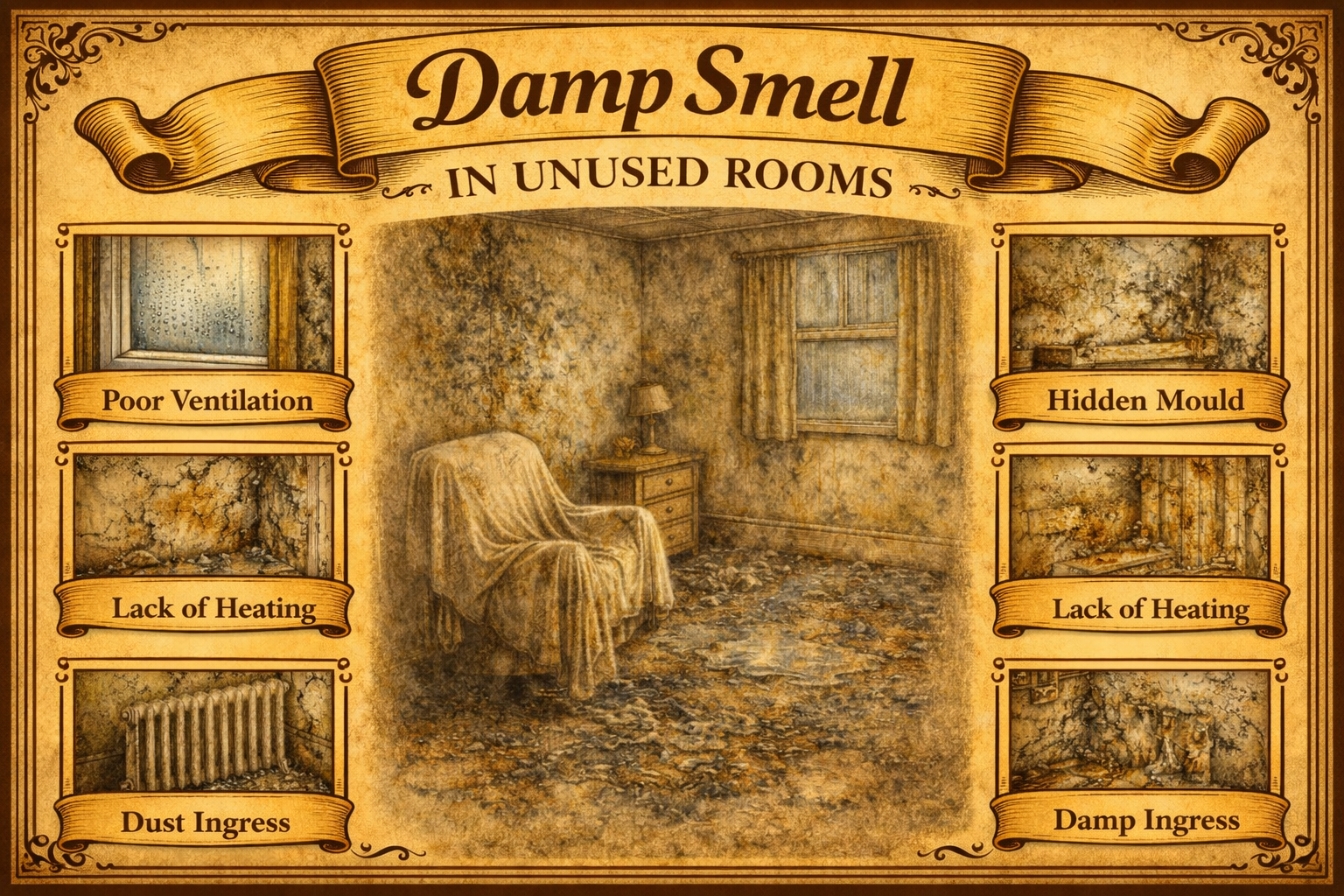
A damp smell in unused rooms is a common issue in many homes and is usually caused by a lack of ventilation combined with trapped moisture. When rooms remain closed for long periods, fresh air cannot circulate and humidity levels can gradually increase.
Over time this trapped moisture can lead to mould growth on walls, ceilings, carpets, and furniture. Even if mould is not immediately visible, the presence of damp air can create the musty smell often associated with damp problems.
Unused rooms are particularly vulnerable during colder months. When heating is reduced or turned off in these rooms, surfaces such as walls and windows become colder than the rest of the house. Warm air from other areas of the property can enter the room and condense on these cold surfaces.
Because the room is rarely opened or ventilated, the moisture remains trapped inside and can gradually build up.
Another factor is that unused rooms often contain items that absorb moisture, such as carpets, curtains, furniture, and stored belongings. These materials can hold moisture in the air and contribute to persistent damp smells.
Common causes of damp smells in unused rooms include:
- Lack of ventilation and airflow
- Condensation forming on cold walls or windows
- Reduced heating compared to the rest of the house
- Moisture absorbed by carpets and furniture
- Mould growth in hidden areas
- Penetrating damp from external walls
Because these rooms are used less frequently, early signs of damp problems may go unnoticed until the smell becomes strong.
The Solution: How to Remove Damp Smells from Unused Rooms
The most effective way to remove damp smells from unused rooms is to improve airflow and control humidity levels.
Opening windows regularly allows fresh air to circulate and helps remove excess moisture from the room. Even short periods of ventilation can help prevent humidity from building up.
Allowing some heat to circulate into unused rooms can also help reduce condensation. Keeping doors slightly open or maintaining a low level of heating during colder months can prevent surfaces from becoming excessively cold.
Cleaning any visible mould from walls or ceilings is important to remove the immediate source of damp smells. Surfaces should then be allowed to dry thoroughly.
Using a dehumidifier may also help control humidity levels in rooms that are rarely used. This can be particularly useful in properties where ventilation is limited.
Furniture and stored items should be positioned slightly away from walls to allow air circulation and prevent moisture from becoming trapped.
When to Call a Specialist
If damp smells continue to return despite improving ventilation and heating, there may be a more serious damp issue affecting the room.
Unused rooms with external walls may be affected by penetrating damp caused by damaged brickwork, leaking gutters, or cracked render. Moisture entering through these defects can gradually affect internal surfaces and produce persistent damp smells.
Signs that professional investigation may be required include:
- Damp patches appearing on walls or ceilings
- Peeling paint or wallpaper
- Mould spreading across large areas
- Cold or wet areas on wall surfaces
- A strong musty smell that does not improve with ventilation
A damp specialist or building surveyor can investigate the cause of the moisture and recommend appropriate repairs.
Addressing damp problems early can prevent further damage to building materials and help restore a healthier indoor environment.
Leave a Reply