Category: Heat Pumps

  • How to Complain About Faulty Energy Upgrade Work

    How to Complain About Faulty Energy Upgrade Work

    Energy efficiency upgrades such as insulation systems, heat pumps and ventilation installations are intended to improve the performance of homes. However, some homeowners experience problems when work is poorly carried out or incorrectly installed.

    Faulty installations may lead to issues such as damp, mould, heating problems or structural defects. When this happens, homeowners may need to raise a complaint with the installer or the organisation responsible for the upgrade scheme.

    Understanding how to report faulty work can help ensure that problems are properly investigated and corrected.

    Common Problems After Energy Upgrade Work

    Complaints often arise when retrofit projects create unexpected issues within the property.

    Typical problems include:

    These issues may appear soon after installation or develop gradually over time.

    Steps to Take When Problems Appear

    Homeowners experiencing problems should begin by documenting the issue carefully.

    Recommended steps include:

    • taking photographs of visible defects
    • recording when the problem first appeared
    • keeping copies of installation documents
    • contacting the installer to report the issue

    Providing clear information can help ensure the problem is investigated properly.

    Raising a Formal Complaint

    If the installer does not resolve the issue, homeowners may need to raise a formal complaint through the relevant organisation or warranty provider associated with the installation scheme.

    Many retrofit projects include warranties or guarantee schemes designed to address defects in installation work.

    These organisations may arrange inspections or repairs if the work is found to be defective.

    When Professional Advice May Be Needed

    In some situations homeowners may seek independent advice from building professionals such as surveyors or building inspectors.

    These professionals can assess the installation and provide reports identifying whether the work has been carried out correctly.

    This information can help support complaints and ensure appropriate repairs are carried out.
  • Cold Rooms After Energy Efficiency Upgrades

    Cold Rooms After Energy Efficiency Upgrades

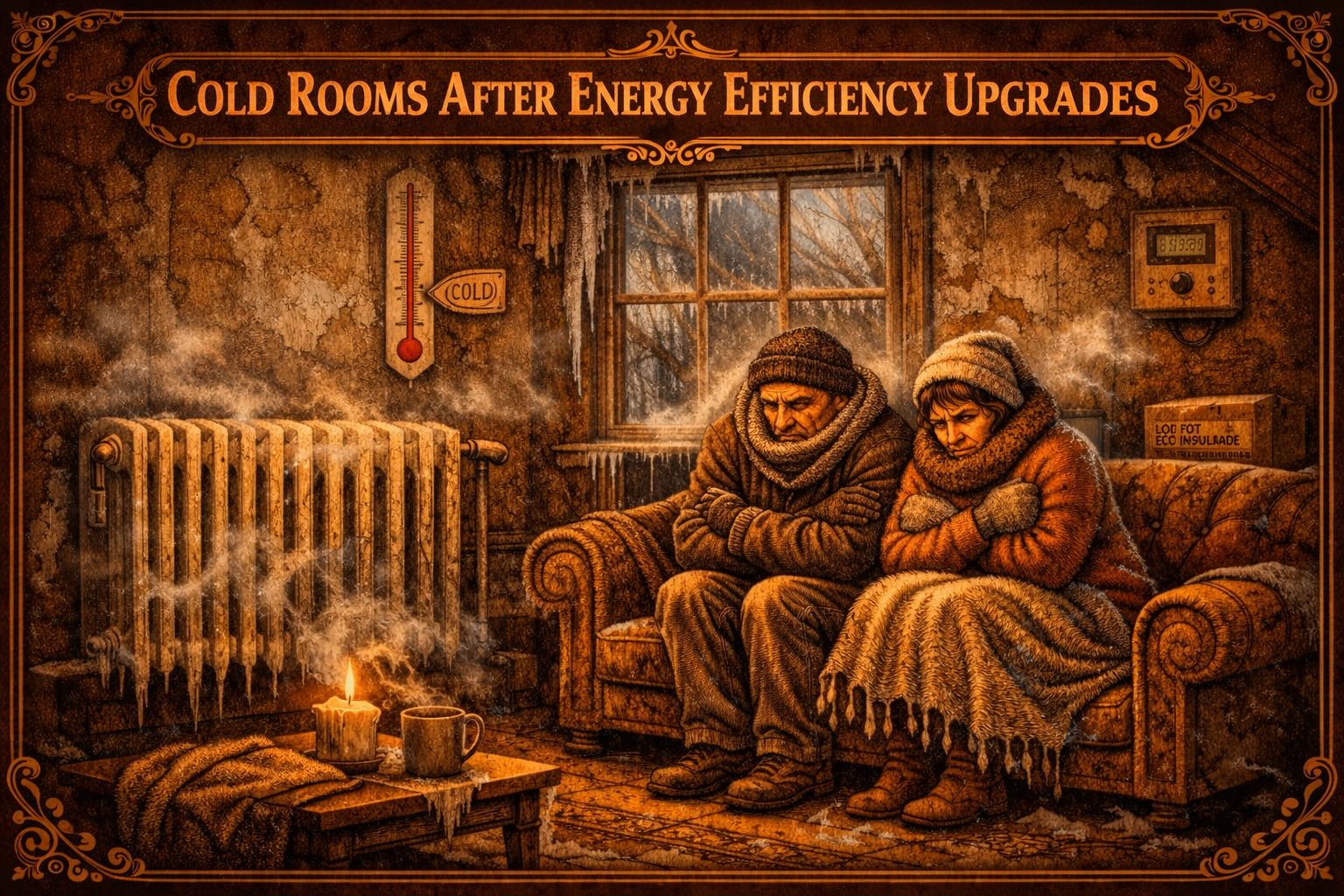
    Energy efficiency upgrades are designed to make homes warmer and reduce heating costs. However, some homeowners find that certain rooms feel colder after improvements such as insulation upgrades, new heating systems or ventilation changes.

    This can happen when the upgrades alter how heat moves through the property. In some cases the heating system may not be properly balanced or the insulation may create uneven temperature distribution within the home.

    While energy efficiency improvements usually improve comfort, poor installation or system design can occasionally lead to unexpected heating problems.

    Why Some Rooms Become Colder

    Several factors can cause rooms to feel colder after energy efficiency work has been completed.

    Common causes include:

    These issues can cause some areas of the house to retain less heat than others.

    Signs of Uneven Heating in the Home

    Homeowners may notice:

    • one room consistently colder than others
    • difficulty heating certain parts of the property
    • condensation forming in colder rooms
    • higher humidity levels in poorly heated areas
    • heating systems running constantly without improving comfort

    These symptoms often suggest that the heating system or insulation has not been correctly designed for the building.

    Investigating the Cause

    Identifying the cause of cold rooms often involves examining both the heating system and the building structure.

    Professionals may check:

    This assessment helps determine whether the problem is related to insulation, heating design or ventilation.

    How Cold Room Problems Are Fixed

    Solutions may include:

    • upgrading radiators in colder rooms
    • improving insulation coverage
    • balancing the heating system
    • addressing ventilation issues

    Once these adjustments are made, temperature differences between rooms can usually be reduced.

  • Noisy Heat Pump Installations

    Noisy Heat Pump Installations

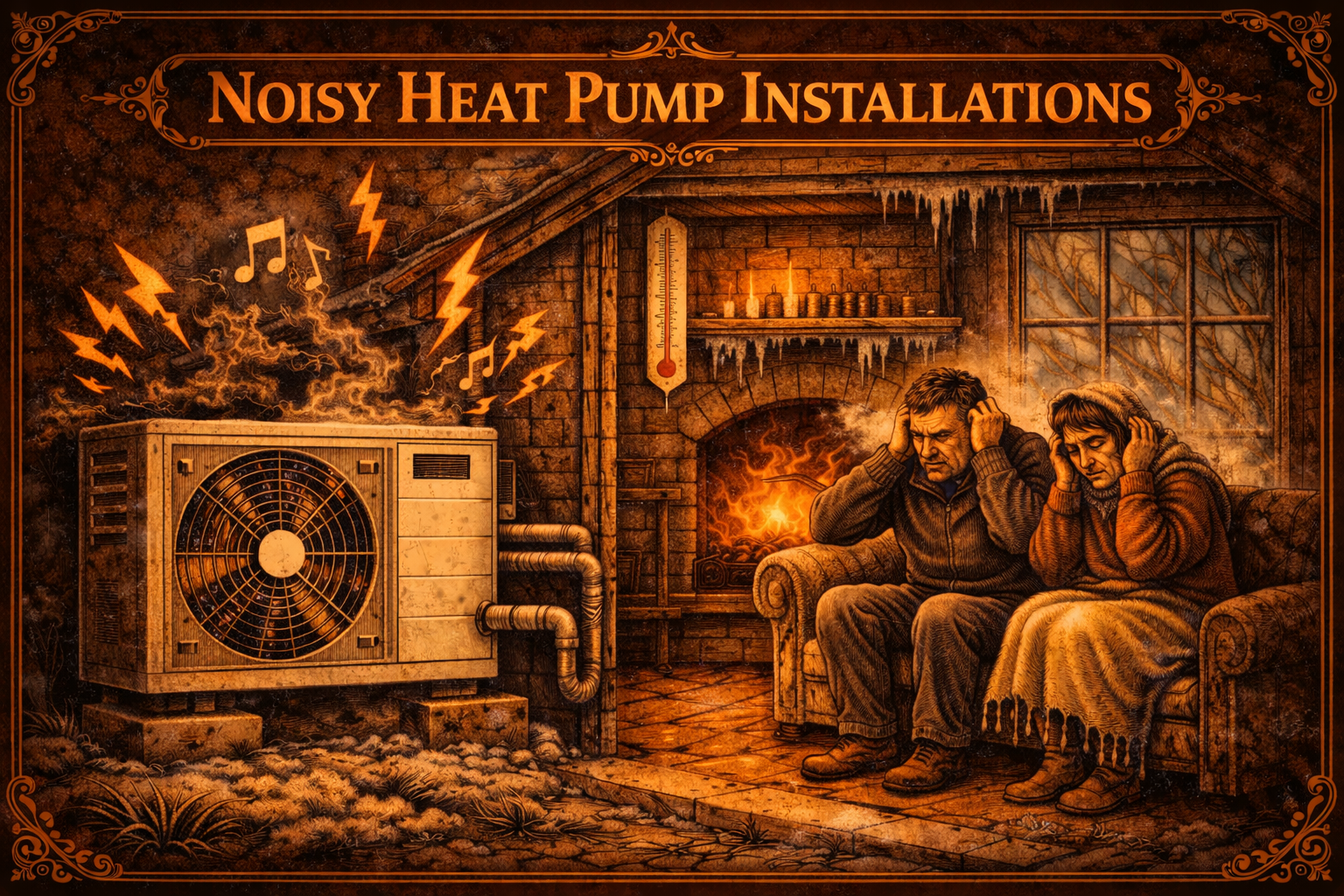
    Heat pumps are designed to operate quietly, but some homeowners report excessive noise after a new system has been installed. While a heat pump will naturally produce some sound when running, loud humming, vibration or rattling noises may indicate an installation problem.

    Noise complaints are most common when outdoor units are installed too close to windows, walls or neighbouring properties. In other cases, noise is caused by vibration or poorly secured pipework.

    If a heat pump installation becomes excessively noisy, it may affect both the comfort of the homeowner and nearby neighbours.

    Why Heat Pumps Can Become Noisy

    Heat pumps work by transferring heat from outside air into the home using a compressor and fan system. When these components operate, they naturally produce some mechanical sound.

    However, excessive noise is usually caused by installation or positioning issues rather than the heat pump itself.

    Common causes include:

    • outdoor units installed too close to walls or windows
    • vibration from poorly secured mounting brackets
    • pipework transmitting vibration into the building structure
    • loose panels or internal components
    • airflow restrictions around the unit

    These issues can amplify sound and make the heat pump appear much louder than expected.

    Signs a Heat Pump Is Too Noisy

    Homeowners may notice:

    • loud humming or buzzing sounds
    • vibration felt through walls or floors
    • rattling or shaking noises
    • increased noise during colder weather
    • complaints from neighbours about outdoor unit noise

    Most modern heat pumps should operate quietly enough that they are barely noticeable from inside the home.

    How Noise Problems Are Diagnosed

    A heating engineer will usually inspect the installation to identify where the noise is coming from.

    This may involve:

    • checking mounting brackets and vibration pads
    • inspecting pipework connections
    • ensuring the outdoor unit has adequate clearance
    • examining the compressor and fan assembly

    In many cases the noise problem can be resolved with relatively simple adjustments.

    How Noisy Heat Pumps Are Fixed

    Solutions often include:

    • installing anti-vibration mounts
    • relocating the outdoor unit to a better position
    • securing loose pipework
    • improving airflow around the unit

    Once these adjustments are made, the system should operate much more quietly.